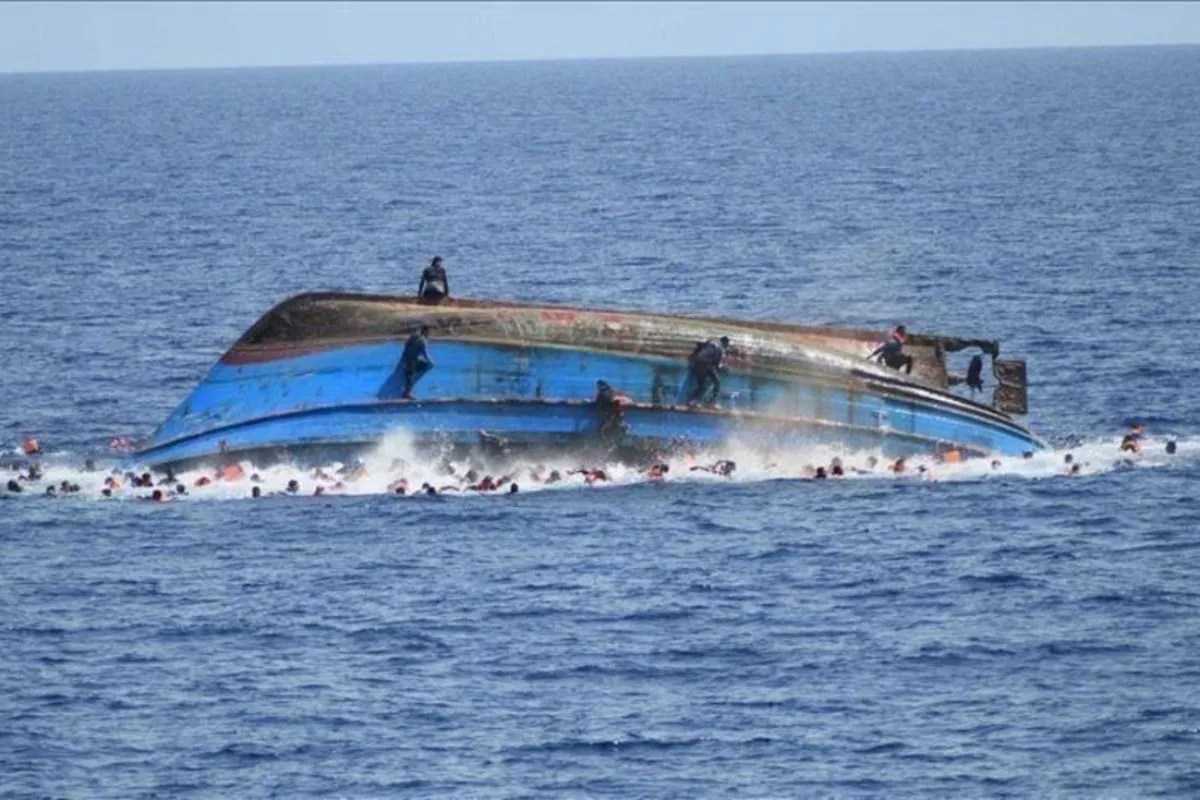
Transatlantic maritime migration along the West African corridor operates on a predictable mathematical failure curve, where vessel displacement limits, prolonged exposure windows, and logistical vacuum states predictably culminate in high-mortality outcomes. The recent interception of a drifting vessel 120 kilometers south of Gran Canaria, carrying an initial complement of 128 individuals from Gambia after 26 days at sea, provides a clear diagnostic of systemic maritime breakdown. With only 45 survivors recovered alongside five on-board corpses, the presumptive loss of over 80 lives exposes the structural mechanics governing modern maritime tragedies.
The Mechanics of Drift and Displacement
The West African migration route to the Canary Islands represents one of the longest and most hazardous maritime corridors globally. Vessels utilized in these operations are typically open wooden pirogues unsuited for open-ocean transit. When loaded beyond structural capacity with upwards of 120 passengers, the freeboard—the distance between the waterline and the top of the gunwale—is reduced to dangerously narrow margins.
This compromises stability and increases vulnerability to beam seas and high-velocity winds. Once a vessel suffers engine failure or structural compromise, it enters a ballistic drift pattern dictated by the Canary Current. Operating within a 26-day drift window implies total loss of propulsion and navigation capability early in the voyage.
The operational timeline degrades predictably through three distinct phases:
- Resource Depletion: Potable water and caloric reserves are exhausted within the initial 96 to 120 hours under high ambient temperatures.
- Physiological Collapse: Severe dehydration induces acute renal failure, delirium, and electrolyte imbalances, driving survivors to ingest seawater, which accelerates neurological and organ failure.
- Structural Abandonment: As fatalities mount, surviving occupants initially practice burial-at-sea protocols until cumulative physical exhaustion eliminates their capacity to handle corpses, leaving bodies to decompose within the confined hull space.
Interception Latency and Response Friction
Search and rescue operations in the Atlantic corridor face massive geographical constraints. Spanish maritime rescue authorities (Salvamento Marítimo) operate under vast jurisdictional boundaries spanning thousands of square kilometers of open ocean. The detection latency—the time elapsed between a vessel becoming overdue and its actual identification via maritime patrol aircraft or commercial shipping sightings—is the single greatest variable determining survival rates.
In this instance, the vessel traversed approximately 1,200 to 1,500 kilometers from its departure point in Gambia over nearly four weeks before being intercepted. The operational friction is compounded by environmental variables. Wave heights averaging 2.5 meters and persistent winds restrict the deployment of secondary rescue craft, forcing reliance on heavy helicopter airlifts and specialized surface vessels. Consequently, even when rescue assets arrive, environmental hostility prevents the immediate recovery of all remains, leaving bodies on adrift hulks and fragmenting the extraction process.
The Economic and Geopolitical Cost Function
The persistence of the Canary route is maintained by an inelastic demand curve driven by regional economic disparity, political instability in source nations such as Gambia, Mali, and Senegal, and the low relative cost of transit compared to legal visa acquisition channels. Smuggling syndicates operate on high-volume, low-cost delivery models, utilizing disposable wooden watercraft that require minimal capital expenditure.
When border enforcement hardens along Mediterranean pathways, displacement effects force traffic toward the Atlantic vector. This substitution effect increases total risk exposure, as the Atlantic presents harsher meteorological conditions, colder nighttime temperatures, and greater open-water distances than interior sea passages. The economic penalty for interception is absorbed entirely by the migrant demographic, while syndicates retain capital upstream.
Regional governance frameworks in the Canary Islands face persistent strain as reception infrastructure is overwhelmed by surge events. Local authorities operate in a reactive posture, where processing ports such as Arguineguín function as triage centers rather than permanent migration management hubs. The structural mismatch between regional reception capacity and macro-level migration pressures guarantees that maritime corridors will continue to test the limits of humanitarian response mechanisms.
Deploy coordinated regional radar surveillance along the entire Northwest African coastline to intercept unseaworthy vessels within the first 48 hours of departure, thereby shifting the rescue perimeter away from mid-Atlantic deep waters and neutralizing the catastrophic drift phase.