Shadow on the Sand
A quiet room in Riyadh smells faintly of black coffee and polished mahogany. Outside, the midday heat bakes the concrete, but inside, the air conditioning hums at a clinical temperature. Maps lie flat on the table. Red lines trace maritime trade routes through the Strait of Hormuz. Green dots mark enrichment facilities deep underground across the Persian Gulf.
Power does not always announce itself with the roar of artillery. Sometimes, it arrives as a signed piece of paper between two governments trying to outmaneuver a shared threat.
For months, diplomatic channels between Washington and Riyadh have burned hot. The proposition on the table sounds deceptively clean: the United States assists Saudi Arabia in developing a civil nuclear energy program, and in exchange, the kingdom aligns its security trajectory firmly with the West. But nothing about nuclear technology is ever simple. The atoms that boil water to turn a turbine are the exact same atoms that can flatten a city.
The backdrop to this high-stakes negotiation is not a sudden desire for green energy. It is fear.
Centrifuges in Iran continue to spin, refining uranium to levels that leave Western intelligence agencies staring at their monitors with white knuckles. Tehran’s nuclear ambitions have shifted from a distant anxiety to an immediate math problem. How many days until breakout capability? How many weeks until a warhead is assembled?
When your rival across the water builds a hammer, you do not sit quietly in the sand. You look for a shield. Or a hammer of your own.
The Price of Light
Consider a power grid. It is the invisible nervous system of modern civilization. When you flip a switch, you do not think about the gas turbines spinning miles away, nor do you consider the geopolitical debt required to keep those turbines fed.
Saudi Arabia sits atop a vast sea of crude oil. Yet, burning liquid gold to power air conditioners in August is bad economics. The Saudis know the oil age will eventually draw to a close. They want nuclear reactors to handle their domestic electricity demands so they can export their petroleum assets for maximum value while they still can.
That is the economic rationale. It makes sense on a ledger.
The strategic reality, however, is far more jagged.
Building a nuclear reactor requires enriched uranium fuel. If a nation imports that fuel pre-packaged from abroad, its program remains strictly civilian. But if that nation demands the infrastructure to enrich its own uranium on its own soil, the boundary between domestic power generation and weapons development becomes dangerously thin.
Washington finds itself caught in a historic vice. Refuse the deal, and Saudi Arabia might turn toward Beijing or Moscow for nuclear technology, effectively severing decades of American influence in the Middle East. Grant the request without strict safeguards, and you risk triggering a regional nuclear arms race that no diplomat can contain.
Silence is not an option. Neutrality is a fantasy.
The Echo Chamber of History
We have walked this tightrope before.
Decades ago, when the global order recalibrated after mid-century conflicts, non-proliferation treaties were signed with solemn promises. The deal was simple: share peaceful atomic technology in exchange for ironclad guarantees that no weapons would ever be built.
Yet, treaties are written on paper; regional rivalries are written in blood.
When intelligence reports filter into the Oval Office, they do not just contain technical specifications. They contain human variables. They detail the temperaments of foreign ministers, the internal economic pressures on oil-dependent states, and the raw panic of defense planners who realize their air defense systems might soon be obsolete.
The tension between Washington, Riyadh, and Tehran is not a game of chess. Chess has rules. Chess has alternating turns.
This is more like three people standing in a dark room, each holding a flare, each terrified that someone else is about to drop theirs into a keg of gunpowder.
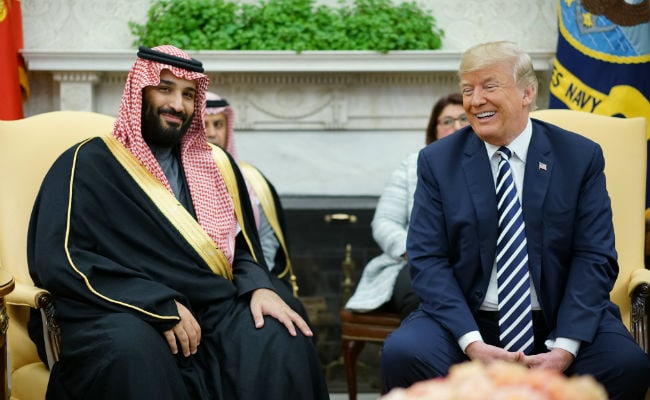
If Washington secures this agreement, it binds Saudi Arabia to American regulatory oversight, American inspectors, and American military hardware for generations. It creates a structural dependency that keeps the kingdom anchored to Western security architecture. But the cost of that anchor is hand-delivering the keys to atomic energy to a sovereign state in one of the most volatile regions on Earth.
The Crucible
Look past the press briefings. Ignore the sterile language of official joint communiqués.
The real story lives in the sheer friction of the moment. It lives in the calculation of a strategic balance that has kept a fragile peace for half a century, now tested by new leaders, new technologies, and old hatreds.
If Iran achieves nuclear capability without a counterweight, the regional balance breaks overnight. Deterrence fails. Smaller nations begin seeking their own guarantees, pulling the thread until the entire security blanket unravels.
If the United States provides that counterweight through a civilian nuclear pact, it resets the board. It signals to adversaries that the American security umbrella in the Middle East is not folding up and going home. It tells allies that Washington is willing to make heavy, uncomfortable investments to maintain the status quo.
Every choice carries a penalty. Every policy option is a different flavor of risk.
The ink on draft agreements dries quickly, but the consequences of nuclear diplomacy endure for centuries. As officials prepare the final statements, the world waits to see whether this handshake brings stability to a fractured region—or merely accelerates the countdown to an unraveling no one can stop.


