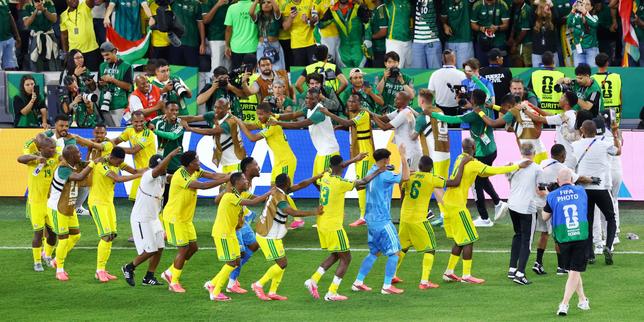
Belief is cheap, but international soccer trophies are notoriously expensive. When U.S. Soccer hired Mauricio Pochettino, the mandate was stripped of typical federation corporate speak. He was brought in to convince a generation of talented but historically underachieving American players that they could genuinely win the World Cup. The superficial media narrative suggests that a few charismatic speeches and a high-pressing system have magically transformed the United States Men’s National Team into global heavyweights. The truth is far more complicated, gritty, and dangerously fragile.
Pochettino did not inherit a broken squad; he inherited a comfortable one. For years, the American soccer establishment patted itself on the back for exporting players to Europe's top leagues. We saw Christian Pulisic at AC Milan, Weston McKennie at Juventus, and Antonee Robinson tearing up the Premier League. Yet, when wearing the national team jersey, this golden generation routinely choked against elite opposition. They played with the safety net of a federation that celebrated making the knockout rounds as a triumph. Pochettino's arrival shattered that complacency, forcing a cultural reckoning that has less to do with tactical formations and everything to do with psychological warfare.
The Illusion of Progress and the Reality of Comfort
To understand why Pochettino's psychological approach was necessary, one must look at the culture he was tasked with dismantling. American soccer has long suffered from an exceptionalism complex. The federation built a media apparatus designed to hype young prospects before they achieved anything substantial on the international stage.
Players were treated like rock stars for simply securing a spot on a European bench. This created a bubble of safety. In contrast, South American and European players face cutthroat pressure every single day. If a player in Buenos Aires or London has a bad week, there is an hungry teenager waiting to take his job and his livelihood. In the U.S. system, the core roster felt untouchable.
Pochettino immediately targeted this lack of urgency. His early training camps were described by insiders not as tactical masterclasses, but as physical and mental endurance tests. He deliberately created friction. He challenged established starters in front of the group, demanding to know why their club form rarely translated to dominant national team performances. He stopped tracking progress by how many players were in Europe and started tracking how many were actually imposing their will on the game.
The initial shock to the system was visible. Some players recoiled from the intense scrutiny, while others thrived. This friction was the point. You cannot build a World Cup contender out of players who expect to be praised for merely showing up.
The Tactical Blueprint That Replaced the Hype
The previous coaching regime relied heavily on rigid, possession-based systems that looked pretty against weaker regional opponents but collapsed under high-level pressure. Pochettino threw that playbook away. He instituted a pragmatic, aggressive style designed to exploit the physical traits of the American athlete while masking their technical deficiencies.
Instead of trying to out-pass teams like Spain or France, the U.S. now focuses on verticality and structural suffocating. The tactical layout relies on three core tenets.
- Aggressive Midfield Traps: Forcing turnovers in the middle third rather than dropping deep into a low defensive block.
- Asymmetrical Fullback Displacements: Allowing left-back Antonee Robinson to act as an outright winger while the right-back tucks in to form a back three during possession.
- Decoupled Attacking Free-Roles: Giving Christian Pulisic the license to abandon his flank and operate in the half-spaces where he can cause maximal chaos.
This is not revolutionary soccer, but it is highly effective soccer for this specific roster. By shrinking the pitch and turning matches into physical duels, the U.S. neutralizes the superior technical skill of elite opponents. It is an exhausting way to play. It requires flawless conditioning and a collective willingness to suffer on the pitch for ninety minutes.
The Institutional Failure Pochettino Cannot Fix
While the senior national team looks sharper, Pochettino’s elite mentality exposes a massive structural deficit beneath his feet. A national team manager is ultimately a chef who must cook with the ingredients provided to him. The ingredients in America are still being produced by a broken, elitist system.
The United States remains the only major soccer nation where talent identification is dictated by wealth. The pay-to-play model ensures that the best athletes from working-class backgrounds are systematically priced out of elite youth academies. While Major League Soccer has made strides with its homegrown player initiatives, the scouting networks are still blind to vast swaths of the country.
Consider a hypothetical example of a scout looking for a central midfielder. In France or Brazil, scouts scour the public concrete pitches and local community clubs, identifying raw instinct and technical fluidity. In America, that same scout is often standing at a suburban complex where parents have paid thousands of dollars for their children to play in showcase tournaments. This system produces disciplined, athletic, and coachable players. It rarely produces creative geniuses or ruthless winners.
Pochettino can maximize the psychological output of the current twenty-six-man roster, but he cannot fix the fact that the U.S. is still failing to develop elite creative midfielders who can dictate the tempo of a match against a world-class press. When the U.S. faces a team that refuses to turn the ball over, the lack of a true orchestrator becomes glaringly obvious.
Managing the Pressure of the Home Soil
The true test of Pochettino's psychological experiment is unfolding right now under the suffocating weight of playing a World Cup on home soil. Historically, hosting a World Cup is a double-edged sword. It can propel a team on a wave of national euphoria, or it can paralyze them with anxiety.
The pressure on this specific group of American players is unprecedented. They are not just fighting for a trophy; they are being asked to validate decades of financial investment and mainstream sports media attention. If they exit early, the sport risks slipping back into the margins of the American consciousness. If they make a deep run, they cement soccer as a premier cultural force in the country.
Pochettino has spent his entire career in high-pressure environments, from the volatile boardrooms of Paris Saint-Germain to the intense spotlight of Tottenham Hotspur. He understands that media management is just as important as player management during a tournament. He has systematically absorbed the pressure, acting as a lightning rod for criticism to keep his players insulated.
He has banned external distractions from the team hotel, limited corporate sponsor appearances during camp, and demanded that the players treat the tournament not as a celebration of American soccer, but as a business trip.
The Fine Line Between Belief and Reality
There is a distinct difference between believing you can win and possessing the tools to make it happen. Pochettino has successfully injected the former into the squad. The players no longer take the pitch looking like starstruck fans exchanging jerseys after the match. They look like hunters.
But belief does not stop a world-class striker from exploiting a missed defensive assignment. It does not magically grant a center-back the recovery speed to catch a breaking forward. The U.S. remains vulnerable on set pieces and still struggles to break down disciplined low blocks. If an opponent scores first and forces the U.S. to chase the game, the tactical deficiencies become apparent.
The success of this era will not be measured by moral victories or competitive losses to traditional powerhouses. The metric is now binary. Pochettino has raised the stakes so high that anything short of an historic quarterfinal or semifinal appearance must be viewed as a failure of execution. He taught them how to look the world's best in the eye without blinking. Now, they actually have to win the fight.