You've probably heard that nature is fragile. We are constantly told that when humans break an ecosystem, it stays broken. But Australian platypuses prove that narrative wrong in the most stubborn, fascinating way possible.
Severe droughts push semi-aquatic mammals to the absolute brink. Waterways dry up into cracked mud. Food sources vanish. When wildlife managers step in to rescue stranded platypuses from vanishing pools, the standard worry is simple: will these traumatized animals ever adjust back to the wild? Can they find their way home after months in human care?
As it turns out, we seriously underestimate them.
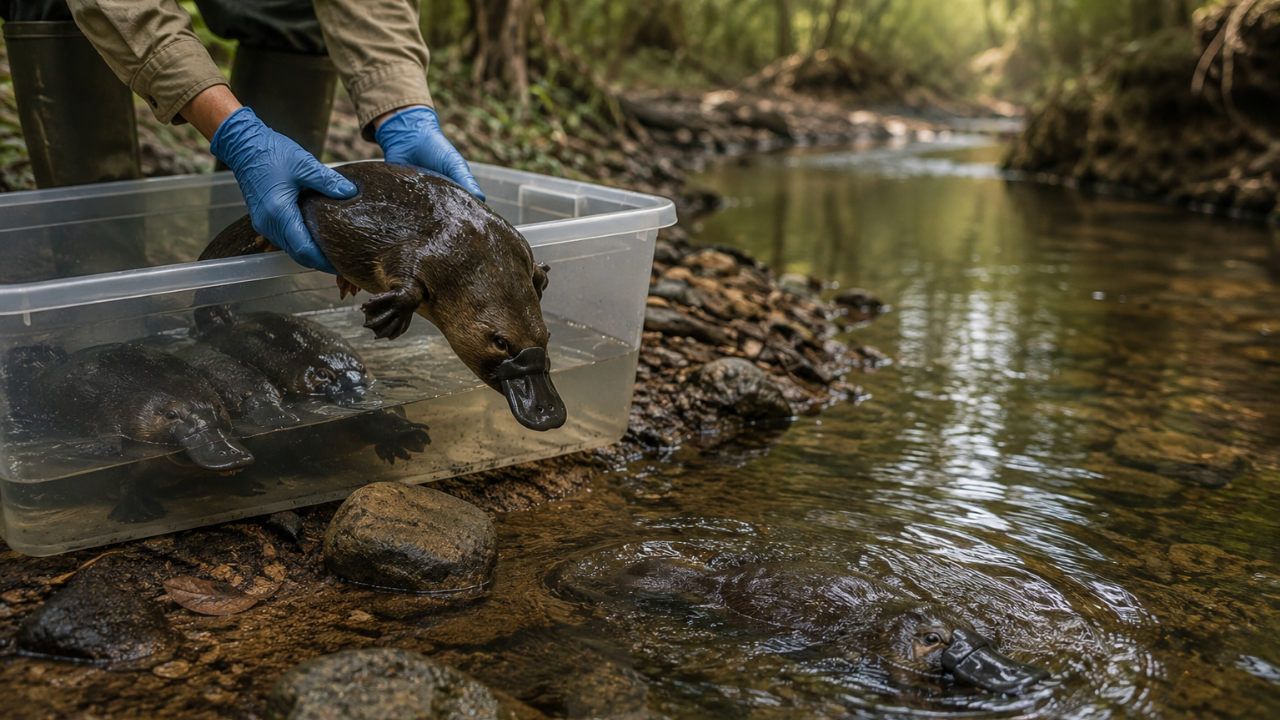
Research tracking displaced platypuses tells an incredible story of resilience. Once returned to their home waters following rainfall, these unusual monotremes don't wander aimlessly. They immediately reclaim their territories, re-establish familiar burrows, and pick up their old routines as if they never left.
Let's look at what actually happens when survival instincts kick in.
The Harsh Reality of Drought and Habitat Loss
Water defines the platypus. They need permanent freshwater streams, deep pools, and soft earthen banks to dig spiral burrows. When climate extremes hit eastern Australia, these vital systems fragment.
During prolonged dry spells, rivers shrink to isolated puddles. Platypuses crowd together in diminishing moisture. Food—consisting of benthic macroinvertebrates, freshwater shrimp, and insect larvae—plummets. Stress levels skyrocket. Cannibalism and starvation become genuine threats.
Wildlife rescue teams operating across New South Wales and Victoria face terrible choices during these peaks. Do they leave animals to nature, risking local extinction in specific river zones? Or do they intervene, capturing stressed individuals and placing them in temporary captivity?
Intervention saves lives, but it creates a massive logistical puzzle. Holding a wild platypus requires specialized facilities, live food supplies, and strict quarantine protocols to avoid disease transmission. More importantly, it creates a psychological shift for the animal. They experience human handling, artificial diets, and confined spaces.
Skeptics always argued that captive care ruins a platypus's wild instincts. They assumed rehabilitation makes them too tame, too disoriented, or too weak to handle real rivers again.
They were wrong.
What Happens When They Go Back
When drought breaks and water levels rise, the hard work begins. Researchers fit rescued platypuses with acoustic tags or tiny passive integrated transponder chips before release. They monitor movements closely to see where the animals go.
The results shatter expectations.
Platypuses don't panic upon release. They navigate straight to familiar river segments, often covering kilometers in days to find their historical home ranges. They utilize scent-marking, electroreception, and spatial memory to map out changes in the riverbed.
Within days of returning to the wild, a rescued platypus will:
- Locate old burrow entrances or quickly excavate new, structurally sound tunnels.
- Resume nocturnal foraging habits, hunting tirelessly in muddy bottoms.
- Reconnect with overlapping territory boundaries of neighboring platypuses.
- Put on weight rapidly as natural food sources bounce back with the floods.
This rapid recovery highlights an evolutionary toughness forged over millions of years. These animals belong to an ancient lineage that survived major climatic shifts long before European settlement or modern water extraction.
The Hidden Challenges of River Restoration
Returning platypuses to the wild isn't just about opening a transport box near a river. Success depends entirely on habitat quality post-drought.
If riparian zones remain chewed up by livestock or choked by invasive weeds, a returned platypus faces an uphill battle. Conservationists must restore riverbanks by planting native trees like river red gums, fencing off stock access points, and maintaining ecological flow rules in agricultural dams.
If you want to support wild platypus populations in your area, or if you live near Australian catchments, you can take direct action. Report sightings to citizen science projects like the PlatypusSPOT app. Keep domestic dogs on leashes near creeks. Never use illegal yabby traps, which act as death traps for curious diving mammals trying to snatch trapped crustaceans.
Platypuses are notoriously difficult to study in the wild because they are shy, venomous, nocturnal, and live in murky water. Every piece of telemetry data collected during drought recovery operations offers a rare window into their private lives.
They don't need our pity. They need clean water, connected river networks, and enough space to do what they have always done.
The next time you hear about a species struggling against climate extremes, remember the platypus. Give them back their water, step out of the way, and watch them rebuild.