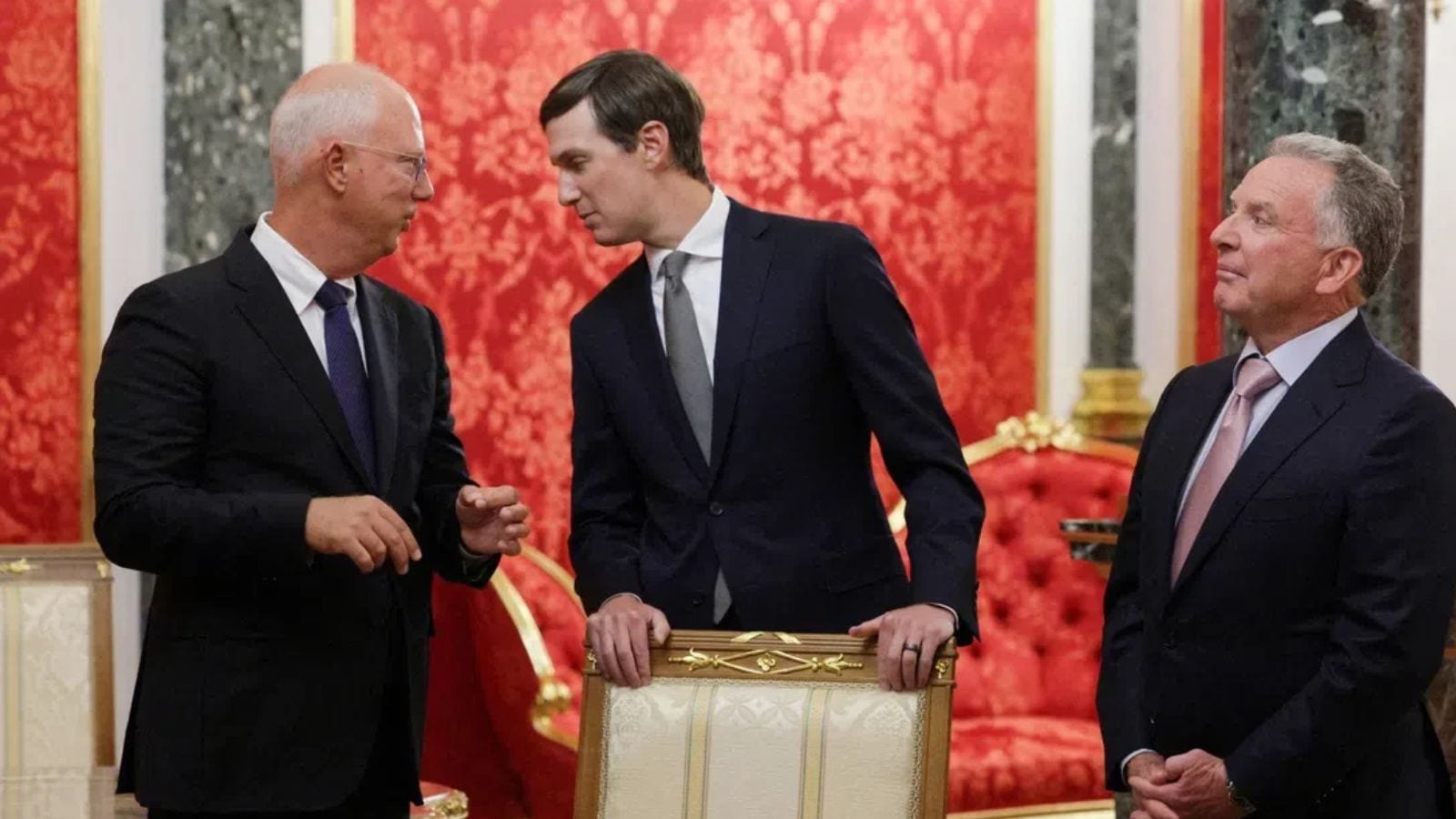
State-affiliated Russian media reports indicating that United States envoys Steve Witkoff and Jared Kushner may travel to Moscow represent a deliberate shift from institutional diplomacy to transactional backchannel negotiation. Standard coverage treats a TASS dispatch as a simple scheduling rumor, missing the structural mechanics of how Russian state media functions as an information-shaping tool and how informal envoys bypass traditional statecraft bottlenecks. Understanding this development requires separating verified diplomatic patterns from Kremlin signaling operations, mapping the incentives of both delegations, and evaluating the systemic risks of personalist negotiation in high-stakes geopolitical conflicts.
The Information Signaling Architecture of TASS
When TASS, the primary Russian state news agency, publishes an unconfirmed report regarding potential visits by high-profile American figures, the text does not operate as independent journalism. It functions as an asymmetric diplomatic instrument. In the Russian media ecosystem, state wire services are integrated into the foreign policy apparatus of the Kremlin and the Ministry of Foreign Affairs.
This mechanism serves three distinct operational purposes:
- Expectation Anchoring: By floating the possibility of a visit by Steve Witkoff and Jared Kushner before Washington issues an official confirmation, Moscow frames the narrative. If the visit occurs, Russia appears to be the receptive host dictating the tempo of engagement. If the visit is canceled or denied, the Kremlin can frame Washington as erratic or internally divided.
- Allied Friction Generation: Releasing reports of bilateral US-Russia contact without prior multilateral consultation forces European allies and Ukrainian leadership into a reactive posture. The immediate second-order effect is diplomatic friction within NATO and the European Union, as allied capitals must expend political capital verifying whether Washington is negotiating over their heads.
- Domestic Legitimacy Maintenance: Within the Russian domestic information space, reports of senior American envoys traveling to Moscow counter the narrative of international isolation. They signal to domestic elites and the broader public that Western powers must eventually engage Moscow directly on Russian terms.
Evaluating a TASS report therefore requires treating the publication itself as a strategic move rather than a neutral observation. The factual baseline remains strictly bounded: TASS has circulated the claim of a potential visit, while operational confirmation depends entirely on official manifests, flight tracking data, or direct statements from the White House and the State Department.
Institutional Diplomacy Versus Personalist Backchannels
The pairing of Steve Witkoff and Jared Kushner exemplifies a specific model of statecraft: the personalist backchannel. Traditional diplomacy relies on the Department of State, the National Security Council, and career foreign service officers. That institutional model prioritizes procedural continuity, interagency vetting, alliance coordination, and strict adherence to established legal and policy frameworks.
Personalist envoys operate outside these constraints. Their authority derives not from statutory office or bureaucratic rank, but from direct, unfiltered proximity to the executive principal. This structural difference alters the mechanics of negotiation across four dimensions.
First, speed of iteration increases dramatically. Career diplomats must clear talking points through multiple bureaucratic layers, each acting as a veto point to protect institutional interests or allied sensitivities. Informal envoys can test radical policy proposals, territorial compromises, or sanctions-relief architectures in real time without generating an immediate paper trail inside the federal bureaucracy.
Second, principal-agent alignment is absolute. In traditional diplomacy, foreign counterparts often question whether a career envoy truly speaks for the president or merely represents the consensus of the foreign policy establishment. When figures like Witkoff or Kushner enter a room, the interlocutor knows the message carries direct executive weight. In Moscow, where power is heavily centralized around Vladimir Putin, Russian negotiators strongly prefer dealing with actors who possess direct access to the American executive over career officials bound by bureaucratic mandates.
Third, transaction cost reduction occurs through the removal of ideological framing. Both Witkoff and Kushner come from commercial real estate and private equity backgrounds rather than diplomatic corps or academic think tanks. Their operational framework treats geopolitical disputes as complex distressed-asset workouts. Instead of viewing territorial sovereignty or security architectures through the lens of international law and historical grievance, a commercial dealmaker isolates the core variables: leverage, liquidity, asset valuation, exit costs, and enforceable guarantees.
Fourth, institutional memory loss becomes an acute vulnerability. Because backchannel meetings frequently exclude note-takers from the State Department or intelligence community, the resulting agreements can suffer from constructive ambiguity that later collapses during implementation. When terms are not rigorously codified by legal and regional specialists, both sides often exit the room with incompatible interpretations of what was agreed upon.
The Operational Profiles of the Envoys
To map the likely agenda of a Moscow visit, one must analyze the specific functional roles that Steve Witkoff and Jared Kushner occupy within this diplomatic architecture. They are not interchangeable; they represent distinct operational capabilities.
Steve Witkoff as the Tactical Deal-Closer
Steve Witkoff’s trajectory from a New York real estate developer to a high-stakes diplomatic troubleshooter illustrates the transfer of commercial crisis management into foreign policy. In complex real estate restructuring, success depends on identifying the exact pain points of creditors and debtors, isolating the blocking minority, and structuring a bridge financing mechanism that allows all parties to avoid catastrophic default.
Applied to geopolitical conflict—specifically the war in Ukraine and broader US-Russia strategic stability—Witkoff’s functional role is tactical de-escalation and ceasefire structuring. His approach centers on identifying immediate, tangible concessions that can freeze kinetic hostilities. This involves decoupling complex, long-term political settlements from immediate operational pauses, such as energy infrastructure ceasefires, prisoner exchanges, or maritime transit agreements in the Black Sea.
Jared Kushner as the Strategic Architect
Jared Kushner brings prior statecraft execution, most notably the architecture of the Abraham Accords and the renegotiation of the North American Free Trade Agreement into the USMCA. Kushner’s operational methodology relies on bypassing entrenched diplomatic orthodoxies by linking seemingly unrelated regional and economic incentives into a single multilateral package.
In the context of Moscow, Kushner’s presence signals that discussions extend beyond a localized ceasefire in Eastern Europe. His portfolio typically involves macro-level alignment: connecting European security arrangements to Middle Eastern dynamics (specifically Russian coordination with Iran and Syria), global energy market stabilization, and long-term economic normalization frameworks. Where Witkoff focuses on the immediate mechanics of a truce, Kushner’s presence indicates an effort to construct a broader geopolitical grand bargain that alters the regional balance of power.
The Cost Function of Moscow’s Negotiating Position
Any direct engagement in Moscow confronts a rigid set of Russian strategic objectives. A common analytical failure in Western commentary is assuming that economic sanctions or battlefield attrition have forced the Kremlin into a posture of desperation. In reality, Moscow operates according to a distinct cost function where regime security and buffer-zone dominance outweigh macroeconomic efficiency.
Russian negotiators evaluate any American proposal against three non-negotiable parameters:
- Territorial and Security Guarantees: Moscow demands formal or de facto recognition of its territorial acquisitions in Ukraine alongside binding mechanisms that prevent Ukrainian integration into NATO. A simple freeze along current lines of contact without political concessions is viewed by the Kremlin not as a resolution, but as an operational pause that allows Western militaries to rearm Kyiv.
- Sanctions Architecture Dismantlement: Russian economic elites face severe structural friction from secondary sanctions, payment system exclusions (such as SWIFT restrictions), and sovereign asset freezes. Moscow will seek targeted relief—specifically regarding financial clearing mechanisms, energy export logistics, and frozen central bank reserves—as a prerequisite for any sustained diplomatic track.
- Strategic Parity Recognition: The Kremlin’s overarching goal is the restoration of great-power bilateralism, where Washington and Moscow negotiate the rules of European security directly, relegating European states to secondary participants.
The friction point between the American envoys and the Russian leadership lies in the sequencing of these deliverables. A transactional American framework typically demands verifiable Russian concessions on the ground before dismantling sanctions or offering security guarantees. Conversely, Moscow’s negotiating doctrine demands upfront structural concessions from Washington before halting military operations, operating on the premise that giving up battlefield momentum forfeits their primary source of leverage.
Second-Order Effects on Multilateral Alliances
The mechanics of a bilateral Witkoff-Kushner mission generate immediate ripple effects across the broader international system. Diplomacy does not occur in a vacuum; shifting resources and attention to a Moscow backchannel alters the incentive structures of every allied capital.
In Kyiv, the prospect of American envoys negotiating directly with the Kremlin without Ukrainian representation triggers an acute security dilemma. If Ukrainian leadership perceives that Washington is preparing to trade territorial concessions for a rapid ceasefire, Kyiv faces pressure either to harden its military posture to establish irreversible facts on the ground, or to seek alternative security guarantees from European powers.
In Brussels, Berlin, and Paris, a unilateral US diplomatic track exposes the structural dependency of European security on American decision-making. European governments have borne the primary economic cost of decoupling from Russian energy and funding Ukrainian budgetary survival. A backchannel deal that lifts US sanctions while leaving European sanctions intact would create an unsustainable divergence in transatlantic trade and compliance regimes. European capitals would face the binary choice of capitulating to a Washington-brokered settlement they did not shape, or maintaining a unilateral containment policy against Russia without American backing.
Furthermore, Beijing monitors these interactions closely. China’s strategic partnership with Russia relies on Moscow remaining locked in systemic confrontation with the West, which keeps American military and diplomatic bandwidth tied down in Europe. A successful US-Russia rapprochement, even a limited transactional truce, threatens to disrupt Beijing’s strategic calculus by freeing American resources for the Indo-Pacific theater and potentially driving a wedge between Moscow and Beijing.
Systemic Risks and Execution Failures
While personalist backchannels offer speed and flexibility, history demonstrates that they carry severe operational hazards when deployed against seasoned authoritarian bureaucracies.
The first risk is asymmetric preparation. Russian diplomatic teams—led by figures such as Sergey Lavrov, Yuri Ushakov, or Kirill Dmitriev—possess decades of institutional memory regarding arms control treaties, European security agreements, and specific territorial disputes. When commercial dealmakers enter these negotiations without deep technical backing from regional experts, they risk overlooking subtle linguistic or legal traps embedded in Russian counter-proposals. A concession that appears minor in a broad commercial framework—such as specific wording regarding "neutrality" or "demilitarization"—can carry devastating military consequences during implementation.
The second risk is verification and enforcement deficits. Commercial real estate deals are backstopped by domestic court systems, escrow accounts, and clear title laws. International agreements between nuclear-armed adversaries lack an external enforcement authority. Without rigorous, intrusive verification protocols—typically drafted by defense and intelligence specialists—a ceasefire brokered on personal trust or mutual economic interest will collapse at the first tactical violation along a thousand-kilometer front line.
The third risk is leverage erosion through premature signaling. Simply sending high-level envoys to Moscow confers a diplomatic victory on the Kremlin before a single concession is extracted. If the envoys arrive in Russia without a unified, credible threat of escalated military or economic pressure in the event of failure, Moscow has zero incentive to compromise. Instead, the Kremlin can string out the negotiations, using the ongoing talks to delay Western military aid deliveries while continuing offensive operations.
Strategic Execution Framework
To convert a high-risk backchannel visit into a durable strategic outcome rather than a propaganda victory for Moscow, the American delegation must execute a disciplined operational sequence:
- Establish Pre-Visit Information Control: Neutralize Russian state media framing by coordinating immediate, synchronized briefings with key European allies and Kyiv prior to any public announcement or departure. Eliminate the element of surprise among allies to prevent Moscow from exploiting transatlantic divisions.
- Enforce Strict Sequencing Mechanics: Reject any Russian demand for upfront sanctions relief or binding political concessions. Structure all proposals around conditional, reversible phases where economic or diplomatic incentives are unlocked strictly upon verifiable, satellite-confirmed military actions on the ground.
- Integrate Technical Backstops: Pair the personalist authority of the envoys with a tightly compartmentalized team of technical specialists from the Pentagon and Treasury Department. Ensure that any conceptual breakthrough is immediately translated into legally airtight verification protocols before the delegation departs Moscow.
- Maintain Escalatory Leverage: Anchor the entire negotiation to a credible baseline of sustained pressure. The delegation must communicate clearly that failure to reach a verifiable agreement within a defined timeframe will trigger an automatic escalation in secondary sanctions enforcement and long-range military capabilities for Ukraine.
Without strict adherence to conditional sequencing and technical verification, a Witkoff-Kushner mission to Moscow risks trading permanent strategic leverage for temporary, unenforceable diplomatic optics.


