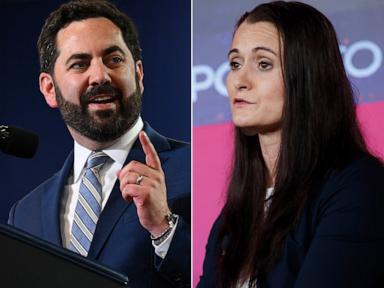
The coffee at the diner on Main Street is always lukewarm, but the people pouring it are wide awake. Outside, the morning air carries the sharp chill of late autumn, and frost clings to the edges of campaign signs jammed into patchy lawns. Every lawn is a territory marker. Every sign is a declaration of war.
We tend to talk about congressional elections as abstract blocks of color on a nighttime television map. Red states, blue states, sweeping tides, and massive mandates. But power does not live in television studios or Washington committee rooms. Power lives on linoleum kitchen floors where neighbors argue over property taxes, healthcare costs, and the price of a gallon of milk.
Consider a district where the margin of victory is smaller than the seating capacity of a local high school gymnasium.
In places like this, a single congressional race becomes a microcosm of a deeply divided nation. It is a crucible. Walk down any suburban street in these contested zip codes, and you can feel the tension hanging in the air like humidity before a summer storm. Mailboxes overflow with glossy flyers financed by millions of dollars from distant political action committees. Television screens flash with aggressive advertisements accusing candidates of everything short of treason.
Yet, beneath the national noise, something much more human is happening.
A volunteer named Maria stands on a concrete porch, taking a breath before she knocks. Her clipboard is heavy with voter registration lists, but her boots are heavier with fatigue. She has walked six miles today. Her calves burn. She knows what is waiting behind that wooden door because she has heard it a hundred times already. Fatigue. Cynicism. Anger.
When the door opens, a middle-aged man looks out at her with guarded eyes. He is wearing a faded sweatshirt, holding a mug of coffee, looking like a man who has worked a double shift and just wants quiet.
"I'm voting for the other guy," he says before she can even introduce herself. It is not an invitation to chat. It is a shield.
Maria does not launch into a scripted talking point. She does not recite talking points about inflation rates or legislative majorities. Instead, she nods. She understands that shield because she wears one too.
"I get it," Maria says, her voice softening. "Honestly, I'm exhausted too. But my daughter's insulin copay went up again last month, and I need to know someone in Washington actually gives a damn."
Silence. The man looks at her clipboard, then down at her worn sneakers. The invisible wall between them cracks just a fraction. They do not agree on politics. They might never agree. But for thirty seconds, they are two people trying to figure out how to afford living in the same zip code.
This is what a swing district looks like on the ground. It is not a battle of ideologies; it is a battle of empathy.
When historians write about the shifts in congressional control, they look at precinct data, turnout models, and demographic changes. They talk about suburban shifts and working-class realignments as if voters were chess pieces sliding across a board. But chess pieces do not worry about paying for childcare. Chess pieces do not lie awake at night wondering if their local hospital will keep its emergency room open next year.
The candidates running in these ultra-competitive races know this. They spend their days sprinting from factory shift changes to firehouse fundraisers, smiling until their jaws ache, shaking hands until their palms are raw. They project absolute confidence, but behind closed doors, their campaign managers stare at spreadsheets with white-knuckled dread. Every single vote is a precious grain of sand on a scale that refuses to tip.
Why does this specific district outside New York City matter so much to the entire country?
Because the majority in the House of Representatives—the fragile, bickering, powerful engine of American lawmaking—often rests on the shoulders of voters who just want a functioning pothole fixed on their street. When a district swings back and forth like a metronome, it acts as a national thermometer. It tells us where the fever is breaking, and where it is still rising.
The stakes are invisible until they are overwhelming. A single vote in committee can alter environmental regulations affecting local waterways. A single federal grant can keep a community college afloat or fund a new fleet of public buses. When voters check a box next to a name, they are not just picking a team color. They are pulling a heavy lever that ripples outward, shaping the daily reality of millions of people they will never meet.
As the sun sets over the diner on Main Street, the neon sign flickers to life, casting a pink and blue glow across the asphalt. Inside, the booth is empty now. The campaign flyers on the counter have been swept away. Tomorrow, the doorbell ringing will start all over again. The footsteps will continue, mile after weary mile, chasing a future that is still entirely unwritten.


