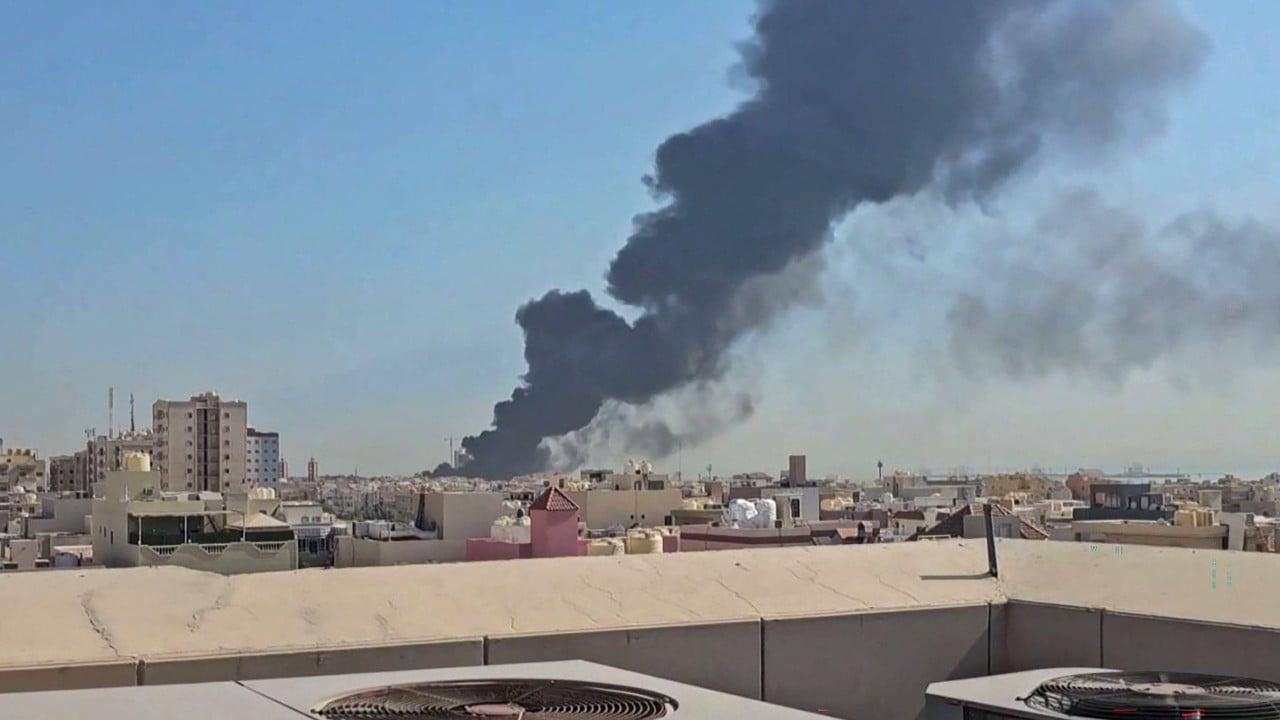
Half a year into the military escalation between Washington, Tel Aviv, and Tehran, the mainstream foreign policy establishment is running a predictable script. Analysts from Washington to Singapore are hyperventilating about Beijing's supposed diplomatic panic. The lazy consensus argues that China is caught in a trap, desperately sweating as its primary crude oil supplier burns, frantically scrambling to protect Belt and Road infrastructure, and praying for an American-led stabilization of the Gulf.
It is a comfortable narrative for Western strategists. It is also completely backwards. In similar news, we also covered: Why Every Headline About the War in Ukraine is Built on a Lie.
Beijing is not sweating. They are writing the playbook while everyone else argues over a burning building.
I have spent the better part of a decade watching foreign policy desks evaluate Asian trade corridors and energy security metrics from carpeted offices thousands of miles away. They look at a map, draw a straight line from the Strait of Hormuz to Tianjin, and assume that any disruption to Iranian oil exports is a direct dagger to the heart of the Chinese economy. They treat Beijing like a traditional superpower obsessed with policing the shipping lanes. The New York Times has also covered this fascinating topic in great detail.
That view belongs in the last century.
The Energy Myth
Let us dismantle the first core misconception: China's vulnerability to Middle Eastern chaos.
The standard line goes like this. China imports more than half of its oil, a massive chunk of it originating from the Persian Gulf. Therefore, an extended conflict involving Iran threatens to starve Chinese factories of the fuel they need to keep running.
This argument ignores how modern Chinese energy logistics actually operate. Beijing has spent the last fifteen years building the world's most sophisticated sanctions-evasion and energy-arbitrage machinery. Iranian crude does not flow through transparent, easily disrupted maritime channels on official state ledgers. It moves through a shadow fleet of darkened tankers, transshipped through Malaysian waters, rebranded as Malaysian or Omani blend, and purchased by independent refiners—the so-called teapot refineries in Shandong—at steep, heavily negotiated discounts.
When the shooting starts in the Middle East, Western sanctions enforcement tightens, and freight insurance rates spike, do you know what happens to Beijing? They gain leverage, not panic. Tehran becomes desperate to offload barrels, which means China buys its oil at a massive discount, paid for in local currency rather than petrodollars.
Imagine a scenario where the Strait of Hormuz faces persistent disruption. While European economies hyperventilate over energy shocks and inflation spikes, Chinese industrial planners absorb discounted sanctioned barrels while quietly accelerating domestic coal gasification and massive EV adoption curves that structurally reduce their long-term oil dependence. The crisis does not stress test their vulnerability; it stress tests everyone else's.
The Security Free Rider Fallacy
The second lazy trope is that China wants the United States to secure the region so Beijing can enjoy free-flowing trade without spending a yuan on naval patrols.
For decades, Washington bought into the myth that being the global policeman was a net benefit. China watched this happen and decided to let America foot the bill for regional policing while Beijing pocketed the commercial upside. But now that the bill has come due with a hot war, the conventional wisdom insists China must step into the vacuum.
Why would they?
Every aircraft carrier the Pentagon keeps parked in the Red Sea or the Persian Gulf is an aircraft carrier not positioned in the Taiwan Strait or the South China Sea. Every billion dollars the US Treasury spends on intercepting drones and missiles is fiscal bandwidth diverted away from countering Chinese technological dominance in semiconductors, artificial intelligence, and quantum computing.
From Zhongnanhai's perspective, the US-Israeli campaign against Iran is a strategic gift. It anchors the world's primary geopolitical rival in the endless, quicksand politics of the Middle East just as the technological bifurcation of the global economy reaches its climax. Beijing does not want peace in the Middle East right now. They want a controlled burn—hot enough to keep Washington permanently distracted, cool enough to avoid a global depression that hurts Chinese export demand.
The Diplomatic Smoke and Mirrors
Look at how Beijing handles its diplomacy in the region. Western media hyperventilated when Beijing brokered a normalization deal between Saudi Arabia and Iran a couple of years ago, screaming that Pax Americana was dead and China was taking over as the primary Middle Eastern hegemon.
That was performative theater.
Beijing does not want military bases stretching from Riyadh to Tehran. They do not want the burden of arbitrating sectarian blood feuds, managing proxy militias, or deciding who controls the West Bank. They want resource extraction, port access, and digital infrastructure contracts through Huawei and ZTE.
When the current war escalated, what did China actually do? They issued carefully calibrated statements calling for a ceasefire, hosted various factions for photo-op reconciliation talks that yielded zero binding security guarantees, and continued buying cheap oil. They didn't deploy peacekeepers. They didn't put skin in the game. They played the role of the impartial elder statesman while refusing to spend a single drop of blood or treasure to stop the fighting.
This is the definition of asymmetric strategy. You project influence through commerce and diplomatic neutrality while your primary adversary exhausts its military stockpiles on interceptor missiles that cost millions of dollars a pop against drones built in backyard workshops.
The Real Crossroads
So what is China's Middle East policy actually at a crossroads with? It is not about whether they can manage the current war. They are managing it just fine.
The real crossroads is how far Beijing can push its de-dollarization agenda before Washington realizes that the military theater in the Middle East is a distraction from the financial war happening underneath it. Every transaction settled in yuan for Iranian or Russian oil chips away at the plumbing of American financial hegemony. The war on Iran provides the cover for these alternative payment rails to expand rapidly under the radar of Western compliance officers.
If you are still analyzing Chinese foreign policy through the lens of a traditional superpower trying to maintain stability and protect sea lanes, you are fighting the last war. Beijing views the Middle East not as a vital strategic backyard to be governed, but as a perpetual containment field for American power.
Stop asking when China is going to step up and rescue the global order in the Gulf. They are too busy watching you pay for it.