The desert does not care about your rank, your uniform, or the medals pinned to your chest. To the vast, shimmering expanse of the Arabian Peninsula, a human being is just a whisper of warmth against an ocean of cold sand.
High above those dunes, inside the cramped cockpit of a flying machine, a pilot’s world narrows down to a few glowing dials and the rhythmic, desperate thrum of a turbine. Flight is an act of defiance. Every takeoff is a gamble against gravity; every landing, a negotiation with fate. But what happens when the machine holds together while the person inside begins to shatter? Discover more on a related topic: this related article.
Let us speak of the unseen boundary lines that map our modern world. We draw borders with ink and blood, dividing sand and sea into sovereign parcels. A citizen of India, soaring through foreign skies, lives under the invisible umbrella of international diplomacy and cross-border agreements. Yet, when a medical crisis strikes at thirty thousand feet, paper maps dissolve into irrelevance. Only pulse rates and oxygen saturation matter.
Consider the anatomy of an emergency. Additional reporting by The Washington Post explores similar views on the subject.
When a pilot experiences acute medical distress, time ceases to be a clock ticking forward. It becomes a tightening noose. Every second lost in transit, every delay spent navigating administrative labyrinths, eats away at the margin between survival and tragedy. In aviation, they talk about the golden hour. It is that fragile window where swift intervention can cheat death. When that hour ticks down in a hospital bed that lacks the specialized care required for complex trauma, the calculus changes from healing to extraction.
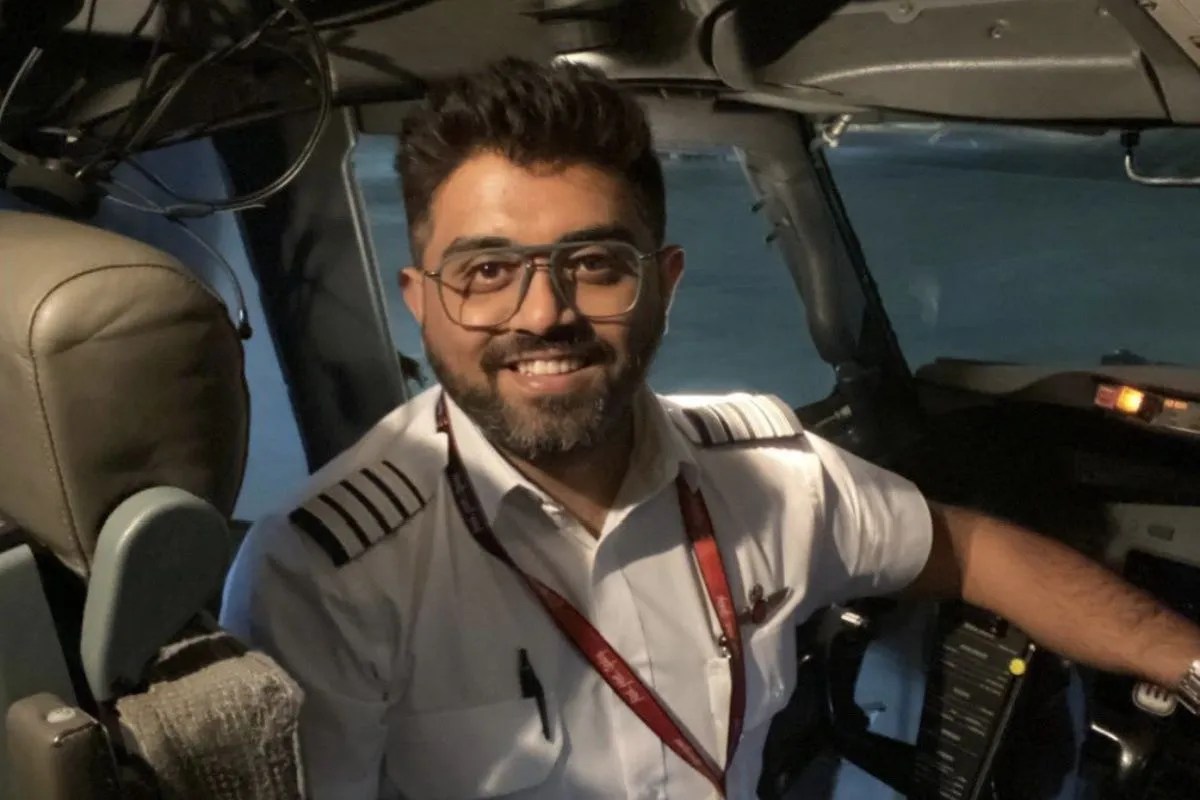
Reports emerged from the Kingdom of Saudi Arabia concerning Wing Commander Smit Machhar, widely celebrated in Indian aviation circles as a hero pilot. A man who had commanded the respect of the skies found himself grounded by an invisible adversary within his own body. Initial expectations pointed toward local medical intervention. Saudi medical facilities are among the most advanced in the region, equipped with state-of-the-art technology and elite physicians. Yet, modern medicine is not a monolith. It is a mosaic of specialized care, institutional protocols, and logistical realities.
For reasons that remain closely guarded by medical privacy and diplomatic discretion, the specialized treatment required was determined to be unavailable locally.
This is where the narrative shifts from a local health update to a masterclass in international logistics. When a patient cannot be treated where they fall, the world must be moved around them.
Imagine the coordination required to pull off a medical evacuation across international airspace. Telephones ring in midnight embassies. Flight plans are rewritten on the fly. Diplomatic clearances are negotiated in hushed, urgent tones across time zones. Ground ambulances race against sirens through congested city streets to reach tarmac edges, where waiting aircraft hum with fuel-hungry impatience. An air ambulance is not merely a plane with a stretcher; it is a flying Intensive Care Unit, pressurized against the thin, unforgiving air of the upper troposphere, packed with monitors, defibrillators, and a medical crew trained to fight death at Mach speeds.
The decision was made. No treatment in Saudi Arabia. Destination: Abu Dhabi.
Why Abu Dhabi? The United Arab Emirates has steadily positioned itself as a premier medical hub in the Middle East, boasting specialized centers of excellence capable of handling complex neurological, cardiovascular, and critical-care cases that defy standard local protocols. It is a sanctuary of advanced science set against the desert horizon.
Airlifting a critical patient across international borders is a harrowing endeavor. The patient’s body is already compromised, struggling to maintain equilibrium. The mere act of changing altitude, despite cabin pressurization, introduces variables that can trigger catastrophic shifts in blood pressure and neurological stability. The flight crew becomes an orchestra of quiet competence, monitoring every subtle fluctuation on the heart monitor while the landscape blurs invisibly beneath the belly of the jet.
We often view heroes through the lens of their triumphs. We remember the airshows, the precision maneuvers, the split-second decisions made during military exercises or high-stakes missions. We forget that beneath the fire-resistant flight suit and the calibrated helmet lies skin, bone, and a fragile, beating heart.
When a hero falls victim to biology rather than hostile fire, the public reacts with a collective intake of breath. Social media feeds light up with prayers. Hashtags trend. Millions of citizens who have never set foot in an airplane cockpit suddenly feel a fierce, protective kinship with a stranger whose name they only just learned.
This is the strange empathy of our hyper-connected age. We share the sky. We understand, on a visceral level, what it means to be far from home when the body betrays us.
The flight to Abu Dhabi was more than a medical transfer. It was a bridge built across geopolitical boundaries, a testament to the fact that when a life hangs in the balance, nations can coordinate with the precision of a Swiss watch. Bureaucracy, usually a sluggish beast, finds a way to sprint when an urgent life-saving mission knocks on its door.
As the air ambulance touched down on the tarmac in the UAE capital, doors opened to a team of waiting specialists. The patient was transitioned smoothly from the flying ICU to the stationary fortress of a modern hospital.
The desert winds outside continue to shift the dunes, indifferent to human drama, indifferent to the fragile machinery of diplomacy and medicine. But inside those sterile, bright corridors, human will pushes back against the dark.
The flight is over. The real battle for recovery has only just begun.