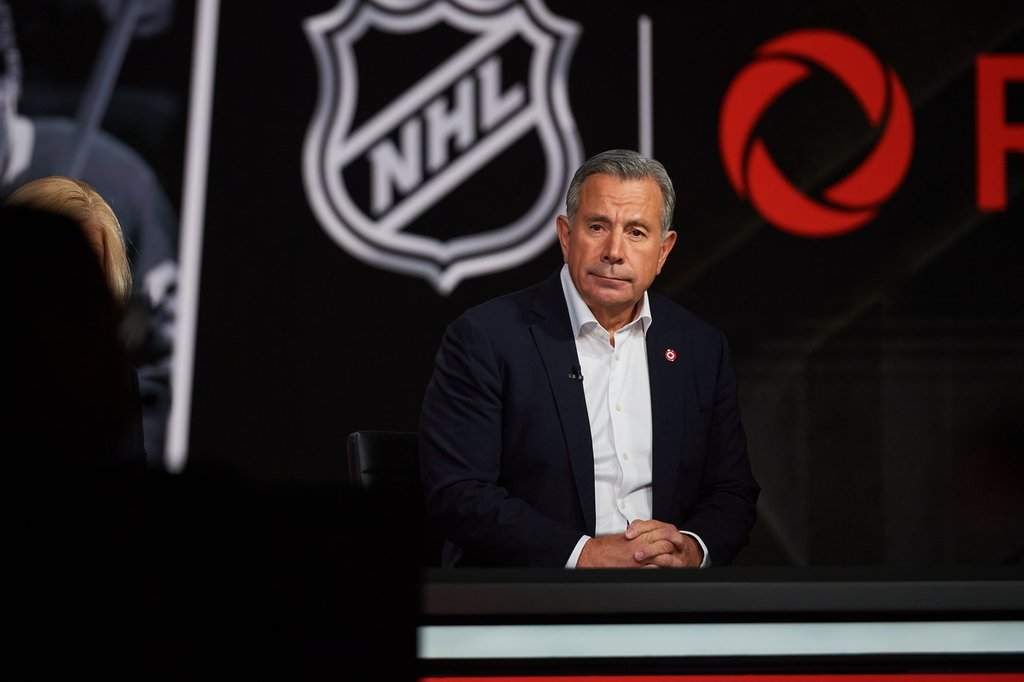
There is a smell to old leather, cheap draft beer, and decades of collective hope that clings to the rafters of Scotiabank Arena long after the final buzzer sounds. It is the scent of a city breathing through its teams. For anyone who has ever stood in the freezing winds off Lake Ontario, waiting for a streetcar while wrapped in a blue-and-white scarf, sports in Toronto are never just business. They are a proxy religion. A shared heartbeat.
When Rogers Communications finalized its massive buyout of Larry Tanenbaum’s Kilmer Sports Inc. stake in Maple Leaf Sports and Entertainment (MLSE), the financial wires buzzed with dry corporate metrics. Valuation figures soared past the four-billion-dollar mark. Percentage shares shifted on heavy oak boardroom tables. Accountants whispered of consolidated media rights, vertical integration, and streamlined corporate governance.
But spreadsheets do not bleed blue.
To understand what happened when Rogers tightened its grip on Toronto’s crown jewel, you have to look past the ticker symbols. You have to walk down Bay Street, past the towering glass monoliths, and remember how a sports empire became the ultimate trophy in Canadian media.
The Architect of the Empire
Larry Tanenbaum was never just an owner. For decades, he was the steady hand at the poker table when the stakes grew terrifying. While corporate giants flexed their balance sheets, Tanenbaum provided the institutional memory. He was the buffer between passionate fans and cold corporate optimization. When the Raptors clawed their way to an improbable NBA Championship in 2019, it was Tanenbaum hoisting the Larry O’Brien Trophy, wearing a smile that looked like every kid from the North who ever dreamed big.
His exit through Kilmer Sports Inc. marks the end of an era. It signals a shift from a coalition model of ownership to total, unvarnished corporate consolidation.
Consider what happens when a single telecommunications behemoth owns the distribution pipes, the content creation studios, and the actual physical franchises on the ice and hardwood. Every Maple Leafs power play, every Raptors fast break, and every Toronto FC goal now flows through a singular corporate pipeline. Efficiency is maximized. Red tape is slashed.
Yet, something intangible shifts in the air.
When control becomes absolute, the human element—the unpredictable, messy, beautiful chaos of sports—must answer to quarterly earnings reports.
The Weight of the Jersey
Imagine sitting in section 109 on a Tuesday night in November. The Maple Leafs are down by two goals entering the third period. The crowd is restless, grumbling about defense pairings and general manager decisions. That collective frustration is born of a unique intimacy. Fans in Toronto care too much because the team belongs to the cultural fabric of the nation.
When Rogers pushed its ownership stake past the seventy-percent threshold by acquiring Kilmer’s roughly twenty-five percent holding, the corporate calculus shifted entirely. This transaction was not about discovering new ways to win playoff rounds. It was about ecosystem control. In the modern media landscape, live sports are the last remaining anchor keeping traditional television alive. People do not stream commercials, but they will watch a Saturday night broadcast through a snowstorm.
Rogers understood this fundamental truth years ago. Owning the blue-chip sports assets of the country’s largest media market guarantees subscriber loyalty, advertising supremacy, and impenetrable market dominance. Kilmer’s departure simply clears the board for the final phase of this grand strategy.
Does the fan in row twelve care about consolidated equity shares? Of course not. They care about whether the power play can execute zone entries. They care about whether the front office is willing to spend past the luxury tax to bring a championship parade down Yonge Street.
The Invisible Stakes
Behind the glass partitions of executive suites, the negotiations were quiet, fierce, and measured in nine-figure increments. Tanenbaum’s departure leaves Bell Canada Enterprises (BCE) as a minority partner holding a roughly twenty-seven percent stake, but the operational steering wheel now rests firmly in one pair of corporate hands.
This centralization eliminates the friction of shared governance. In the past, decisions regarding MLSE required delicate balancing acts between competing corporate titans. Now, the path is clear. If Rogers wants to pivot its broadcast strategy, integrate ticketing with mobile data plans, or reshape the fan experience inside the arena, the friction is gone.
Power streamlined is power magnified.
Yet, sports resist clean equations. You cannot code chemistry into a roster. You cannot engineer heart through a software update. The danger of total corporate ownership is the temptation to treat human athletes and historic franchises like widgets on an assembly line. When a brand becomes too big, it risks losing the raw, unfiltered passion that makes sports worth watching in the first place.
The Last Drop of Ink
Out on the street, the wind whips off the lake, carrying the scent of roasted chestnuts and exhaust fumes. A teenager wearing an old-school Vince Carter jersey dribbles a worn-out basketball against a concrete retaining wall, chasing a dream under the flickering orange glow of a sodium streetlight.
Inside the arena, the lights go down, the ice glistens under high-definition spotlights, and millions of eyes across a vast, frozen country lock onto their screens. The billions have changed hands. The corporate charts have been redrawn. The press releases have faded from the front pages.
The puck drops. The noise begins. And for a few fleeting hours, nobody cares who owns the ledger. They only care about the next shot.


