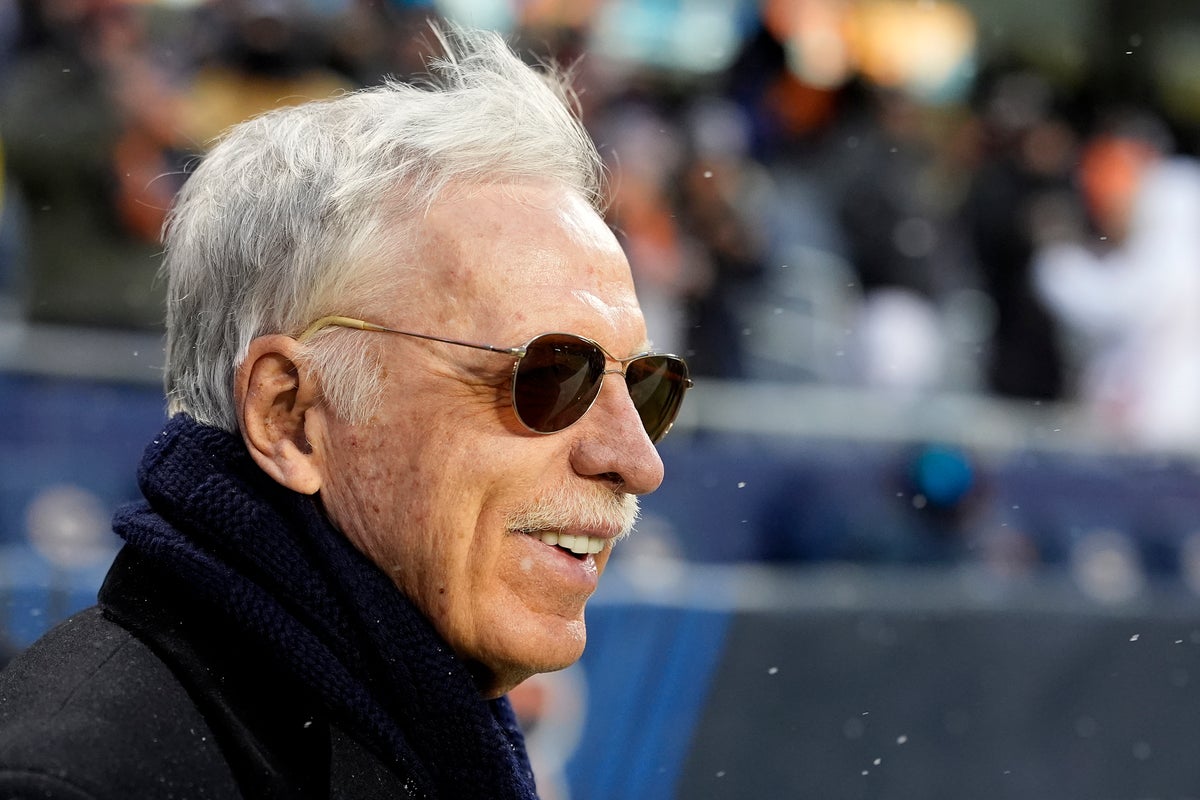
Stan Kroenke has built an unprecedented sports empire by treating iconic franchises like real estate assets. While fans measure success in silverware and trophies, Kroenke Sports & Entertainment (KSE) measures it in square footage, geographic synergy, and asset appreciation. This fundamental disconnect explains why a man married to Walmart heiress Ann Walton Kroenke—boasting a combined family fortune that alters global markets—remains one of the most polarizing and intensely disliked figures in modern sports. From London to Los Angeles, his playbook relies on cold corporate efficiency rather than the emotional validation that sports fanbases crave.
The fan frustration is not driven by a lack of capital, but by how that capital is deployed. Kroenke does not operate as a beneficent sugar daddy. He operates as a developer.
The Relocation that Broke a City
To understand the depth of public resentment, one must look at St. Louis. The relocation of the Rams to Los Angeles in 2016 was not just a business move. It was a scorched-earth corporate exit that left an American city reeling and resulted in a massive $790 million legal settlement.
For years, Kroenke maintained a public stance that he was attempting to find a stadium solution in Missouri. Behind the scenes, the machinery was already moving toward Southern California. The NFL’s own guidelines state that teams should make every reasonable effort to remain in their host cities. Yet, the allure of the nation’s second-largest media market and the opportunity to build a multi-billion-dollar entertainment complex proved too lucrative to ignore.
The fallout was bitter. St. Louis fans watched a native Missourian strip the city of its football identity. The subsequent litigation exposed internal league communications that painted a grim picture of billionaire owners manipulating processes to maximize media market valuations.
The move paid off handsomely for KSE. SoFi Stadium in Inglewood became the crown jewel of the Kroenke portfolio, a futuristic venue hosting Super Bowls and concerts, driving the Rams' franchise value to historic heights. The fans left behind in the Midwest received nothing but a broken promise and an empty dome.
The European Super League Disaster and the London Uprising
Across the Atlantic, Kroenke encountered a different kind of resistance. American sports leagues are closed cartels where relocation and franchise franchising are accepted, if despised, realities. European football operates on meritocracy, tradition, and deep-seated community roots. When Kroenke attempted to apply the American closed-shop model to Arsenal FC, he sparked a civil war.
In April 2021, Arsenal emerged as a founding member of the ill-fated European Super League. The proposal sought to eliminate the risk of relegation, guaranteeing permanent elite status and astronomical broadcasting revenues for a select group of wealthy clubs. It was a flawless business strategy on paper.
It was an unmitigated disaster in practice.
Super League Structural Flaw:
[Traditional Model] -> Performance Merit -> Champions League Revenue -> Risk of Failure
[Super League Model] -> Permanent Membership -> Guaranteed Revenue -> Zero Risk
The backlash from Arsenal fans was instantaneous and ferocious. Thousands gathered outside Emirates Stadium, hanging effigies and chanting "Kroenke Out." To the London faithful, the American owner demonstrated a complete ignorance of football culture. He viewed a 135-year-old institution merely as content for a subscription television package.
The project collapsed within 48 hours under the weight of political pressure and fan fury. While Kroenke issued a rare apology through his son, Josh Kroenke, the trust was permanently shattered. It revealed the core tension of the KSE ownership model: the prioritizing of risk mitigation over sporting integrity.
The Silent Stan Paradox
Fans want an owner who bleeds the team colors, or at least one who talks to the media after a devastating loss. Kroenke does neither. His nickname, "Silent Stan," is well-earned. He rarely grants interviews, avoids press conferences, and shields himself from the public eye behind layers of corporate public relations.
This silence is often interpreted as arrogance. When a team underperforms, an owner's silence feels like indifference to a fan base investing hard-earned money into tickets and merchandise.
Consider the contrast between Kroenke and more vocal owners. Mark Cuban or Steve Ballmer inject themselves into the team identity, acting as the ultimate fans. Kroenke treats his properties with the clinical detachment of a private equity executive monitoring a portfolio of logistics hubs.
This detachment extends to his financial model. KSE famously adhered to a self-sustaining financial philosophy for years. Unlike Roman Abramovich at Chelsea or Sheikh Mansour at Manchester City, Kroenke did not inject hundreds of millions of dollars of personal wealth into the transfer market to buy immediate success for Arsenal. Every dollar spent had to be a dollar generated by the club itself.
While financially responsible, this approach frequently left teams hovering in mediocrity while rivals outspent them to win championships.
Winning Trophies Without Winning Hearts
The narrative around Kroenke shifted slightly in the early 2020s due to an undeniable run of competitive success. The Los Angeles Rams won Super Bowl LVI. The Colorado Avalanche hoisted the Stanley Cup. The Denver Nuggets, led by Nikola Jokic, captured their first NBA Championship. Arsenal mounted genuine title charges in the English Premier League.
KSE Championship Timeline:
* 2022: Los Angeles Rams (NFL) - Super Bowl LVI Champions
* 2022: Colorado Avalanche (NHL) - Stanley Cup Champions
* 2023: Denver Nuggets (NBA) - Larry O'Brien Trophy Winners
By traditional metrics, this run should have cemented Kroenke's legacy as one of the greatest owners in sports history. Yet, the skepticism remains.
In Denver, despite the Nuggets' historic championship run, fans faced a multi-year television blackout. A bitter dispute between KSE-owned Altitude Sports and major television providers like Comcast left local fans unable to watch their championship team on home networks. The business objective of protecting a regional sports network's carriage fees took precedence over letting local citizens watch the best basketball player in the world.
Winning trophies does not automatically erase years of corporate alienation. The animosity persists because the structural issues remain unchanged. The victories are seen as the result of brilliant front-office executives outmaneuvering the system, rather than an owner’s passion for the game.
The Walmart Connection and the Scale of Wealth
The sheer scale of the Kroenke family wealth amplifies the public scrutiny. Stan Kroenke’s marriage to Ann Walton, daughter of Walmart co-founder James "Bud" Walton, united two massive fortunes. This positioning changes how fans view financial decisions made by his teams.
When Arsenal makes a low-ball offer for a star player, or when the Nuggets hesitate to pay a luxury tax to keep a crucial role player, fans do not see financial prudence. They see billionaire penny-pinching. The perception is that an ownership group with access to limitless capital is choosing to prioritize profit margins over a city's collective happiness.
Furthermore, the Kroenke real estate portfolio is staggering. He is one of the largest landowners in the United States, possessing millions of acres of working ranches. His sports teams frequently serve as anchors for broader real estate plays.
- SoFi Stadium is the centerpiece of Hollywood Park, a massive 300-acre mixed-use development featuring retail, residential units, and office spaces.
- Ball Arena in Denver sits on prime downtown land destined for massive redevelopment projects.
- Emirates Stadium allowed for the transformation of the old Highbury site into lucrative luxury apartments.
To Kroenke, sports franchises are the ultimate anchor tenants. They generate foot traffic, media attention, and cultural relevance, which in turn inflates the value of the surrounding dirt.
The Modern Sports Empire as a Corporate Template
Kroenke did not invent the multi-club ownership model, but he perfected its corporate execution. The modern sports fan wants an escape from the harsh realities of corporate life, an emotional sanctuary where loyalty matters. Kroenke’s empire is a reminder that sports are, at the highest level, just another branch of the global entertainment industry.
The model is highly effective at generating revenue and increasing asset value, making it the envy of Wall Street and investment bankers looking to enter the sports landscape. It ensures long-term financial stability for the franchises involved, protecting them from the boom-and-bust cycles that ruined clubs in previous decades.
But this stability comes at a cost. It strips away the romance of sports, replacing it with a transactional relationship that leaves fans feeling like customers rather than custodians of a community institution. Stan Kroenke may continue to accumulate championship rings and billions in equity, but the stadium concourses will continue to echo with the discontent of fans who know their passion is just another line item on a corporate balance sheet.