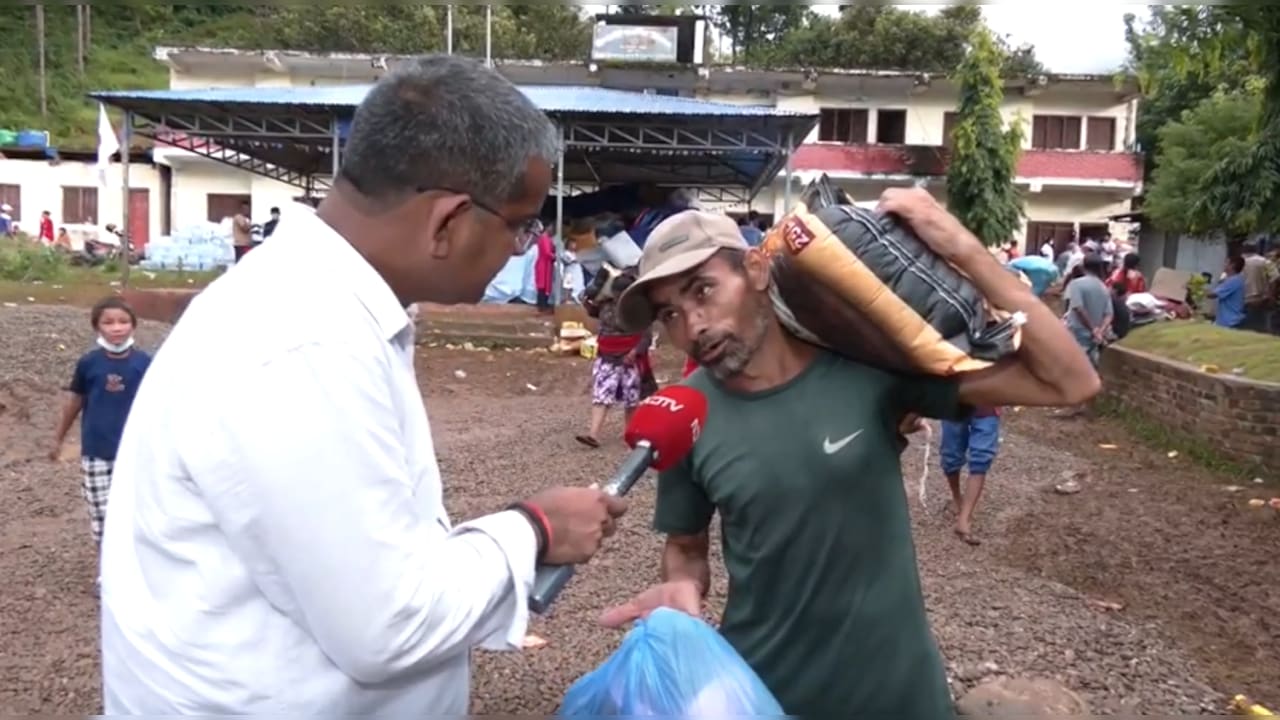
The water did not just take the roofs; it took the math of survival.
When the monsoon swelled beyond its banks last year, turning familiar valleys into muddy graveyards of silt and splintered timber, Ramesh watched his entire grain store dissolve into the brown current. Within hours, the village of Melamchi was cut off from the outside world. No roads. No electricity. Just the suffocating humidity of a displaced community crammed onto a sliver of higher ground, waiting for the sky to clear. Don't forget to check out our previous article on this related article.
When the first relief helicopters finally beat their way through the gray mist, they dropped salvation wrapped in plastic and cardboard. Rice. Lentils. Cooking oil. Packaged biscuits stamped with the logos of international aid agencies. For Ramesh, holding a bag of dry lentils against his chest, it felt like breathing again.
Hunger is loud. It scrapes at the ribs and hollows out the eyes. But after a disaster, a new kind of terror crawls in behind the hunger. A quiet, invisible fear that lives inside the very food meant to keep you alive. If you want more about the background of this, Associated Press provides an excellent breakdown.
Consider what happens when the floodwaters recede. They leave behind more than mud. They leave behind a microscopic universe of cholera, typhoid, and dysentery, hitching rides on every droplet of standing water. When survivors like Ramesh open those precious sacks of emergency grain or try to boil water with soaked firewood, the margin for error shrinks to zero. Every meal becomes a calculated gamble. Do you eat the contaminated rice and risk the violent, dehydrating grip of a waterborne infection, or do you listen to your starving children cry and wait for a rescue that might bring medicine too late?
Public health data tells us that the immediate aftermath of a flood is rarely defined solely by drowning statistics. It is defined by the epidemiological cliff that follows. In regions lacking robust sanitation infrastructure—a reality for many remote river communities in Nepal—monsoon deluges overwhelm local water sources almost instantly. Latrines overflow. Wells fill with agricultural runoff and sewage. The food chain, from storage to plate, gets bathed in pathogens.
Ramesh knew the water was bad. He could smell the rot of livestock and ruined crops hanging heavy in the hot air. But hunger does not care about bacteria. You boil the water if you can. If the wood is too wet, you take a chance. You cross your fingers, eat the rice, and pray your stomach can fight what your eyes cannot see.
This is the hidden cruelty of modern humanitarian logistics. Delivering calories to a disaster zone is an immense, logistical triumph of international aid. Yet, feeding survivors is only half the battle. The other half is ensuring that the sustenance provided does not become a Trojan horse for disease. When public health officials distribute dry rations without immediate access to clean boiling fuel, water purification tablets, or adequate sanitation, they are handing out a race against time.
The human body is resilient, but it has limits. Weeks of subsisting on damp, potentially compromised rations wear down the immune systems of the most vulnerable. Children and the elderly fall first. A mild stomach ache turns into acute watery diarrhea within hours. In a place where the nearest clinic is a two-day trek across washed-out trails, a bout of food poisoning is no longer an inconvenience. It is an existential threat.
Sitting on a blue tarpaulin sheet, staring at the small metal pot bubbling over a meager fire of damp twigs, Ramesh thought about the irony of it all. The river had tried to drown them. Now, the gifts sent to save them demanded just as much vigilance. He stirred the lentils, watching the steam rise into the heavy monsoon air, acutely aware that survival was no longer just about enduring the storm. It was about surviving the plate in front of him.
The rain started up again, drumming a heavy, relentless rhythm against the plastic shelter. Somewhere in the dark, a child coughed. Ramesh scooped a small portion of the warm food into a bowl, took a deep breath, and took the first bite.


