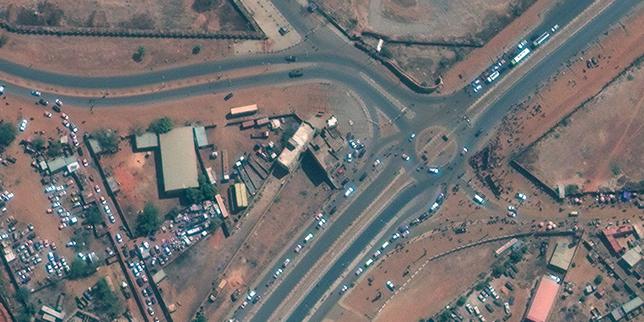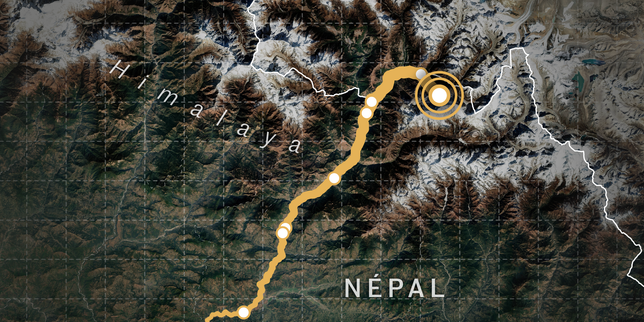
Every monsoon season, the media pulls out the exact same script. Heavy rains hit the Himalayas, glacial lakes burst, rivers swallow villages, and the headlines scream about an unprecedented natural disaster fueled entirely by global heating. Satellites beam down eerie images of brown torrents carving through green valleys. NGOs beg for donations. Governments point fingers at carbon emissions.
It is a neat, comfortable narrative. It requires zero critical thinking and lets every regional planner, corrupt bureaucrat, and reckless developer off the hook.
And it is fundamentally wrong.
I spent years consulting on hydrological risk infrastructure across South Asia. I have stood on the banks of transboundary rivers in the Himalayas while engineers ignored glaring red flags because waiting for a climate fund check was easier than doing hard structural maintenance.
Calling the devastating floods in Nepal and Tibet a purely natural climate disaster is a dangerous delusion. The weather is extreme, yes. But the catastrophe is entirely man-made, built on a foundation of unchecked road expansion, unregulated sand mining, and structural institutional cowardice.
The Myth of the Unpredictable Act of God
The lazy consensus relies on the word natural. When you call a flood natural, you imply inevitability. You imply that Mother Nature simply unleashed a fury that no human could withstand.
Look at the data from the Koshi and Karnali river basins. Peak rainfall events have always happened in this region. The monsoon is not a surprise guest; it arrives on a calendar. What has changed is not just the volume of water dropping from the sky, but the surface area resistance on the ground.
When you slice into fragile mountain slopes to carve out unpaved, unengineered roads—a phenomenon exploding across rural Tibet and the mid-hills of Nepal—you create millions of tons of loose debris. Engineers call this side-cast material. Physics calls it an invitation for an avalanche.
The first heavy downpour hits this loose earth, and it does not just absorb rain. It liquefies. It turns into a high-density debris flow that chokes riverbeds, raises the river bed level above the surrounding floodplains, and guarantees that even a moderate storm will trigger catastrophic overflow.
Satellites capture the brown water from space, but they do not show the backroom handshakes where local politicians signed off on dynamite blasting for tourist highways without proper drainage conduits.
Sand Mining is the Real Silent Killer
While the West worries about carbon footprints, local contractors along the Tibetan plateau and Nepalese lowlands are engaged in industrial-scale riverbed sand mining.
Concrete requires sand. Construction booms in regional economic hubs demand endless supply. Heavy excavators scoop millions of tons of gravel and sand directly out of river channels year-round.
Common sense tells you that removing sediment deepens the river. Hydrodynamics tells you the exact opposite. When you strip a riverbed of its natural coarse armor, the water velocity increases. The river begins to aggressively carve into its own banks, undercutting bridges, destabilizing retaining walls, and shifting its course unpredictably during high-flow events.
When the monsoon surge arrives, the river is already structurally compromised. It does not flow within its banks; it thrashes wildly because we have systematically stripped away its natural geometry.
Blaming melting glaciers in Tibet for downstream flash floods ignores basic timing. Glacial lake outburst floods happen, but the vast majority of wet-season devastation is driven by sheer, unmitigated surface runoff and local meteorological cloudbursts amplified by local topography and land degradation. Conflating the two is lazy journalism designed to secure clicks and suppress local accountability.
The Transboundary Information Black Hole
Another structural failure nobody wants to talk about is the geopolitical friction governing transboundary river management between China, Nepal, and India.
Rivers do not check passports. A weather event or a dam release in the Tibetan autonomous region cascades directly into Nepal, which subsequently flows into India. Yet, real-time hydrological data sharing between these nations ranges from deeply flawed to non-existent.
Imagine a scenario where an air traffic controller refused to talk to planes crossing a regional border because of political tension. That is precisely how regional watershed management operates.
When upstream water levels spike in Tibet, downstream communities in Nepal often receive zero advanced warning. By the time the wall of water arrives, evacuation protocols are useless. We treat transboundary disaster response like a diplomatic chess match instead of an emergency medical triage.
Stop Rebuilding in the Gun Sight
The most infuriating part of this cycle is the rehabilitation theater. Every time a village is washed away, international donors swoop in to rebuild houses in the exact same floodplain, using the exact same cheap materials, on the exact same unstable alluvial fans.
This is not aid. It is recurring victimization funded by well-meaning taxpayers.
Real resilience requires brutal choices. It means zoning laws that prohibit construction within high-risk debris-flow corridors, even if it displaces communities that have lived there for generations. It means halting unengineered road construction in geologically active seismic zones. It means treating sand mining not as a minor local business, but as the ecological felony that it is.
The satellite images from Nepal and Tibet show us a tragedy. But if you look past the brown water and the emotional musical scoring of the news segments, you are looking at a monument to human arrogance and administrative failure.
Stop waiting for global climate policy to save the Himalayas. The local corruption and bad engineering are killing these valleys long before the ice ever melts.