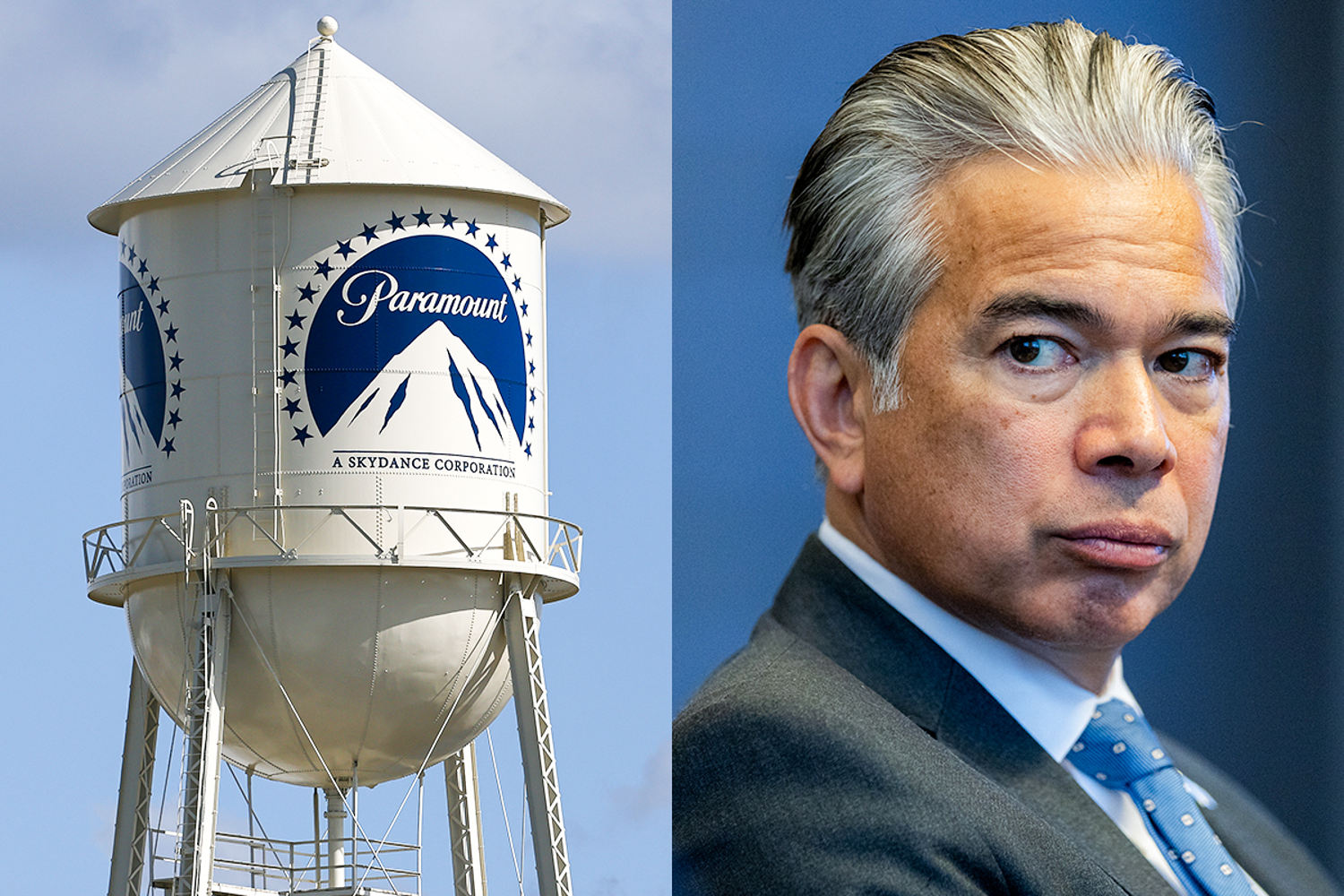
The media narrative surrounding the California Attorney General abruptly walking away from talks with Paramount is built on a comforting, lazy falsehood. The consensus story goes like this: someone inside the corporate machinery couldn't keep their mouth shut, spilled details to reporters, breached trust, and torpedoed sensitive negotiations.
It is a tidy explanation. It paints government regulators as aggrieved victims of bad behavior and treats the corporate player as a clumsy actor sabotaging its own interests. Meanwhile, you can explore other developments here: Why Reducing Sliman Mansour To A Sad Poster Icon Erases His Radical Genius.
It is also completely naive.
I have spent years watching high-stakes entertainment and regulatory mergers from the inside, and I can tell you that accidental leaks rarely kill deals of this magnitude. When a state attorney general officially detonates a dialogue and points the finger at unauthorized disclosures, leaks are almost never the disease. They are merely the symptom of a deal that was already dying on the table. To explore the full picture, check out the excellent article by E! News.
The Leak Myth In Regulatory Negotiations
Let us dismantle the core premise driving the standard reporting. People assume that privacy is the bedrock of regulatory settlement talks, and that any breach of that sanctuary shatters trust beyond repair.
That view ignores how power actually operates inside a state attorney general's office.
Regulators do not walk away from multi-billion-dollar corporate structures because a reporter found a source willing to chat about concession structures or asset carve-outs. Information flow in these discussions is rarely a pure accident. More often, selective disclosures are tactical pressure tests launched by one side to gauge public reaction, rally political allies, or force the counterparty's hand.
When an attorney general dramatically halts conversations under the banner of a leak investigation, look closer at the calendar and the leverage points. California’s top prosecutor is not clutching pearls over confidentiality. They are signaling that the gap between what Paramount wanted and what the state was willing to accept became politically indefensible.
Blaming a leak gives both sides a clean exit ramp. Paramount gets to look like the victim of an undisciplined ecosystem, while the regulator gets to project moral authority and strict adherence to process. It is theater dressed up as ethics.
The Real Breakdown Nobody Is Discussing
If the leak is a smoke screen, what actually happened behind closed doors?
The real friction point in modern media consolidation talks is the weaponization of future-state remedies. When a legacy studio talks to a state regulator, the conversation quickly moves past traditional antitrust metrics like local market share and box office dominance. Regulators are no longer just looking at whether a single corporation controls too much of the screen. They are attempting to bake social mandates, labor protections, and platform neutrality directly into the operating framework.
Paramount is attempting to navigate a brutal macroeconomic environment where traditional television revenue is collapsing, streaming profitability remains a moving target, and global scale is an existential survival requirement. State regulators, on the other hand, face intense pressure from activist groups and labor unions to extract specific concessions regarding local jobs and content production minimums.
When these talks hit a wall, it is because the price of regulatory approval has become economically indistinguishable from a rejection.
Imagine a scenario where a studio realizes that satisfying a state's demands requires locking themselves into fixed-cost labor and operational structures that will render them uncompetitive globally within three years. At that point, a deal starts looking less like a victory and more like an anchor.
If details of these onerous demands or the studio's pushback leak to the press, it alters the political calculus overnight. The moment a negotiation plays out in public view, rigid institutional stances harden. Politicians cannot compromise on leaked terms without looking weak, and corporations cannot accept punitive conditions without triggering shareholder revolts.
The Dangerous Cost Of Public Posturing
The fallout from this specific breakdown reveals a deeper flaw in how modern entertainment consolidation is handled. By turning regulatory reviews into high-profile public battlegrounds, we guarantee worse outcomes for everyone involved, including the workers and consumers the state claims to protect.
When talks collapse amid accusations of bad faith, the process resets to zero. Uncertainty replaces structure. Instead of a managed transition where asset deployment and studio operations can be scrutinized systematically, the market is left guessing.
I have seen companies blow millions on legal architecture and lobbying teams, only to watch a deal dissolve because a regulator cared more about the optics of a headline than the substance of the economic reality.
We need to stop pretending that leaks are the primary catalyst for regulatory failure. They are a convenient excuse used by institutional actors to mask irreconcilable differences in vision, leverage, and economic survival.
The next time an agency halts talks with a major studio over alleged indiscretions, do not look at the person who picked up the phone. Look at the balance sheet, look at the political pressures facing the elected official, and look at the insurmountable math of keeping a legacy media titan alive in a fractured digital economy.
The truth is rarely as simple as a loose lip sinking a ship. Usually, the ship was already headed straight for the rocks, and somebody just wanted an excuse to jump overboard first.