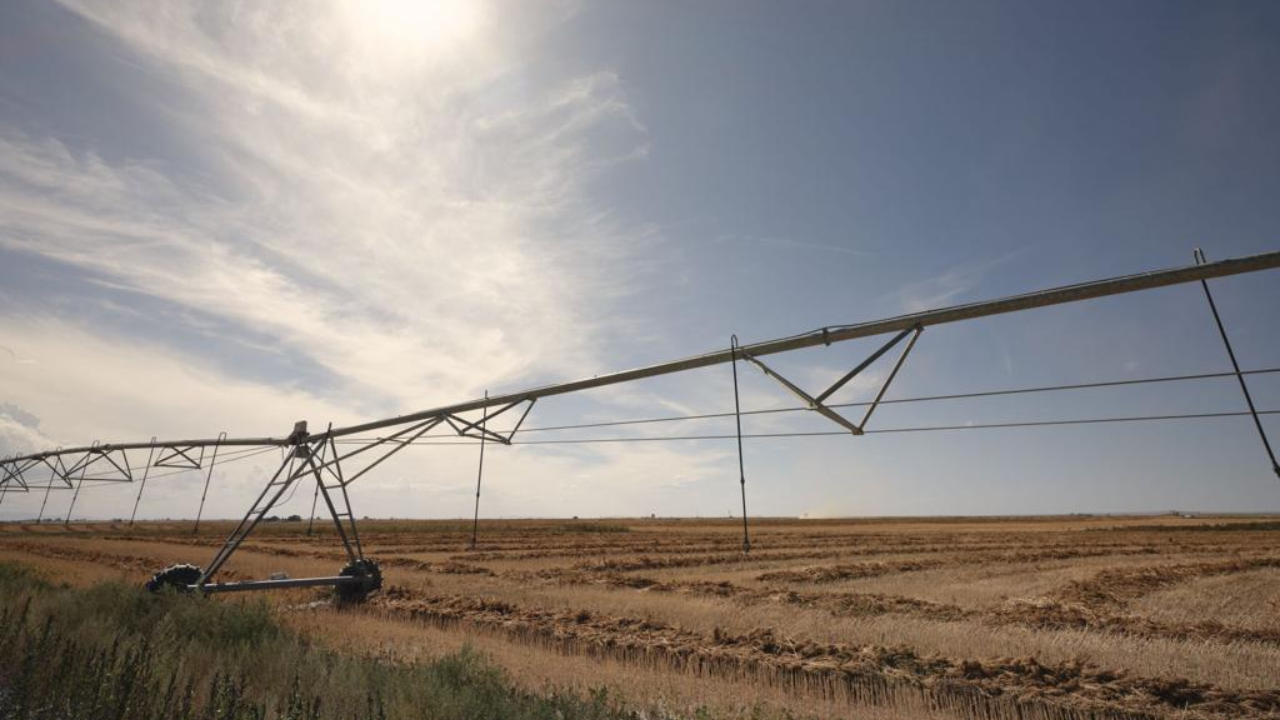
When an Idaho family farming operation working a thousand acres since 1950 gets its irrigation water shut off, the internet reaches for the pitchforks. Headlines scream about regulatory overreach, bureaucratic tyranny, and the war on generational agriculture. The narrative writes itself: hardworking stewards of the soil pulverized by an unfeeling state apparatus prioritizing fish, tech campuses, or urban sprawl over the people who grow the food.
It is a clean story. It is also dangerously incomplete.
I have spent decades watching agricultural water rights battles play out across the American West. I have seen multi-generational operators blow millions chasing legal ghosts while their aquifers drop another six feet every summer. The lazy consensus says the state is the villain for cutting off the spigot. The uncomfortable truth is that the state kept the spigot open way past the point of structural insolvency.
Look past the emotional theater of the shutoff notice. The tragedy is not that the water was finally turned off. The tragedy is that anyone ever expected a finite, fossil aquifer to last forever under the weight of flood irrigation and unmetered pumping.
The Myth of Perpetual Senior Rights
Let us dismantle the foundational fiction of Western water law: the absolute sanctity of senior water rights.
Under the doctrine of prior appropriation, the first person to divert water for a beneficial use gets first dibs. First in time, first in right. For decades, this system provided the legal certainty required to build an agricultural empire in a semi-arid desert. If your grandfather filed his claim in 1950, you possess a senior right. You assume that priority date is an impenetrable shield against drought, climate shifts, and hydrogeological reality.
That assumption is a delusion.
Prior appropriation was designed for surface streams in the nineteenth century, not for deep-well groundwater extraction in the twenty-first. When you pump from a declining aquifer, your senior priority date does not magically manufacture molecules of H2O out of thin air. You are not just taking a share of a flowing river; you are mining a finite geological savings account.
When a state water resource board finally steps in and curtails junior—or even senior—rights due to material injury to the aquifer, they are not acting
Why Rescuing That Idaho Farm is Economic Malpractice
business, news
The internet is currently weeping over a tragic headline. A heritage Idaho family farm, working a thousand acres since 1950, got its irrigation water cut off by the state. The narrative writes itself: heartless bureaucrats crushing multi-generational sweat, modern policy destroying American agriculture, and a pristine pastoral tradition choked out by administrative decree.
It is a great story. It is also an economic fairy tale that ignores basic hydrology and property rights.
Stop mourning the forced retirement of a business model subsidized by artificially cheap liquid assets. When a state cuts off water access, the default public reaction is immediate outrage. People look at the calendar—fifty years, seventy years, a century of operation—and assume longevity equals entitlement. It does not. Longevity without sustainable input costs is just a slow-motion liquidation sale being billed as a heritage.
I have spent two decades advising industrial agriculture operations and watching millions of dollars evaporate because operators confuse historical presence with natural law. They assume that because their grandfather turned the valve in 1950, the aquifer owes their great-grandchildren the exact same flow rate in perpetuity, regardless of drought indices, recharge rates, or competing municipal demands.
That assumption is bankrupting the agricultural sector.
The Fallacy of Prior Appropriation
To understand why shutting off that water is actually a brutally necessary correction, you have to look past the emotional veneer of family farming and look at how western water rights actually function. The legal doctrine in most of the American West is prior appropriation: first in time, first in right. Sounds fair on paper. If you were here first, you get your share before the newcomer builds a housing subdivision or a tech campus downstream.
Except prior appropriation treats water like a static mineral deposit rather than a dynamic, shared ecological cycle.
When a thousand-acre farm in Idaho relies on junior or stressed surface water allocations that finally get curtailed, the public screams about big government overreach. They ignore the foundational reality of the market: water has a true economic cost. For decades, legacy operators have insulated themselves from that cost by leaning on subsidized infrastructure and historical priority dates that predate modern scarcity models.
Imagine a scenario where an airline ran flights for fifty years using fuel that cost ten cents a gallon because of an old government decree. When the government finally realizes the supply depot is bone dry and cuts off the cheap fuel, the airline cannot survive by running ads about its grandfatherly commitment to aviation. It has to adapt, pivot, or go under. Farming is no different. It is a business, not a museum exhibit.
Let us look at the common defense raised whenever these stories break: "Where will our food come from if we stop watering desert crops?"
This is the classic misdirection. Nobody is suggesting we pave over the Midwest breadbasket or stop eating. What is actually happening is a long-overdue reallocation of a finite resource toward uses with higher economic yield and better efficiency metrics. Growing water-intensive feed crops in arid or semi-arid zones using outdated flood irrigation methods is not food security; it is a massive wealth transfer from the public water table to private balance sheets.
When the state shuts off that irrigation tap, it is not murdering a family legacy. It is forcing a correction on a system that refused to modernize itself.
The Cost of Refusing to Pivot
Why did this Idaho farm get cut off? Because the water simply is not there anymore. Snowpacks fluctuate, aquifers drop, and legal mandates shift to protect minimum streamflows for endangered species and downstream urban centers.
The operators will tell you they had no warning, but the data has been screaming at them for twenty years. Monitoring wells do not lie. USGS reports on the Eastern Snake Plain Aquifer have mapped the decline with terrifying precision. Yet, instead of transitioning to high-efficiency drip systems, shifting to dryland crops, or buying into municipal water markets at true market rates, many legacy operations double down on flood irrigation because it is what they have always done.
I've seen mid-sized agricultural enterprises blow millions trying to litigate their way out of hydrological reality. They hire high-priced water attorneys to fight state engineers, burning through capital that should have been spent on soil moisture sensors, pivot upgrades, or crop diversification. They treat adaptation like a defeat.
That stubbornness is lethal.
True expertise in modern agriculture requires acknowledging that historical rights do not override physics. The most successful modern operators are not the ones with the oldest deeds; they are the ones treating water as an expensive, precision-managed input, right alongside diesel and fertilizer.
If you want to support American farming, stop demanding that the state bail out inefficient practices through subsidized resource depletion. When a business model requires the uninterrupted flow of underpriced public water to remain solvent, it is not a viable enterprise. It is a slow leak.
The Brutal Truth About Resource Scarcity
Let us dismantle another persistent myth: the idea that heritage automatically equals efficiency.
People assume that because a family has worked a specific plot for generations, they possess an intuitive, flawless understanding of land stewardship. Often, the opposite is true. Generations of doing things a certain way create deep operational blind spots. They develop muscle memory for an abundance that no longer exists.
When the water stops, the shock feels unfair because the system shielded them from the true cost of their inputs for half a century. But fairness in a market economy does not mean your grandfather's cost structure gets grandfathered into eternity.
The state did not destroy a piece of Idaho history by turning off the valve. The state finally stopped propping up an unsustainable math problem.
If that farm wants to survive, it has to stop looking backward at 1950 and start looking at the balance sheet of 2026. That means leasing water rights, shifting to low-water horticulture, or selling off acreage to operators who can extract higher economic value per drop.
Heritage does not trump hydrology.
Stop weeping for the irrigation shutdown. Start demanding a system where water goes to the highest and best use, rather than the loudest and oldest claim.
Let the inefficient farms dry up so the modern ones can actually survive.