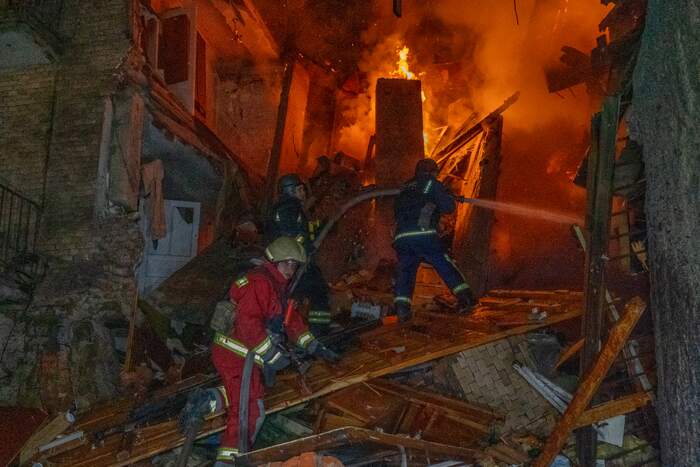
When the air raid sirens wailed over Kyiv, the warning should have come hours before the impact. Instead, President Volodymyr Zelenskyy revealed a stark operational reality that exposed an alarming fracture in allied intelligence sharing. Ukraine received zero advance intelligence from its international partners regarding the incoming missile strike that hit the capital.
That single admission cuts straight to the core of modern warfare transparency. It raises urgent questions about the reliability of early warning networks, satellite telemetry, and real-time data integration between Western intelligence agencies and Ukrainian command. If a strategic missile barrage can strike the heart of government without foreign allied telemetry flagging the launch vectors beforehand, the architecture of allied support has a dangerous blind spot. For another perspective, check out: this related article.
Understanding how this happened requires looking past the political talking points and examining the mechanics of modern electronic surveillance.
The Mechanics of Sensor Gaps
Modern missile defense relies on a continuous chain of custody for data. Satellites equipped with infrared sensors detect the heat plume of a rocket motor firing at the moment of launch. That telemetry is processed, cross-referenced with ground-based radar networks, and routed through command hubs to project trajectory and impact zones. Similar coverage on this trend has been provided by TIME.
When a nation like Ukraine claims its partners provided no notice, it points to a critical breakdown in this pipeline.
There are several operational reasons why a gap of this magnitude occurs. Intelligence sharing is never absolute. Western capitals operate under strict self-imposed classification barriers to prevent sensitive sensor capabilities, such as the exact positioning and resolution of specialized reconnaissance satellites, from being compromised or reverse-engineered by adversaries. If an early warning asset is repositioned or experiencing maintenance, coverage over a specific launch corridor can drop to zero.
Another factor is the sheer volume of false alarms and low-priority telemetry. When hundreds of drones and decoys fill the skies daily, prioritization algorithms within allied intelligence fusion centers can misallocate analytical bandwidth. A launch that appears routine or localized on a foreign radar screen might be deprioritized until it crosses a critical threshold. By then, the warning time evaporates.
The Cost of Operational Autonomy
Relying on external warning systems has always been a vulnerability for nations fighting asymmetric conflicts. When a defender must wait for a friendly superpower to verify a launch signature, sovereignty over airspace defense becomes compromised.
Zelenskyy’s public critique was not merely a complaint about a missed notification. It was a strategic signal. It highlights the urgent necessity for Ukraine to accelerate its own domestic radar manufacturing, indigenous long-range tracking, and independent signal intelligence networks.
Historical precedent shows that relying entirely on donor-supplied intelligence creates dangerous operational dependencies. During past conflicts, intelligence sharing was frequently throttled to manage escalation risks or preserve diplomatic channels. While Western partners provide unprecedented volumes of data daily, the reality remains that foreign intelligence agencies ultimately serve their own national security interests first.
When those interests diverge or when bureaucratic friction delays data transmission, the civilian population in Kyiv pays the price.
Bridging the Information Divide
Fixing this vulnerability demands a fundamental shift in how joint targeting and early warning data are shared. The current model relies heavily on centralized processing hubs where Western analysts vet and approve the release of tactical information before it reaches Ukrainian air defense batteries.
That latency is lethal. Hypersonic and ballistic projectiles travel at speeds that render human-in-the-loop bureaucratic filtering obsolete.
To achieve true defense integration, the architecture must move toward automated, machine-to-machine data handoffs. Direct feeds from orbital assets straight into regional Ukrainian command nodes would bypass political gatekeepers and reduce warning times from precious minutes to mere seconds.
Yet, Western reluctance to grant unfiltered access to raw telemetry persists. The fear of technology falling into enemy hands or the risk of direct escalation keeps a glass ceiling over intelligence cooperation.
The missile strike on Kyiv stands as a brutal reminder of the limits of allied protection. As long as critical early warning data remains tied to foreign policy calculations rather than tactical necessity, gaps will remain in the sky. Ukraine is forced to build its own shield, knowing that relying on the watchful eyes of others leaves blind spots right where the danger is greatest.



