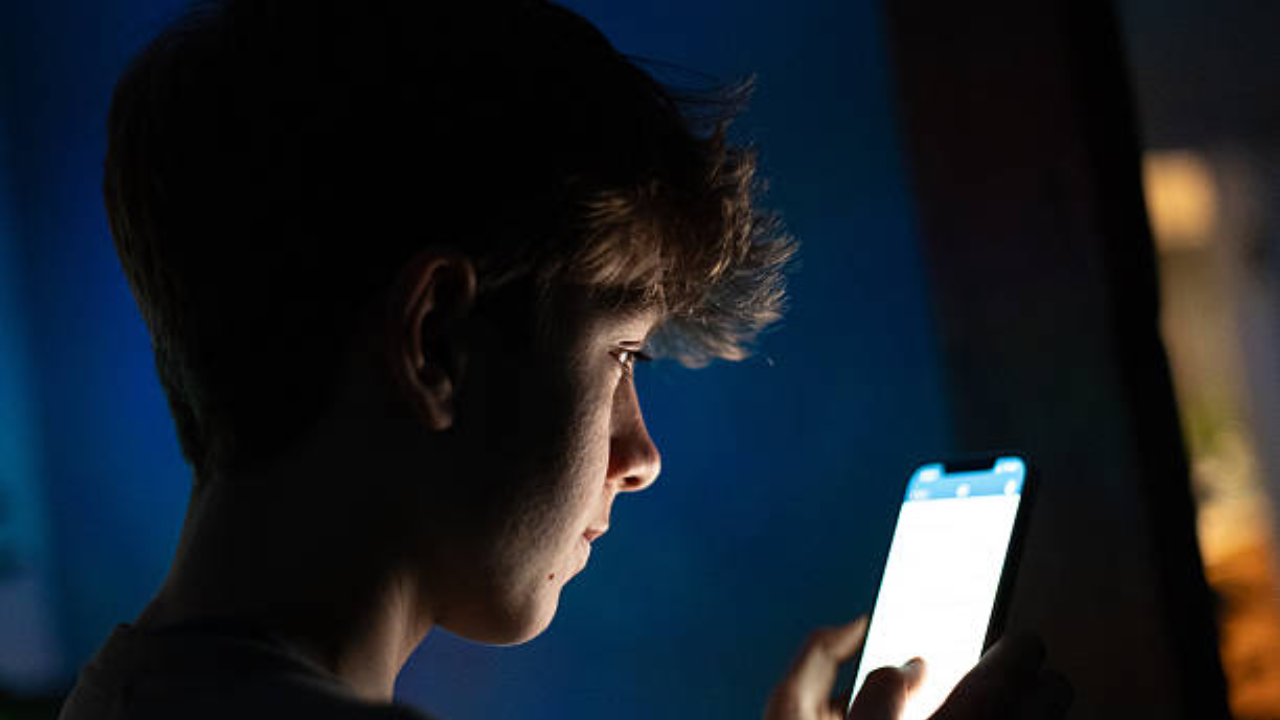
The bedroom is perfectly dark, save for a single, intense rectangle of light.
It is 3:17 AM. In a quiet suburb just outside London, sixteen-year-old Chloe lies on her side, her face illuminated by the cold, pale radiance of her smartphone. Her thumb moves in a practiced, rhythmic flick. Up. Pause. Up. Pause. Meanwhile, you can explore related developments here: The Anatomy of Project Quadriga: Why Germany is Re-Engineering its Air Dominance Strategy.
She is not looking at anything she will remember tomorrow. She is watching a stranger dance in a kitchen in Ohio, followed by a clip of a cat falling off a television, followed by a compilation of street fights in Manchester. Her eyes are bloodshot. Her neck aches with a dull, persistent throbbing. Tomorrow—or rather, in less than five hours—her alarm will scream, and she will drag herself to school, her brain wrapped in a thick, gray fog.
She knows she should sleep. She wants to sleep. But the loop is magnetic, a slot machine designed by the world's most brilliant minds to keep her thumb moving forever. To understand the bigger picture, we recommend the excellent report by Wired.
Now, the British government wants to cut the power to the machine.
Under a radical new proposal gaining traction in Westminster, social media platforms could face a mandatory overnight curfew for users aged sixteen and seventeen. Between the hours of 11:00 PM and 6:00 AM, the feeds would go black. The notifications would fall silent. The infinite scroll would simply freeze.
It is an extraordinary assertion of state authority, a digital lock on the bedroom door. But as parents, policymakers, and teenagers clash over the proposal, a deeper question emerges: can a law cure an addiction, or will it merely drive the dark habits of a generation further into the shadows?
The Anatomy of the Midnight Scroll
To understand why the government feels compelled to step in, we must first look at what happens to a teenage brain in the dead of night.
I remember the heavy, leaden feeling of my own high school mornings, though my generation’s distractions were far cruder—late-night television or text messages that cost ten pence each. Today, the scale of intrusion is entirely different. The modern smartphone does not wait to be picked up; it demands attention with surgical precision.
Consider the biological vulnerability of a sixteen-year-old. At this stage of development, the brain’s prefrontal cortex—the region responsible for impulse control and long-term planning—is still under construction. Meanwhile, the reward centers are fully online, roaring for stimulation.
When a platform serves up a perfectly tailored video, the brain releases a tiny splash of dopamine. It feels good. More importantly, it creates anticipation. What is under the next scroll? The teenager cannot easily stop because the brain is literally wired to find out.
When this cycle runs into the early hours of the morning, the biological toll is devastating. Sleep is not a luxury; it is the neurological janitor that cleans the brain of metabolic waste accumulated during the day. Without it, emotional regulation crumbles. Anxiety spikes. The ability to concentrate evaporates.
Medical professionals have sounded the alarm for years, pointing to a direct, climbing correlation between overnight screen use and the youth mental health crisis. Yet, voluntary measures have largely failed. Screen-time limits set by parents are bypassed with a simple four-digit code or a quick search for a workaround on YouTube.
The curfew proposal is born out of this desperation. It is an admission that individual families are losing a war against multi-billion-dollar algorithms.
How the Digital Lock Would Work
The mechanics of the proposed curfew are as legally complex as they are technically ambitious.
Under the draft framework, the responsibility for enforcing the curfew would fall squarely on the tech companies. Platforms like TikTok, Instagram, and Snapchat would be legally required to restrict account access for verified minors during the designated seven-hour window.
To make this work, the UK would rely on strict age-verification protocols. This is where the policy meets its first major hurdle.
For years, the internet has operated on a system of polite lies. We click a box that says we are over eighteen, and the digital world welcomes us in. To enforce an overnight lockout, platforms would need to know exactly who is behind the screen. This means integrating facial estimation technology, third-party database checks, or even government-issued identification uploads.
If a platform fails to implement these locks, they would face astronomical fines, potentially reaching up to ten percent of their global turnover.
Critics of the policy argue that the government is overreaching, attempting to play the role of a national parent. They point out that a teenager who wants to get around the ban will find a way. Virtual Private Networks, or VPNs, can easily mask a phone's location, making a device in London look like it is operating from a sunny afternoon in Los Angeles.
There is also the question of utility. A teenager locked out of Instagram might simply turn to offline mobile games, pre-downloaded streaming shows, or encrypted messaging apps that fall outside the definition of social media. The screen remains lit; only the logo changes.
The Friction at the Kitchen Table
In households across the country, the debate is not about policy papers or tech infrastructure. It is about authority.
Marcus is the father of a seventeen-year-old son, Leo. He describes the nightly routine as a constant, grinding battle of wills.
"Every night it's the same dance," Marcus says. "I tell him it's time to put the phone downstairs. He argues that he needs it for his alarm, or that his homework group is discussing a project. If I force the issue, the atmosphere in the house turns toxic. He feels like I don’t trust him. I feel like I'm policing a prisoner."
For Marcus, the idea of a government-mandated curfew is a relief. It shifts the blame. The bad guy is no longer the father standing in the doorway; it is a hardcoded law built into the phone itself.
But Leo sees it differently.
"It feels patronizing," Leo says, sitting at the kitchen table, his fingers instinctively twitching toward his pocket. "I’m seventeen. Next year I can vote, I can drive a car, I can join the army. But the government thinks I can't decide when to go to sleep? If I have a late shift at my part-time job and want to decompress by watching videos at midnight, why should a politician stop me?"
Leo’s argument exposes the messy reality of adolescence. The transition from child to adult is not a sudden flip of a switch at age eighteen; it is a gradual testing of boundaries. By imposing a blanket ban, the state risks infantilizing young people at the exact moment they need to learn self-regulation.
The Cost of the Silent Hours
If the law passes, what happens to the culture of youth communication?
Social media is no longer just an entertainment platform; it is the infrastructure of teenage socialization. For many marginalized young people—those struggling with their identity, experiencing bullying at school, or living in isolated communities—the late-night internet is a lifeline. It is a place where they can find solidarity and support when the physical world feels hostile.
A curfew could inadvertently sever these networks, leaving vulnerable teenagers isolated in the dark with their thoughts.
We must also consider the economic pressure on tech firms. If the UK establishes this precedent, other nations will undoubtedly follow. Silicon Valley will be forced to redesign its products, shifting away from maximizing engagement at all costs toward designing tools that respect human biology.
This friction is necessary. For the past two decades, technology has evolved at a breakneck pace, leaving our legal and biological systems gasping for air. We have treated our attention as an infinite resource, forgetting that our bodies require rhythm, darkness, and rest.
Beyond the Curfew
A law can turn off a screen, but it cannot fix the restlessness that drove the teenager to pick it up in the first place.
If the UK implements the overnight lockout, it will be a fascinating, high-stakes experiment in public health. We will likely see an immediate bounce in average sleep times, followed by a slight dip in teenage anxiety metrics. But the true test will be what happens when those seventeen-year-olds turn eighteen.
When the digital cage opens, will they run wild, spending their university years drowning in twenty-four-hour streams to make up for lost time? Or will the enforced break have given their brains the breathing room required to build better, healthier habits?
Back in the dark bedroom, Chloe’s phone suddenly glitches.
A hypothetical message pops up on her screen, courtesy of a new server mandate: This service is unavailable in your region until 6:00 AM. Go to sleep.
She stares at the blank display. The reflection of her own tired face stares back at her in the glass. She sighs, flips the phone face down on her nightstand, and rolls over toward the window. The room is finally dark. Outside, the night is quiet, and for the first time in months, the only thing left to do is drift away.