The Pentagon has a favorite script, and they are playing it to an audience that has stopped paying attention.
Every time a regional militia pulls a trigger, the machinery of American foreign policy gears up for the predictable encore. We hear the same somber announcements from the briefing room. We watch the high-definition night-vision footage of precision-guided munitions obliterating concrete structures. We read the headlines about "re-establishing deterrence" and "sending a clear message to Tehran." Learn more on a connected topic: this related article.
It is a comforting performance. It is also a complete lie.
The latest wave of retaliatory strikes in Iraq and Syria is not a display of military dominance. It is a confession of strategic bankruptcy. By continuing to play this kinetic whack-a-mole, the United States is not weakening its adversaries; it is actively funding their recruitment drives, validating their political narratives, and bleeding its own high-tech arsenal dry against low-cost, disposable targets. Further journalism by BBC News explores similar views on this issue.
We are fighting a 21st-century asymmetric conflict using a mid-20th-century playbook. And we are losing.
The Inverted Economics of Asymmetric Warfare
Military strategists love to talk about "proportionality." What they rarely want to calculate is the financial and operational asymmetry of these exchanges.
When a militia fires a one-way attack drone at a US outpost, they are risking almost nothing. When the US responds, it deploys assets that cost more than the entire annual budget of the group it is targeting.
Look at the cold, hard math of a typical engagement cycle:
| Asset / Action | Estimated Cost to Adversary | Estimated Cost to US Treasury |
|---|---|---|
| Attack Vector | $20,000 (Commercial-grade drone) | N/A |
| Air Defense Intercept | N/A | $2,000,000 (SM-2 or Patriot Missile) |
| Retaliatory Strike | N/A | $1,500,000+ (Tomahawk Land Attack Missile) |
| Platform Operating Cost | Negligible | $40,000 per hour (B-1B Lancer flight time) |
| Target Destroyed | Empty warehouse / Cheap truck | Millions in ordinance and logistics |
We are using million-dollar missiles to blow up fifty-dollar tents and empty weapon caches.
I have spent years analyzing regional security dynamics, and the most glaring blind spot in Washington is the refusal to acknowledge this economic reality. This is not a sustainable defense strategy; it is a wealth-transfer mechanism from the American taxpayer to defense contractors, all to achieve zero net change on the ground. The adversary knows this. They are more than willing to trade cheap, mass-produced hardware for precious, highly limited Western interceptors and precision munitions.
The Deterrence Delusion
The core premise of the current policy is that if you hit back hard enough, the other side will stop. This works when you are dealing with rational, state-level actors who have valuable infrastructure, sovereign territory, and a population that demands stability.
It does not work against decentralized, non-state militias. In fact, it does the exact opposite.
For an asymmetric militia, being bombed by the world’s lone military superpower is not a punishment. It is the ultimate validation.
In the currency of Middle Eastern proxy politics, surviving a US air strike is how you buy credibility. It proves you are the primary force resisting foreign intervention. Every crater left by a JDAM is a monument used to recruit the next generation of fighters.
When the US hits back, it does not deter; it fuels the martyr economy. The commanders who survive these strikes enjoy elevated status, greater political leverage within their host governments, and a renewed mandate to continue their operations. Tehran does not need to micro-manage these groups or force them to attack. The local commanders want to attack because drawing American fire is how they secure their own domestic power.
By reacting predictably every single time, we allow our adversaries to dictate the timing, the location, and the political fallout of every confrontation. We are the ones being managed.
The "Proportional" Telegraph
Why do these strikes consistently fail to degrade the actual capability of these networks? Because the US policy of "measured escalation" has turned military operations into a highly choreographed, polite dance.
Days before any major retaliatory strike, the administration leaks the target lists, the timing, and the strategic intent to the press. The stated goal is to avoid direct escalation with Iran and minimize civilian casualties. The actual result is that we give the militia commanders a courtesy call, allowing them to pack up their sensitive equipment, move their high-value personnel to safe houses, and leave behind nothing but empty buildings and expendable guards.
We then bomb the brick and mortar, hold a press conference declaring victory, and watch as the militias re-occupy the exact same positions forty-eight hours later.
This is not warfighting. It is public relations. It is designed to satisfy the domestic demand to "do something" after American casualties, without actually taking the strategic risks necessary to solve the underlying problem.
Dismantling the Flawed Premise
To understand how broken this system is, we have to dismantle the questions that dominate the media whenever these strikes occur.
"Are these strikes stopping Iran?"
This is the wrong question. It assumes Iran is a centralized corporate entity where every militia is an obedient franchise. The reality is far more complex. The "Axis of Resistance" is a loose, highly decentralized coalition. While Iran provides funding, training, and technology, these groups operate with a high degree of local autonomy. Bombing a warehouse in eastern Syria does not change the political calculus in Tehran, nor does it strip local actors of their agency.
"Why doesn't the US just strike targets inside Iran?"
This is the favorite talking point of keyboard hawks who have never had to manage a supply chain or a casualty evacuation. Striking Iran directly would not restore deterrence; it would ignite a regional conflagration that would immediately shut down the Strait of Hormuz.
A spike in global oil prices to $150 a barrel would do more damage to the global economy than any proxy group ever could. It would also force the US into another massive, open-ended ground war in a nation with a highly defensible mountainous terrain and a population of 85 million.
Striking Iran directly is a logistical and economic suicide pact. The Pentagon knows this, which is why they settle for bombing the desert in Syria instead.
The Downside of Disruption
Let us be completely honest about the alternative. If the United States stops reacting to every provocation, there is a distinct, immediate cost.
- Loss of Prestige: In the short term, failing to respond kinetically will be painted by critics as cowardice and retreat.
- Initial Escalation: Adversaries may misinterpret a sudden shift in policy as weakness and launch more aggressive attacks to test the limits of the new stance.
- Political Fallout: Locally, any administration that chooses strategic patience over immediate retaliation will face immense pressure from media outlets demanding a show of force.
But continuing the current cycle because we are afraid of the political cost of stopping is the definition of strategic cowardice. We are trading long-term national security for short-term news-cycle management.
The Unconventional Playbook
If we want to actually change the dynamic, we must stop playing the game by their rules.
First, we must ruthlessly evaluate the utility of our physical presence in the region. Outposts like Tower 22 or small garrisons in eastern Syria are not strategic staging grounds; they are static, isolated targets that exist primarily to defend their own existence. They are sitting ducks that invite attack without providing any meaningful power projection. If an outpost cannot defend itself without risking a regional war every time a drone is launched, that outpost should not exist.
Second, we must replace kinetic theater with economic and logistical warfare that operates entirely in the shadows. Instead of dropping high-explosive bombs that generate dramatic footage and zero long-term impact, the focus should be on the silent, systematic interdiction of supply lines.
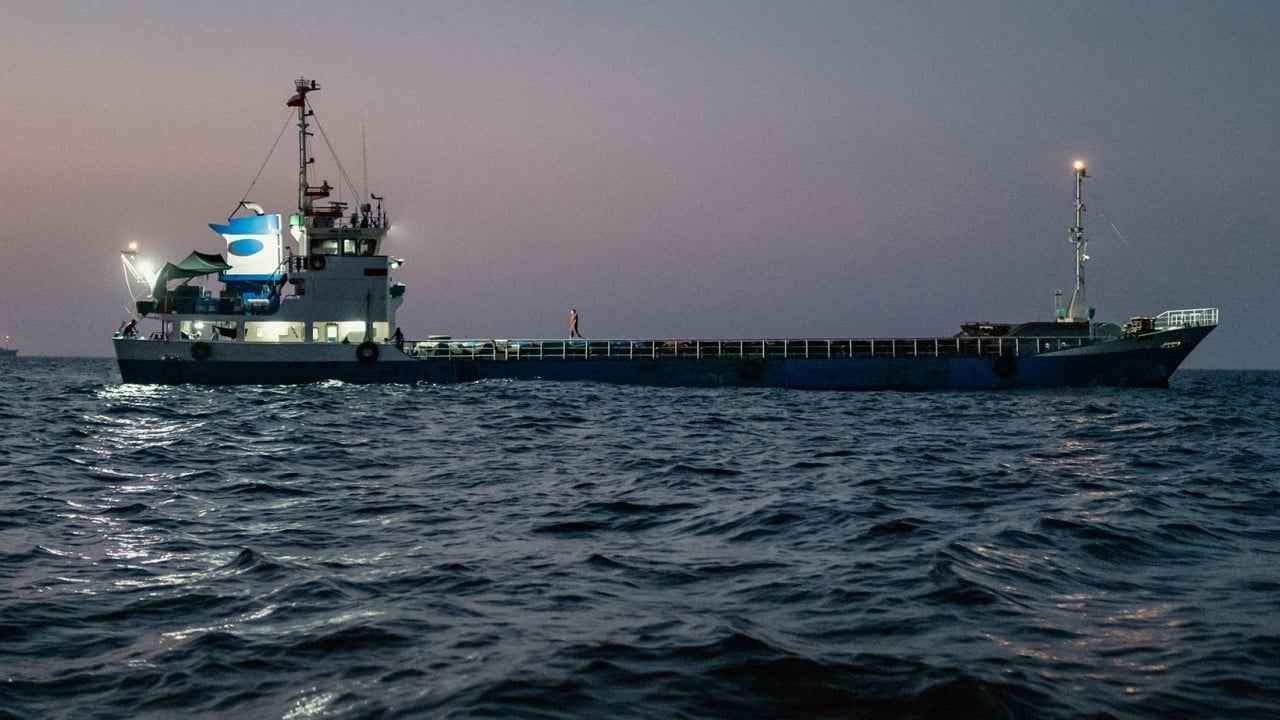
This means targeting the financial networks, the front companies, and the specific maritime shipping routes that transport dual-use components before they ever reach the assembly floors in Baghdad or Damascus. You do not win an asymmetric conflict by destroying the arrow; you win by making the bow too expensive and too difficult to build in the first place.
Stop giving the militias the war they want. Stop validating their existence with multi-million dollar firework displays. Close the exposed outposts, cut off the supply chains in silence, and leave them to starve in the desert without an empire to fight.