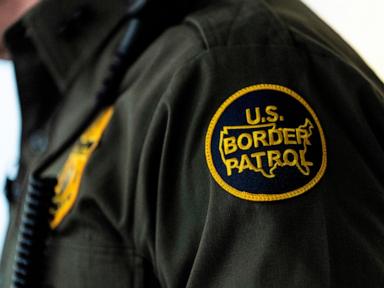
The Myth of the Mastermind Saboteur
Public discourse loves a cartoon villain. When news broke that a Mexican national pleaded guilty to impersonating a U.S. Border Patrol agent to "disrupt deportation missions," the media machine did exactly what it always does: it pivoted to a narrative of high-stakes national security breaches. The "lazy consensus" here is that this individual represents a massive, organized threat to the integrity of federal enforcement.
It is a comforting lie.
The reality is far more embarrassing for the state. If a single individual can put on a uniform, buy a few patches, and successfully derail official "missions," we aren't looking at a security breach. We are looking at a system so bloated, uncoordinated, and reliant on visual cues that it has become its own worst enemy.
The competitor articles focus on the "criminality" of the act. They dwell on the guilty plea and the potential prison time. They miss the real story: the absolute fragility of a multi-billion dollar enforcement apparatus that can be tripped up by a guy playing dress-up. This wasn't a failure of border security; it was an indictment of security theater.
Logic Over Legalese
Let’s look at the mechanics. Law enforcement operations rely on a chain of command and verified identification. At least, that is what the brochures say. In practice, the bureaucratic "landscape"—a word I hate but one that fits the messy reality here—is governed by the "uniform bias."
Social engineering 101 teaches us that people stop asking questions the moment they see the right shirt. I’ve seen corporate security audits where a guy with a clipboard and a high-vis vest walked into a server room unchallenged. This "agent" didn't exploit a high-tech flaw in the border. He exploited the human tendency to outsource critical thinking to a badge.
The argument that this man "disrupted missions" assumes those missions were robust to begin with. If your deportation mission can be halted or redirected by a random person in a fake Tahoe, your mission wasn't a tactical operation. It was a parade. Real operations involve encrypted communication, pre-verified manifests, and digital handshakes. If those were missing, the fault lies with the agency, not just the impersonator.
The Cost of the Uniform Bias
We spend billions on thermal imaging, ground sensors, and drones. Yet, the most effective tool for "disruption" remains a $40 polyester blend shirt.
This case exposes the Verification Gap. In the tech sector, we call this "Single Point of Failure." The Border Patrol, for all its rugged branding, relies on a visual identity that is easily replicated. When the media focuses on the "guilt" of the individual, they ignore the systemic vulnerability. We are training agents to look for "threats" in the desert while they ignore the person standing right next to them who looks exactly like they do.
Imagine a scenario where a bank allowed anyone wearing a suit to walk into the vault. We wouldn't blame the guy in the suit for being a genius; we would fire the bank manager.
Why the "Disruption" Narrative is Flawed
The term "disrupting deportation missions" sounds like a plot from a spy thriller. In reality, it likely involved confusing local residents, redirecting traffic, or providing false information to actual agents.
- Fact: Real disruption requires deep intelligence.
- Reality: Most "impersonations" are low-level grifts or protests that only work because the system is too large to talk to itself in real-time.
The status quo says we need harsher penalties for impersonation. The contrarian truth is that we need a total overhaul of how field identity is verified. If an agent can’t authenticate a colleague within five seconds using a zero-trust protocol, the system is broken.
The E-E-A-T of Enforcement Failures
I have watched government agencies waste millions on "bolstering" perimeters while their internal authentication protocols remained in the 1970s. This isn't an isolated incident; it's a feature of large-scale bureaucracies.
The "battle scar" here is the realization that the more we militarize the look of an agency, the easier it becomes to mimic. By moving toward specialized tactical gear, the Border Patrol has created a "brand" that is sold at every surplus store.
The downside to my argument? Yes, implementing cryptographic identity verification for every field interaction is expensive and slows down operations. It's a logistical nightmare. But the alternative is what we have now: a system where a guilty plea for "impersonation" is used to mask the fact that the agency was tricked by its own vanity.
Stop Asking "How Did He Do It?"
The "People Also Ask" sections of the internet are flooded with questions about the legality of uniforms and the specifics of the plea deal. These are the wrong questions.
Instead, ask: Why was he allowed to get close enough to a mission to affect it?
If he was "disrupting" missions, he was in the loop. He was part of the flow. That means actual federal agents accepted his presence. This is a failure of internal culture. It is the result of a "brotherhood" mentality where the uniform is the only credential that matters.
We don't need more laws against impersonation. We have those. We need a "Zero Trust" model in the field.
- Stop trusting the visual. A badge is a piece of tin.
- Mandate digital handshakes. Every field agent should be pingable on a secure network.
- Kill the security theater. If a mission is so fragile it can be stopped by one guy with a fake ID, it wasn't a mission. It was a suggestion.
The Brutal Reality of the Border Machine
The media wants you to feel outraged that a "foreigner" subverted the system. I want you to be outraged that the system is so easily subverted.
The competitor's article serves as a press release for the Department of Justice. It frames the guilty plea as a win for the rule of law. It isn't. It's a plea deal intended to bury the embarrassing details of how long this went on and how many "missions" were actually affected.
Every time someone successfully impersonates a federal official, they aren't just breaking the law. They are conducting a free penetration test of our national security. And right now, the results of that test are failing.
The "fresh perspective" no one wants to hear: The impersonator isn't the problem. He’s the symptom. The problem is an agency that values the appearance of authority more than the hard, digital infrastructure of actual security.
We are patrolling the border with 18th-century identity concepts in a 21st-century world. Until we stop worshipping the uniform and start verifying the individual, expect more "disruptions." The next one might not be a guy in a fake Tahoe; it might be someone who understands that the biggest hole in the wall is the one in the agent's logic.
Stop looking at the man who pleaded guilty. Start looking at the agents who didn't notice he wasn't one of them.