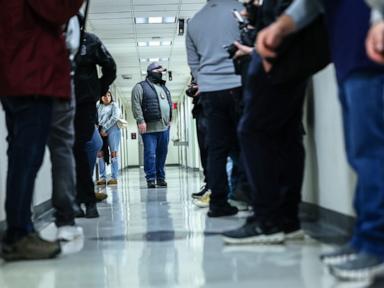
A federal judge has blocked the federal government from executing civil immigration arrests inside and directly outside New York state courthouses. The ruling strikes a direct blow to a controversial enforcement strategy that has fundamentally altered the mechanics of local justice. By curbing the powers of Immigration and Customs Enforcement (ICE) within these judicial zones, the decision attempts to restore a boundary that state officials argue was eroded by an aggressive federal overreach. This clash is not merely a dispute over jurisdiction. It represents a deeper systemic fracture between federal enforcement mandates and the constitutional guarantee of equal access to the courts.
The Courthouse Standoff
The federal injunction responds to a specific, escalating tactic. Over recent years, federal agents increasingly utilized local halls of justice as tracking grounds for undocumented immigrants. These individuals were often appearing for routine matters—traffic violations, family court disputes, or domestic violence hearings.
The rationale from federal authorities seemed straightforward. Courthouses are secure environments. Visitors pass through metal detectors, identity checks are standard, and schedules are matters of public record. For an agency tasked with locating individuals in non-cooperative jurisdictions, a courthouse represented a highly efficient, controlled environment for apprehension.
Local prosecutors and defense attorneys viewed the practice through a vastly different lens. They observed an immediate, chilling effect on participation in the justice system. When a victim of domestic abuse or a witness to a violent crime fears that entering a courthouse will result in immediate deportation, they stop showing up. Crime rings flourish when witnesses disappear. The judicial process stalls when defendants vanish before their day in court. The federal ruling acknowledges this reality, prioritizing the integrity of state legal proceedings over the administrative convenience of federal deportation efforts.
A Collision of Powers
At the heart of this battle is a profound constitutional tension between federal supremacy in immigration matters and the state’s duty to maintain public safety. The federal government possesses broad authority to enforce immigration laws. However, that authority is not absolute, especially when its execution actively disrupts the core operations of state government.
The legal mechanism used to halt these arrests relies heavily on common-law privileges that date back centuries. Historically, courts have protected individuals from civil arrest while attending court proceedings to ensure that justice could be administered without obstruction. The recent decision revives this principle, adapting it to a modern crisis where federal policy directly collides with state sovereignty.
This is not a clean legal victory, nor does it resolve the broader gridlock. ICE officials maintain that restricting their access to courthouses forces agents into residential neighborhoods and workplaces, environments that are arguably less secure and far more unpredictable for both agents and the public. By shutting down the courthouse pipeline, the ruling shifts the operational burden back to the streets, setting the stage for the next phase of friction.
The Hidden Cost to Public Safety
Proponents of aggressive courthouse enforcement argue that public safety is compromised when individuals accused of crimes are shielded from immigration authorities. This argument breaks down under closer scrutiny of how local courts actually function. The vast majority of individuals targeted in these courthouse sweeps were not dangerous felons; those individuals are typically transferred directly from local jail custody under different protocols. Instead, courthouse arrests frequently swept up individuals entangled in minor civil or criminal infractions.
Consider the ripple effects on local communities. When a single witness refuses to testify out of fear, an entire prosecution can collapse.
- Domestic Violence Reporting: Victims choose silence over the risk of separation from their children.
- Labor Violations: Undocumented workers decline to pursue wage theft claims against abusive employers, creating an underclass of exploitable labor that depresses standards for everyone.
- Civil Disputing: Basic property and contract disputes go unresolved, undermining local economic stability.
The disruption extends to the legal profession itself. Public defenders find themselves acting as lookouts rather than legal counsel, scanning corridors for plainclothes federal agents. Judges face the indignity of seeing their orders rendered meaningless when a defendant is plucked from the hallway before a scheduled hearing can commence. The courtroom ceases to be a neutral forum for dispute resolution and becomes a trap.
The Limits of Judicial Intervention
While the injunction offers immediate relief to advocates of courthouse sanctity, it remains a localized remedy for a national systemic failure. A ruling in New York does not bindingly alter operations in Texas, California, or Illinois, where different federal courts navigate similar challenges with varying outcomes. This patchwork legal reality creates confusion for immigrants and law enforcement alike.
Furthermore, the ruling faces an inevitable journey through the appellate courts. Higher courts, particularly those with a strict interpretation of federal immigration authority, may view the state's common-law protections as secondary to explicit federal statutes governing the removal of undocumented individuals. The temporary nature of these injunctions means that the underlying instability persists.
The reality is that courtroom protections are a defensive maneuver, not a permanent solution. As long as federal enforcement priorities remain disconnected from the operational realities of local municipalities, the friction will continue to find new outlets. The courthouse doors may be temporarily closed to federal agents, but the pressure cooker of immigration enforcement will simply find another venue to boil over.