Fifteen dollars. That was all it took to change the geography of a human life forever.
In the summer of nineteen fifty-nine, most fifteen-year-olds were worried about high school dances, baseball batting averages, or scraping together enough loose change for a Saturday matinee ticket. Jim Bishop was different. Jim was looking at a jagged piece of Colorado hillside off Highway 165, a rugged stretch of earth wrapped in pine trees and quiet isolation, and seeing an empire. Discover more on a related issue: this related article.
He didn't have the money to buy it outright. So he did what any stubborn kid with an impossible dream would do. He worked odd jobs, saved every fragile coin, and made a down payment. Over the next few years, he paid off the rest, handing over a grand total of four hundred and fifty dollars for two and a half acres of raw mountain ground.
At the time, people laughed. Neighbors shook their heads, assuming the teenager would grow up, sell the scrubland for a minor profit, and move on to a normal suburban existence. They did not understand what happens when a mind becomes possessed by a singular, unyielding vision. They did not know Jim. Additional analysis by Glamour highlights comparable perspectives on this issue.
Stane.
That is where it starts.
If you visit rural Colorado today, long before you see the towering iron gates or the medieval turrets piercing the pine canopy, you hear the weight of it. The dull, rhythmic thud of a heavy hammer striking iron. The scrape of a shovel dragging across gravel. The heavy, resonant clunk of native rock shifting into a permanent embrace with mortar.
For half a century, Jim Bishop has been out here. Alone.
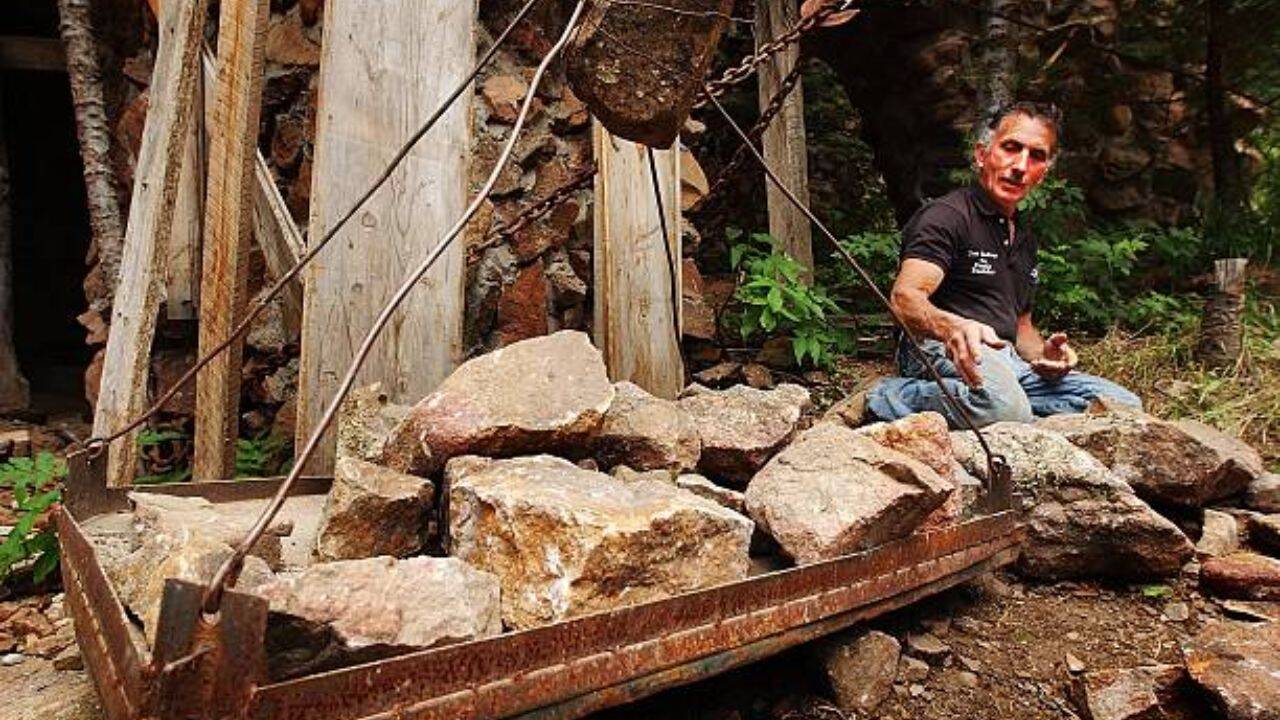
There are no giant construction crews with earthmovers. There are no venture capitalists funding the masonry. There is only one man, his calloused hands, and a pickup truck hauling thousands of tons of rock out of the surrounding mountainside.
(Note: When I speak of a one-man project, I am relying on the historical record of Bishop Castle's construction, where Jim built the vast majority of the stone structure single-handedly, though family members occasionally assisted with specific logistics or safety measures in later decades.)
To understand what Jim built, you have to let go of modern architecture. We live in an era of drywall and pre-fabricated panels, where buildings are designed to be temporary, efficient, and easily replaceable. We punch clock cards in cubicles built by the lowest bidder. We rent apartments that look identical from New York to Seattle.
Jim rejected all of that.
He started small. In the late sixties, he set out to build a modest two-story cabin for his family. Stone by stone, he hauled the native rocks from the earth. But as the walls rose, so did his ambitions. A cabin became a cottage. A cottage became a fortress.
Visitors often ask why. Why spend fifty years of a human life breaking your back under the punishing Colorado sun? Why risk injury, financial strain, and public skepticism just to stack heavy stones on top of one another?
The answer is deceptively simple. Most of us spend our lives consuming things that disappear. We scroll through feeds that refresh into oblivion. We buy products designed to break down in five years. We leave footprints on beaches that the next tide washes clean.
Jim wanted something that would outlast him. He wanted proof that he had walked this earth.
Walking up to Bishop Castle for the first time is an exercise in disbelief. It rises from the mountain like a fossilized dragon. Massive stone walls anchor the structure into the cliffside, while wrought-iron balconies spiral upward toward a blue mountain sky. There are towering towers, sweeping archways, and a massive, fire-breathing stainless steel dragon head perched menacingly over the eastern wall.
It is medieval fantasy brought violently into physical reality.
And yet, it is completely real. Every single stone you touch was hoisted by human muscle. Every iron railing was forged in an open-air workshop on site.
Consider the sheer scale of the labor. A single large boulder can weigh hundreds of pounds. Multiply that by hundreds of thousands of stones. Add in the mortar, the wooden beams, the intricate glasswork, and the sheer architectural engineering required to keep a multi-story stone castle structurally sound without modern blueprints or civil engineering degrees.
Jim didn't use blueprints. He built it the way a painter approaches a canvas, stroke by stroke, adjusting to the contours of the land as he went. If a wall needed to curve around a pine tree, he curved it. If a tower needed to catch the afternoon light, he raised it higher.
There were costs, of course. Not just financial, though local zoning battles and safety inspections became legendary. The real cost was physical. Arthritis, torn muscles, scars, and exhaustion. Building a castle with your own hands is an act of quiet violence against your own body.
I remember talking to an old mason once, a man who spent his life restoring cathedrals in Europe. He looked at his hands—thick-knuckled, scarred, permanently stained with limestone dust—and told me something I have never forgotten.
"You don't build stone," he said. "Stone builds you."
That is what happened to Jim. As the castle grew, so did his reputation. Tourists began pulling off the highway. Travelers from across the world heard rumors of a madman building a fortress in the Rockies and drove out just to see if it was true.
Jim never charged admission. He never put up a ticket booth or commercialized the entrance. The castle remains open to the public, completely free of charge, supported entirely by voluntary donations dropped into a weathered metal box near the gate.
Think about that in our current cultural moment. Everything has a subscription fee. Every experience is monetized, optimized, and algorithmically targeted. A project of this magnitude in the twenty-first century would normally be swallowed by corporate tourism boards, gift shops selling plastic trinkets, and parking fees.
Jim said no. He kept the gates open. He kept the dream pure.
People come for the architecture, but they stay for the philosophy. They walk the spiral staircases, peer out through stained-glass windows, and feel a strange shiver down their spine. It is the feeling of encountering genuine human conviction. In a world of digital ephemera, stone is heavy. Stone is permanent. Stone tells the truth.
Age eventually slows even the most relentless spirits. The hammer swings a bit slower now. The truck trips up the mountain are fewer. But the castle stands, anchored to the Colorado bedrock, defiant against the wind, the snow, and the passage of time.
When Jim Bishop first handed over those few crumpled bills as a teenager in nineteen fifty-nine, he was buying dirt. He turned it into a kingdom.
The sun dips low behind the Sangre de Cristo mountains, casting long, dramatic shadows across the stone parapets. The wind rustles through the pine needles, carrying the faint, lingering scent of woodsmoke and iron.
High above the highway, the iron dragon catches the last dying rays of golden light, glowing bright against the gathering dark.