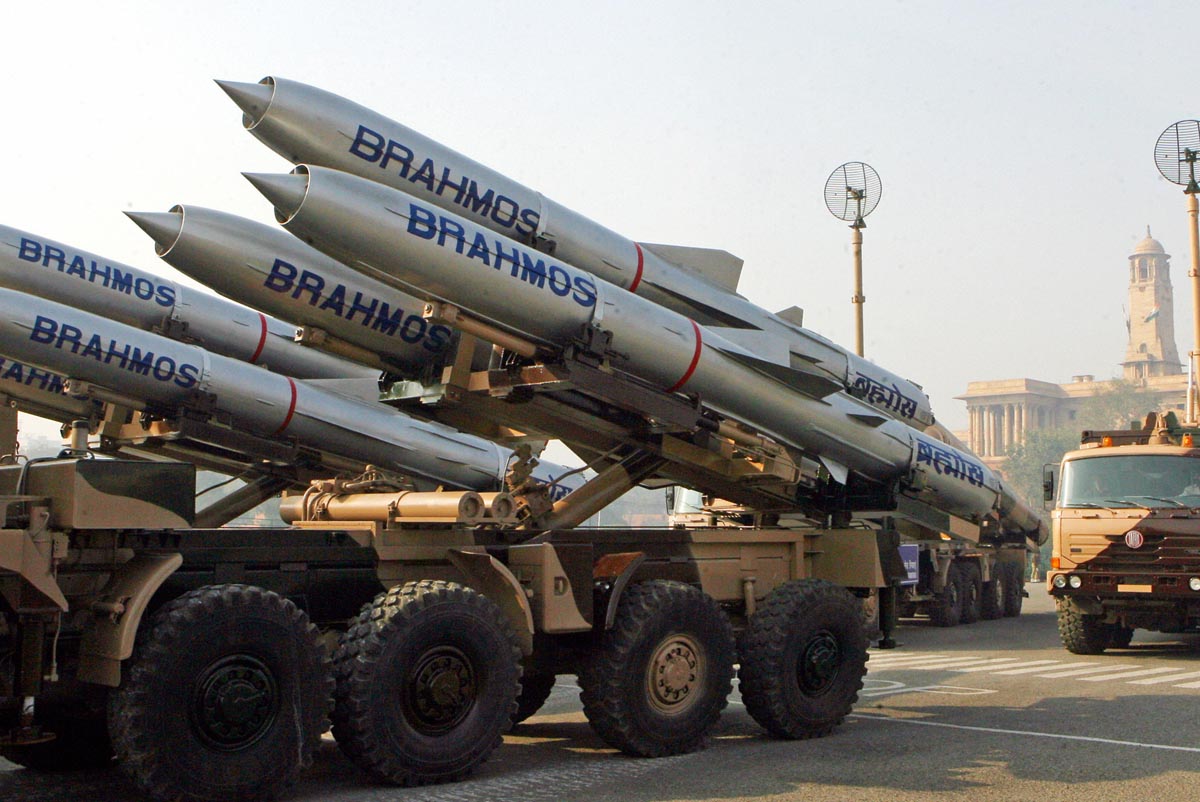
The headlines are predictable. They scream about "strategic breakthroughs" and "shifting regional balances" every time a diplomat from New Delhi lands in Hanoi. The narrative is always the same: India is finally selling the BrahMos cruise missile to Vietnam, providing a hard-hitting deterrent against Chinese maritime expansion while positioning itself as a premier defense exporter.
It is a beautiful story. It is also a fantasy.
If you believe the hype surrounding the current talks over BrahMos sales and Maintenance, Repair, and Overhaul (MRO) support for Sukhoi jets, you are missing the structural rot underneath the deal. We are witnessing a performance, not a policy. India and Vietnam are trapped in a cycle of "negotiation theater" that serves domestic optics but ignores the brutal reality of modern electronic warfare, supply chain fragility, and the sheer physics of the South China Sea.
The Myth of the Silver Bullet
The BrahMos is a formidable piece of hardware. I have stood next to these launchers; the ramjet engine is a marvel of Indo-Russian collaboration, capable of pushing a 3,000 kg missile to Mach 3. But in the defense industry, we have a saying: "Hardware is easy; integration is impossible."
Mainstream analysts treat the BrahMos like a plug-and-play video game power-up. They assume that if Vietnam places these batteries along its coast, the People’s Liberation Army Navy (PLAN) will suddenly turn tail.
This ignores the Kill Chain.
A missile is only as good as the data feeding it. To hit a moving destroyer 290 kilometers away, you need a sophisticated, resilient network of over-the-horizon (OTH) radars, maritime patrol aircraft, and satellite uplinks. Vietnam’s current maritime domain awareness (MDA) is a patchwork quilt of aging Soviet tech and mid-tier European sensors.
Without a unified data link that can survive intense Chinese jamming, the BrahMos is just an expensive, supersonic paperweight. If Hanoi cannot see the target with precision, the missile is firing into an empty ocean. The "lazy consensus" says the missile changes the math. The reality? Without the sensor architecture—which India is not providing—the math remains exactly the same.
The Russian Albatross
The most overlooked flaw in this "strategic partnership" is the elephant in the room: Russia.
The BrahMos is a joint venture with NPO Mashinostroyeniya. The Sukhoi Su-30MK2 fighters that India wants to maintain for Vietnam are Russian. The Kilo-class submarines India wants to service are Russian.
We are currently living through a total transformation of global defense logistics. Since the escalation of the conflict in Ukraine, the Russian defense industrial base is under immense strain. Spare parts for AL-31F engines are not just delayed; they are being diverted to the front lines in Donbas.
India’s offer of MRO support is framed as a "self-reliant" alternative for Vietnam. This is a half-truth. While India can manufacture many components, it still relies on Moscow for specialized alloys, high-end avionics, and core engine blueprints.
By deepening its reliance on Indian-managed Russian tech, Vietnam is doubling down on a declining ecosystem. It is like buying a vintage car and thinking you’re safe because your neighbor has a decent toolbox. If the factory stops making the pistons, you both have scrap metal.
Instead of pivoting toward the modular, Western, or indigenous systems that define modern 21st-century warfare, this deal tethers Hanoi to a 20th-century supply chain that is currently being dismantled by sanctions and attrition.
The MRO Trap: Expertise vs. Capacity
New Delhi is pitching itself as a regional MRO hub. This is a classic case of overpromising and under-delivering.
I have tracked the turnaround times at Hindustan Aeronautics Limited (HAL). While their technical skill is undeniable, their capacity is chronically overstretched by the Indian Air Force's own demands. India has hundreds of its own Su-30MKIs to keep flight-worthy.
When a Vietnamese Sukhoi needs a mid-life upgrade or an engine overhaul, does anyone honestly believe New Delhi will prioritize Hanoi’s tail numbers over its own during a border standoff in Ladakh?
Defense diplomacy is built on trust, but defense logistics is built on bandwidth. India lacks the excess industrial bandwidth to be Vietnam's mechanic. By accepting this deal, Vietnam isn't gaining a partner; they are joining a long, slow-moving queue for parts that might never arrive.
The Asymmetry Illusion
The "People Also Ask" sections of the internet are filled with queries like "Can BrahMos sink a Chinese aircraft carrier?"
The answer is: Theoretically, yes. Practically, it's the wrong question.
The obsession with "carrier killers" ignores the reality of Saturation Warfare. China doesn't need to have a better missile than the BrahMos; they just need to have more interceptors than Vietnam has missiles.
The PLAN’s Type 055 destroyers carry 112 Vertical Launch System (VLS) cells. They are designed to operate in an Integrated Air Defense System (IADS) environment. If Vietnam buys 30 or 50 missiles, they are playing a losing game of numbers. In a high-intensity conflict, the BrahMos batteries would be the first targets of a massive, coordinated drone and ballistic missile strike (the DF-17 or DF-21D).
True deterrence isn't about one "scary" missile. It’s about Distributed Lethality. It’s about having thousands of low-cost, expendable sensors and shooters.
By spending a massive chunk of its defense budget on a few prestigious BrahMos batteries, Vietnam is engaging in "prestige procurement." They are buying a symbol of defiance, but they are sacrificing the ability to build a truly resilient, swarm-based coastal defense.
The Sovereignty Paradox
There is a deeper, more uncomfortable truth that neither side will admit in a press release: India is a cautious power.
New Delhi loves the idea of being a counterweight to China, but it is terrified of a direct kinetic confrontation. Every time India moves closer to a weapon sale with Vietnam, Beijing sends a "message" along the Line of Actual Control (LAC).
This creates a "Strategic Chill."
The BrahMos deal has been "discussed" since 2014. We are over a decade into "discussions." Why? Because India uses the threat of the sale as a bargaining chip with China. Vietnam is being used as a pawn in a larger Himalayan chess match.
If you are a Vietnamese military planner, how can you rely on a supplier that views your national security as a secondary lever for their own border disputes? The moment New Delhi gets a concession from Beijing in Ladakh, the BrahMos "technical delays" will miraculously reappear.
Stop Buying Hardware, Start Buying Time
If Vietnam actually wanted to disrupt the status quo, they would stop chasing supersonic missiles and start investing in undersea cable resilience, domestic drone manufacturing, and cyber-offensive capabilities.
The BrahMos is a loud weapon. It announces itself with a massive infrared signature and a Mach 3 sonic boom. In modern warfare, if you are loud, you are dead.
The real "game-changer"—to use a term the bureaucrats love—isn't a missile; it's the ability to make the South China Sea "dark" for the PLAN. This means thousands of sea mines, underwater unmanned vehicles (UUVs), and electronic warfare suites that can blind satellite SAR (Synthetic Aperture Radar).
India isn't offering those things. India is offering a shiny, expensive rocket that keeps Vietnam dependent on a crumbling Russo-Indian supply chain and a diplomatic strategy that is more about posture than protection.
The Cost of the "Safe" Choice
The "consensus" view says this deal is a win-win. It’s "safe." It’s "strategic."
I call it a trap.
It’s a trap for Vietnam, which gets a limited number of high-maintenance missiles that require a sensor net they don't have. It’s a trap for India, which is overextending its MRO capacity and inviting Chinese retaliation for a sale that doesn't actually change the regional balance of power.
True strategic autonomy isn't found in a catalog of Soviet-derived missiles. It’s found in the ability to fight a war that the enemy isn't prepared for. By buying the BrahMos, Vietnam is preparing for the exact war China has spent thirty years learning how to win.
Stop looking at the spec sheets. Stop listening to the joint statements. The BrahMos deal isn't a shield; it's a target. And right now, Hanoi is paying for the privilege of putting it on their own chest.
Buy the missiles if you want the parade photos. But if you want to win, you need to stop playing India's game.
The era of the prestige missile is over. The era of the invisible, autonomous, and resilient swarm has begun.
Vietnam is currently shopping in the wrong century.