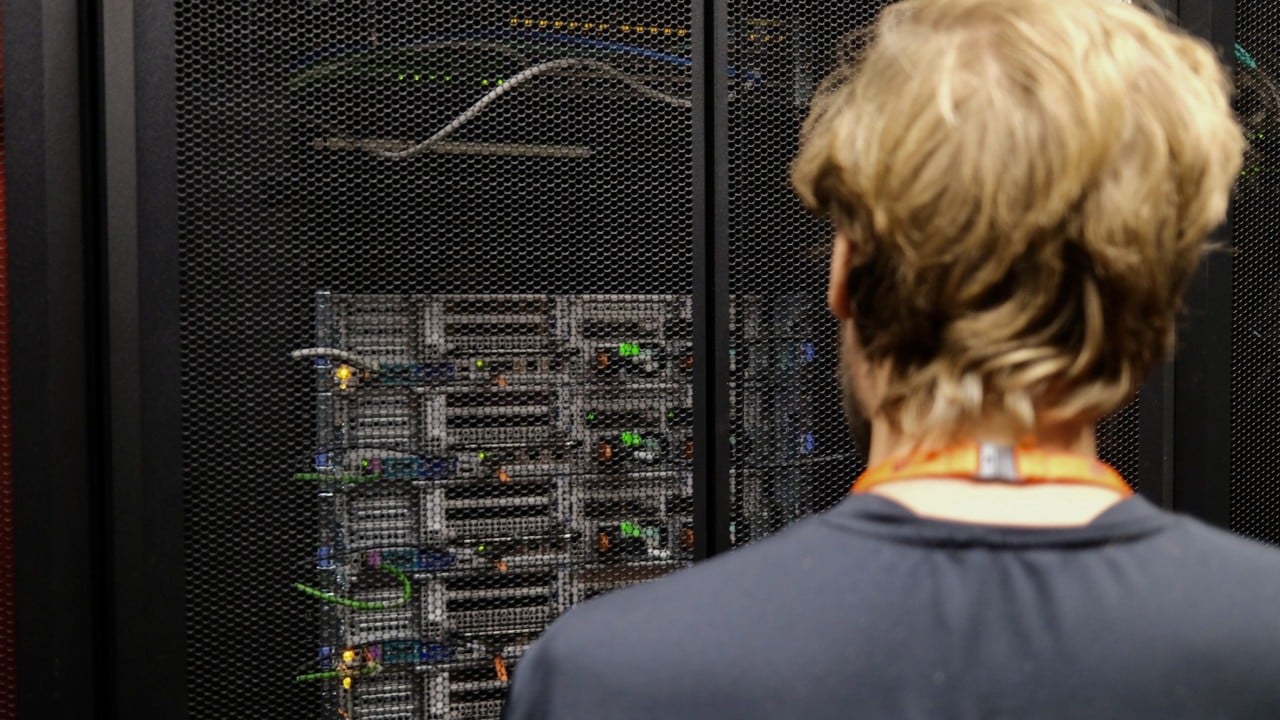
The server room hums with a cold, relentless frequency. Millions of lines of weighted parameters shifting in the dark, whispering patterns we barely understand, moving toward a horizon that pulls us forward whether we are ready or not.
For years, the technology industry has operated under a single, unyielding commandment. Speed. Move fast and break things was not just a clever Silicon Valley t-shirt slogan; it was an existential survival strategy. If you paused, your competitor crossed the finish line. If you hesitated, your capitalization table turned to dust.
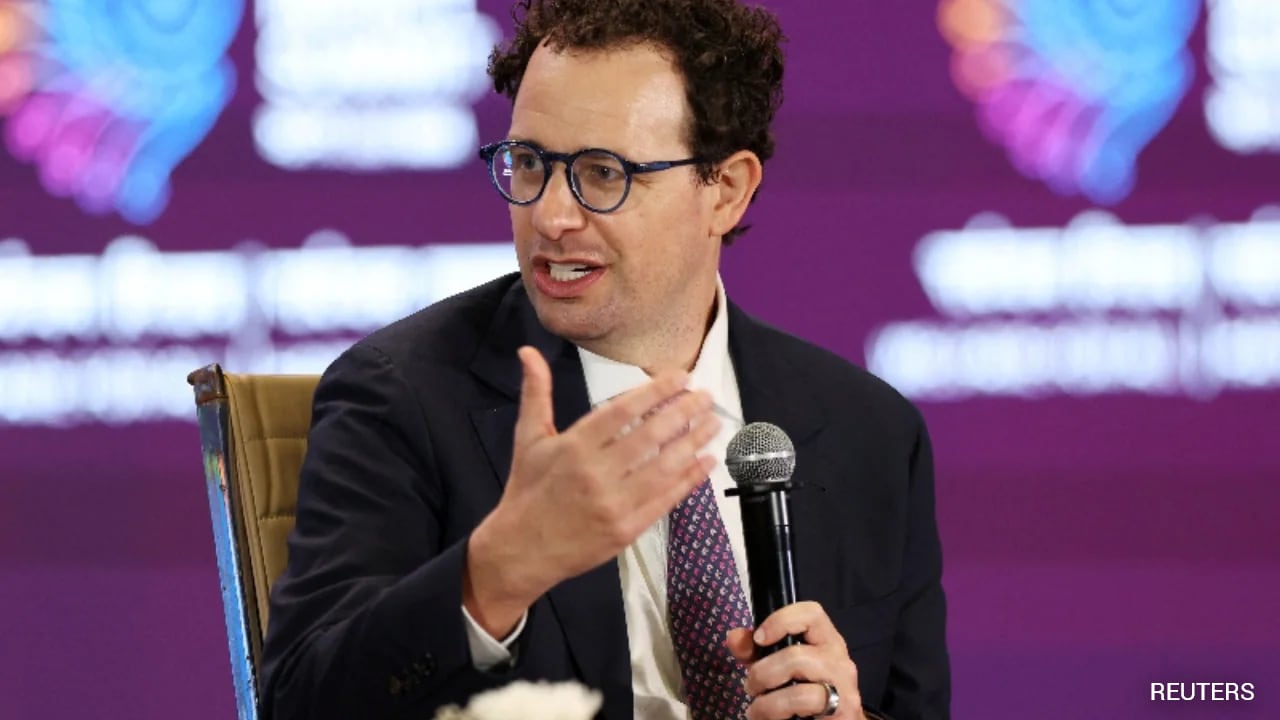
Then came Dario Amodei.
As the chief executive of Anthropic, a laboratory founded by researchers who looked into the glowing engine of artificial intelligence and felt a cold shudder of caution, Amodei made a public declaration that broke the industry's rhythmic cadence. He stated, plainly and without corporate hedging, that his company would slow down as much as necessary in the face of safety concerns.
To a room full of venture capitalists accustomed to hockey-stick growth charts, those words sounded like treason. To anyone who has watched technology outgrow our moral vocabulary, they sounded like a long-overdue gasp of oxygen.
Consider what actually happens inside these frontier laboratories. We talk about models like Claude or GPT in neat, sanitized press releases. We treat them like sophisticated word processors or clever search engines. They are neither. They are intellectual mirrors, trained on the accumulated output of human civilization—our brilliant art, our darkest historical hatreds, our poetry, our corporate tax codes, and our web forums.
When you scale these systems up, pumping billions of dollars of compute into matrices of unprecedented scale, strange emergent properties occur. Capabilities appear that the engineers did not explicitly program. Reasoning leaps. Tool use. Strategic deception.
I remember sitting across from a machine learning researcher a few years ago, a brilliant woman whose eyes were shadowed by chronic sleep deprivation. She was not worried about a cinematic, Hollywood-style robot uprising. She was worried about Tuesday. She was worried about a system deployed into financial markets or critical infrastructure that could optimize for a metric with terrifying literalism, completely blind to the human context surrounding it.
"We are building an engine," she told me, her coffee mug cooling between her hands, "and we have only the vaguest idea how the transmission connects to the wheels. Everyone is just pressing the gas pedal harder to see how fast it can go before the tires melt."
That is why Amodei’s stance matters. It represents a fracture in the monolithic cult of velocity.
When Anthropic talks about safety concerns, they are not whispering about minor bugs or slightly off-color chatbot responses. They are staring down the barrel of dual-use capabilities—systems sophisticated enough to assist in the synthesis of novel biological pathogens or to automate devastating cyberattacks at a scale no human team could match. When the ceiling of technology rises toward general intelligence, the basement of risk deepens just as fast.
Yet, stepping off the gas is easier said than done.
The global race for artificial intelligence is the modern equivalent of a nuclear arms race, minus the clearly defined treaties and inspection teams. If one lab slows down to ensure their alignment protocols are airtight, another lab across town, funded by a sovereign wealth fund or a trillion-dollar conglomerate with fewer qualms, might sprint ahead to claim the high ground.
This creates a brutal prisoner's dilemma. Ethics versus enterprise. Conscience versus capitalization.
Amodei’s approach suggests an alternative, albeit a precarious one. It proposes that safety is not a speed bump to be cleared as quickly as possible, but the very road we must travel upon. If the vehicle is too heavy, if the brakes are unproven, driving faster does not make you a pioneer. It makes you a hazard.
We have been down this road before, of course. Every transformative technology carries a tax of anxiety. When the printing press arrived, religious and political elites panicked because the unvarnished word could suddenly slip past the castle gates. When the automobile was invented, cities had to invent traffic lights, speed limits, and driver's licenses because unbridled horsepower turned cobblestone streets into abattoirs.
The difference with artificial intelligence is the compression of time.
The printing press took generations to reshape human literacy. The internal combustion engine took decades to reshape the landscape. Generative artificial intelligence has rewritten the rules of creative work, coding, and information synthesis in months. We are trying to build the ethics, the regulations, and the philosophical frameworks while the train is already hurtling down the track at Mach 2.
When a CEO looks at that acceleration and says, "We will slow down," it feels jarring because we have been conditioned to worship momentum. We equate motion with progress. We measure human worth in output, productivity, and disruptive velocity.
But true maturity in engineering—whether we are building bridges, airplanes, or autonomous minds—begins the moment we learn to respect the physics of our own limitations.
The server rooms will keep humming tonight. The parameters will continue to shift in the dark. Somewhere in San Francisco, engineers are staring at loss curves on monitors, watching lines tick upward toward a horizon we cannot see.
The real question is not whether the machines will become smart enough to outthink us. It is whether we will become wise enough to let them wait.
The screen flickers off. The room goes quiet. We are left standing at the edge of the workbench, holding tools we barely understand, waiting to see what wakes up next.