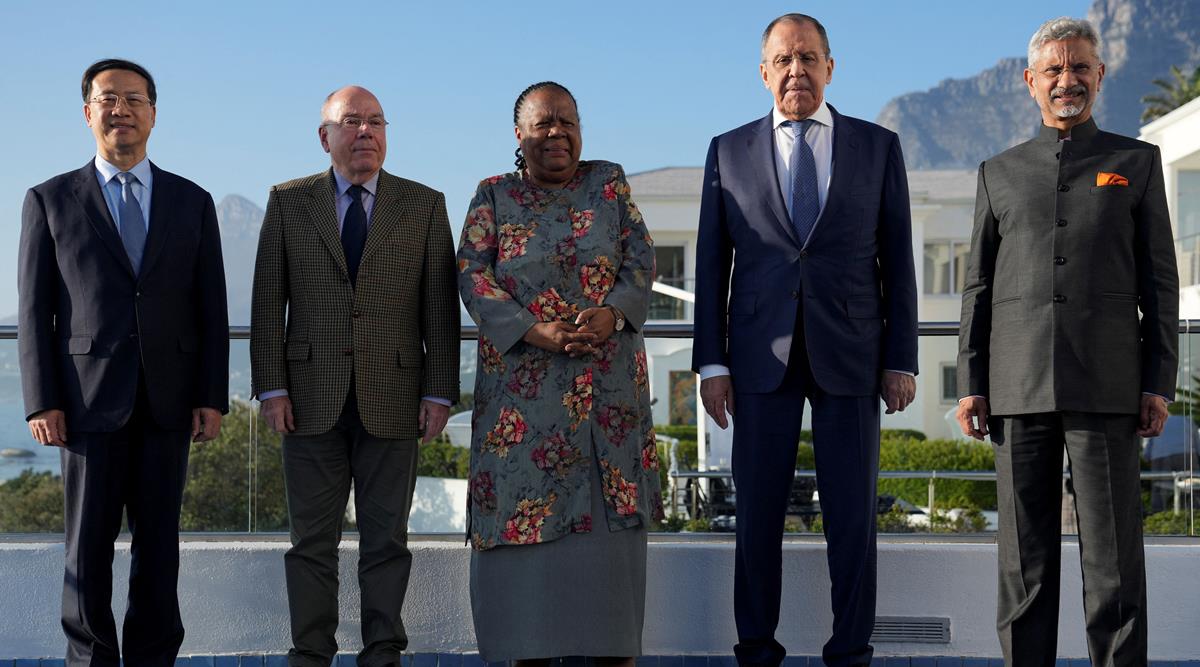
India’s capital is currently a high-stakes staging ground for some of the world’s most influential diplomats. As global leaders arrive in India for the BRICS Foreign Ministers’ Meeting, they aren't just here for photo ops or polite tea. They’re here to negotiate a massive shift in how the world actually runs. If you think this is just another dry diplomatic summit, you’re missing the point. The group that started as a clever acronym is now a serious weight on the global scale, and what happens in New Delhi this week will dictate trade and security for the next decade.
The arrival of foreign ministers from Brazil, Russia, India, China, and South Africa—alongside newer members—signals a clear move away from a world where one or two Western nations call all the shots. India’s role as the host is particularly telling. It’s a balancing act that few other countries could pull off. I’ve watched these summits for years, and the energy in Delhi right now feels different. It’s less about "joining the club" and more about "building a new one."
Why the BRICS Meet in India is a Big Deal
The timing of this arrival isn't an accident. We're living through a period of intense fragmentation. Western sanctions on Russia and the cooling of US-China relations have pushed these nations to find alternative ways to move money and goods. When you see figures like Sergey Lavrov or Wang Yi landing at the airport, don't just see individuals. See the representative power of a bloc that now accounts for a larger share of global GDP (PPP) than the G7.
India sits at the center of this hurricane. It manages to stay in the Quad with the US while hosting the very nations the US is trying to isolate. That’s not a contradiction; it’s a strategy. India wants a multi-polar world, and this meeting is the primary tool to build it. They’re discussing things that actually matter to your wallet: digital payment systems that don't rely on SWIFT, energy security, and how to stop being at the mercy of the US dollar.
Security and Logistics in New Delhi
You don't move this many high-profile figures into a city without turning it into a fortress. The security around the summit venues is intense. Elite paramilitary units and Delhi Police have cordoned off specific zones to ensure no disruptions. For those living in or traveling through the capital, the traffic diversions are a headache, but they’re necessary.
The hospitality is also part of the diplomacy. India uses these arrivals to showcase "Vishwa Mitra" or the concept of being a friend to the world. It’s about soft power. Every handshake on the tarmac and every cultural performance at the welcoming ceremony is designed to send a message of stability and leadership.
The Expansion Problem
One of the biggest items on the agenda is how to handle the "BRICS Plus" crowd. Everyone wants in. From Southeast Asia to the Middle East, nations are tired of being told who they can trade with. But expansion brings friction. China wants a bigger bloc to counter the West. India wants to make sure the group doesn't just become a pro-Beijing mouthpiece.
The tension is real. If the group gets too big, it loses its ability to act. If it stays too small, it stays a fringe club. The leaders arriving today have to find the sweet spot. They have to figure out how to incorporate nations like Iran, Egypt, and Ethiopia without breaking the fragile consensus they've built so far.
Moving Beyond the US Dollar
This is the part that usually gets buried in the fine print, but it’s the most important. De-dollarization is no longer a fringe conspiracy theory. It’s a work in progress. The ministers are here to talk about local currency trade. Russia and India have already been experimenting with Rupee-Ruble payments for oil. China and Brazil are doing similar deals with the Yuan.
It’s not that the dollar will disappear tomorrow. That’s not going to happen. But the dependency on it is being chipped away. If these leaders can agree on a common framework for digital currencies or a new settlement system, it changes how global business works. It means a country can’t be "turned off" from the global economy just because Washington is mad at them.
The Russia and China Dynamic
Let's be honest. The presence of Russia and China makes this meeting a lightning rod. For the West, this looks like a gathering of "the others." For the Global South, it looks like an insurance policy. India’s job is to keep the conversation focused on development rather than just being an anti-Western venting session.
I don't think people realize how difficult this is for Indian diplomacy. They have to keep the Russians happy enough to keep the oil flowing, the Chinese calm enough to avoid border flare-ups, and the Americans convinced that India is still a reliable partner. It’s a tightrope walk. So far, India has proven it can stay on the rope.
Real Issues on the Table
While the headlines focus on the big names, the actual committees are looking at boring but vital stuff.
- Supply chain resilience so we don't have another 2020-style collapse.
- Shared satellite data for disaster management.
- Reforming the United Nations, which most BRICS members think is stuck in 1945.
- Joint efforts in vaccine production and healthcare tech.
These aren't just talking points. They represent a move toward self-sufficiency. The leaders aren't just arriving for a talk shop; they're here to sign off on technical frameworks that have been in the works for months.
What You Should Watch For
As the summit unfolds over the next few days, ignore the fluff. Look at the joint statements for specific mentions of "alternative payment mechanisms." That’s the real gold. Also, watch the body language between the Indian and Chinese representatives. Any slight thaw in their frozen relationship would be a massive win for regional stability.
The arrival of these leaders is the start of a very long game. We're moving away from a world of "East vs West" and into a world of "The West vs The Rest." Or, more accurately, a world where the "Rest" finally has the economic muscle to say "No" when they want to.
Keep an eye on the official Ministry of External Affairs (MEA) briefings. They usually drop the most concrete details about bilateral side-deals that happen away from the main cameras. These side-deals—like new energy pipelines or tech sharing—are often more impactful than the main declaration itself. If you're invested in global markets or just curious about where the world is headed, pay attention. The center of gravity is shifting toward the East, and it's happening right now in New Delhi.