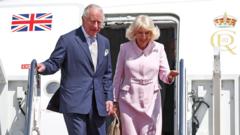
King Charles III and Queen Camilla have landed on American soil, marking a high-stakes pivot in the "Special Relationship" that goes far beyond simple photo opportunities. While the tabloid press focuses on the Queen’s choice of wardrobe or the precise angle of a royal wave, the reality of this visit is rooted in hard-nosed soft power. The palace is currently engaged in a desperate bid to prove that a thousand-year-old hereditary institution still carries weight in a republic that is increasingly skeptical of old-world authority. This isn't just a trip. It is a corporate rebranding exercise conducted at the highest level of international diplomacy.
The timing is not accidental. As the UK grapples with its post-Brexit identity and a shifting economic position, the monarchy remains its most potent export. However, the American appetite for British royalty has shifted from the fairy-tale obsession of the 1980s to a more critical, modern lens. Charles knows this. He isn't here to be a celebrity; he is here to be a statesman. Also making waves in related news: Why Chinese Activity Near Taiwan Waters Still Matters in 2026.
The Diplomacy of a Cautious King
Behind the closed doors of Foggy Bottom and the West Wing, the arrival of a British monarch is viewed through the prism of strategic alignment. Unlike his predecessor, who maintained a certain distance from the gritty details of policy, Charles has spent fifty years as an advocate for specific global issues. This visit is the culmination of that lifelong advocacy.
The British government uses the royals as the ultimate "icebreakers." When a minister visits Washington, it’s a meeting. When a King visits, it’s an event. This allows for a level of informal dialogue that can bypass the usual bureaucratic gridlock. We are seeing a coordinated effort to shore up support for environmental initiatives and defense pacts, all while maintaining the veneer of non-political tradition. It is a delicate dance. If the King appears too political, he violates the constitutional neutrality of his office. If he is too passive, he becomes irrelevant. Additional insights regarding the matter are explored by The New York Times.
The Environmental Mandate
For decades, Charles was mocked for his views on organic farming and climate change. He was the "eccentric" prince. Today, those views are the global mainstream. This gives him a unique credibility that other world leaders lack. He isn't a politician looking for a four-year term; he represents a continuity that spans generations.
During this visit, the King is prioritizing meetings with American tech leaders and climate venture capitalists. He isn't just looking at trees; he is looking at the capital required to save them. By positioning the monarchy as a bridge between traditional governance and modern environmentalism, he is attempting to secure a role for his family in the 21st century.
The Camilla Factor and the Image Rebuild
The presence of Queen Camilla is perhaps the most fascinating aspect of the current American tour. For years, the American public—raised on a diet of Diana-centric media—viewed her with a mix of suspicion and outright hostility. The palace has worked tirelessly to humanize her, focusing on her work with literacy and her support for survivors of domestic abuse.
In the United States, these issues resonate deeply. By choosing to visit community centers and literacy programs rather than just high-society galas, Camilla is executing a ground-game strategy. It is designed to dismantle the "wicked stepmother" narrative once and for all. It seems to be working. The crowds in Washington and New York are showing a level of warmth that would have been unthinkable twenty years ago.
The Shadow of the Sussexes
It is impossible to discuss this visit without acknowledging the elephant in the room located in Montecito, California. Prince Harry and Meghan Markle have spent years cultivating a specific American brand—one built on "truth-telling" and the dismantling of royal mystery.
The King’s visit is a silent rebuttal to that brand. By focusing on service, tradition, and the dignity of the office, the palace is attempting to show that the institution is more important than any individual personality clash. They aren't engaging in the drama. They are ignoring it. In the world of high-stakes PR, silence is often the loudest possible response. The goal is to make the California branch of the family look like a sideshow compared to the "real" work being done by the reigning sovereign.
The Cost of the Crown
Critics are already pointing to the immense cost of such a visit. Security alone for a state visit involving the British monarch and the American President runs into the tens of millions. In a time of global economic tightening, the question is whether the return on investment justifies the price tag.
The British Treasury would argue that the "soft power" generated by these visits results in billions in trade and tourism over the long term. A single image of the King at a specific landmark can drive travel bookings for months. More importantly, it reinforces the UK as a primary partner for the US. In the world of international relations, perception is reality. If the world perceives the UK and the US as being "joined at the hip" through the monarchy, it strengthens the UK's hand in trade negotiations elsewhere.
Security and the Secret Service
The logistics of this trip are a nightmare for the Secret Service and Scotland Yard. It involves coordinating multiple motorcades, secure zones in densely populated cities, and the management of thousands of onlookers. This isn't just about protecting a person; it's about protecting the symbol.
Any lapse in security would be a catastrophic failure for both nations. We see a level of cooperation between the FBI, the Met, and local police departments that is rarely matched. They are scanning for everything from lone-wolf protesters to organized political disruptions. The King, for his part, insists on a "walkabout" at every stop. This is the moment where he gets to touch the hands of the public—the most dangerous and most effective part of royal stagecraft.
Why the Republic Still Watches
There is a fundamental irony in a nation that fought a war to get rid of a King being so obsessed with his arrival. Some psychologists suggest it’s a form of "ancestral memory," while others believe it’s simply the ultimate reality show. But for the serious analyst, the fascination is about the permanence of the institution.
In a world where political leaders change every few years and social media trends shift by the hour, the monarchy offers a sense of terrifying, immovable stability. It is a reminder of a time when the world was ordered differently. For some, that is comforting. For others, it is an affront to democratic values. This tension is exactly what makes the visit so compelling.
The Business of Being Royal
We must also look at the commercial implications. The "Royal Warrant" system—where brands are given a seal of approval by the monarch—is a massive driver of luxury goods sales in the US. When the King is seen wearing a specific brand of wax jacket or using a certain pen, that company sees an immediate spike in the American market.
This visit is a rolling advertisement for British craftsmanship. From the Savile Row suits to the high-end automotive engineering, the King is the ultimate brand ambassador. He is selling a version of Britain that is refined, durable, and expensive. It is a niche, but it is a highly profitable one.
The Future of the Commonwealth in America
The US isn't part of the Commonwealth, but it is the largest influence on the nations that are. Countries like Canada, Jamaica, and the Bahamas are all watching how Charles is received in Washington. If he is treated as a heavyweight global player, it makes it harder for republican movements in those countries to argue that the monarchy is a "relic."
If, however, the visit is seen as a quaint curiosity—a relic of a bygone era—it will embolden those who want to see their own countries cut ties with the crown. This is why the meetings with the President are so vital. Charles needs to be seen as an equal, not a guest. He needs to be a peer in the room where it happens.
The Hard Truth of Soft Power
Soft power is notoriously difficult to measure. You can't put a "prestige" value on a spreadsheet and expect it to balance the budget. But in the halls of power, it is the only currency that matters when the chips are down. The ability to call a world leader and have them answer because of who you are, rather than what office you hold this week, is a power that is unique to the British monarch.
Charles is using this visit to spend that currency. He is investing his personal reputation into the American relationship, hoping that the dividends will be paid in the form of continued relevance for his heirs. He is not just a King on a trip; he is a CEO on a survival mission.
The Strategy of the Modern Monarchy
The "pictures" that the competitor press is so fond of are merely the surface layer of a deep, strategic operation. Every handshake is briefed. Every stop on the itinerary is vetted for its symbolic value. The choice of the King to visit a specific tech hub in California or a historical site in Virginia is a signal to the world about where the monarchy’s priorities lie.
The British monarchy survives because it adapts. It doesn't change quickly, but it changes surely. By coming to America now, Charles is signaling that the era of the "Grand Old King" is over. He is the Working King, the Environmental King, and the Diplomatic King.
The success of this visit will not be measured by the number of people in the streets. It will be measured by the tone of the editorials in the following weeks and the quiet agreements made in the corners of state dinners. The monarchy is fighting for its life in the court of public opinion, and the United States is the most important jury it will ever face.
The End of the Beginning
As the royal couple moves from the East Coast to the West, the narrative will continue to evolve. We will see more photos, more speeches, and more protests. But the core reality remains the same. The British Crown is attempting to prove it still matters in a world that has every reason to forget it.
The King isn't asking for permission to exist. He is acting as if his existence is the most natural thing in the world. In the high-stakes game of global perception, that confidence is his greatest weapon. Whether the American public buys into the myth or sees through the artifice will determine the shape of the monarchy for the next fifty years.
There is no middle ground here. Either the King is a vital part of the global order, or he is a ghost in the machine of modern politics. This visit is his chance to prove he is the former. The world is watching, not just because of the crown, but because we want to see if the old world can still teach the new world a thing or two about staying power.
The motorcade moves on, the flags are folded, and the King prepares for the next meeting. This is the grind of the modern sovereign. It is a life of gilded service, and in the heart of the American Republic, it has never looked more out of place—or more necessary.
Watch the hands, not the crown. That is where the real work is being done.