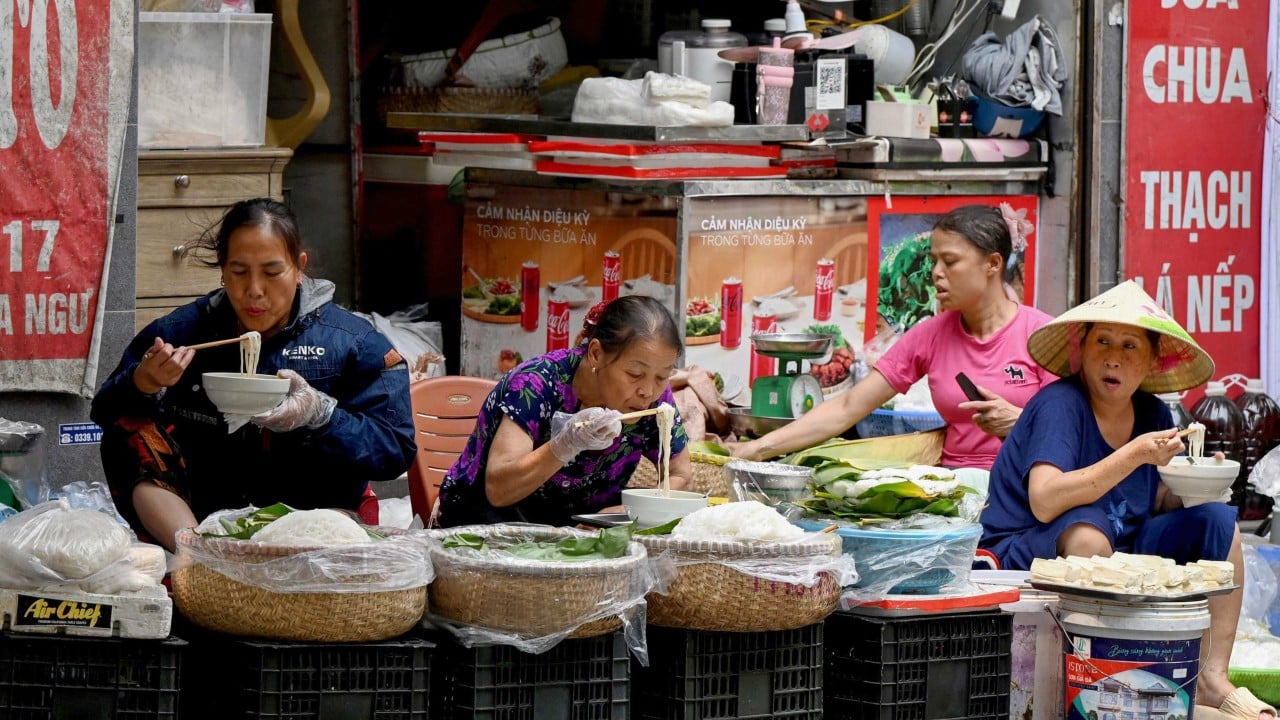
Asia is currently staring down a systemic collapse of its food supply chains, driven by a volatile mix of extreme weather and geopolitical instability. While the headlines focus on temporary price hikes, the underlying reality is far grimmer. The region is caught between a punishing El Niño cycle and the ripple effects of a widening conflict involving Iran, creating a pincer movement that threatens the caloric intake of billions. This is not a drill. It is a fundamental restructuring of how Asia feeds itself, and the old playbooks for managing scarcity are no longer working.
The Heat is the First Hammer
El Niño has transitioned from a seasonal concern into a persistent threat to agricultural output. We are seeing a "Super" variant of this phenomenon that disrupts the monsoon patterns essential for rice, wheat, and palm oil production. In countries like Vietnam and Thailand, the water levels in the Mekong Delta have hit historic lows, allowing saltwater to seep into paddies and kill crops before they can even sprout.
This isn't just about a few bad harvests. When the rain stops, the power often goes out too. Hydropower accounts for a massive chunk of the energy mix in Southeast Asia. Without water to turn the turbines, factories shut down, cold storage units fail, and the logistics network that moves food from farm to table grinds to a halt. The cost of irrigation spikes because farmers are forced to pump water from deeper underground using expensive diesel generators.
The Rice Protectionism Trap
India, the world's largest rice exporter, has already slammed the brakes on shipments to protect its domestic market. This move sent shockwaves through the Philippines and Indonesia, nations that rely heavily on Indian grain. When the biggest player leaves the table, everyone else scrambles for the crumbs. We are seeing a rise in "food nationalism" where governments prioritize their own voters over regional stability.
This creates a feedback loop of panic buying. Governments are currently hoarding stocks, which artificially inflates prices even further. It is a zero-sum game. If Jakarta buys up the remaining Vietnamese surplus, Manila goes hungry. The market becomes a bidding war that the poorest nations simply cannot win.
The Persian Gulf Pressure Point
While the weather burns the fields, the conflict involving Iran is strangling the arteries of trade. The Strait of Hormuz is the world's most sensitive chokepoint. Any escalation there doesn't just raise the price of a gallon of gasoline; it raises the price of every loaf of bread in Asia.
Modern farming is essentially a process of turning fossil fuels into food. The fertilizers that sustain Asian yields are largely derived from natural gas. Much of that gas, and the oil required to ship the finished product, passes through the Persian Gulf. If the flow of energy is interrupted by naval skirmishes or sanctions, the price of nitrogen-based fertilizers skyrockets.
Shipping Costs and the Insurance Tax
Insurance premiums for cargo ships in the Middle East have reached prohibitive levels. Shipping companies are rerouting vessels around the Cape of Good Hope, adding weeks to transit times and millions to fuel bills. For a region like Asia, which imports vast quantities of soy from South America and wheat from the Black Sea, these delays are catastrophic.
Grain is a perishable commodity. Longer transit times increase the risk of spoilage and infestation. When a shipment finally arrives in port, it isn't just more expensive; it is often of lower quality. The "war tax" on shipping is being passed directly to the consumer at the grocery store.
The Fertilizer Crisis is the Hidden Killer
We often overlook the fact that Asia’s "Green Revolution" was built on cheap, abundant fertilizer. That era is over. China, another major producer, has restricted fertilizer exports to ensure its own food security. With Iran-related tensions threatening the Middle Eastern supply, Asian farmers are facing a 300% increase in input costs.
When a small-scale farmer in Bangladesh or the Philippines can't afford fertilizer, they don't just produce less; they produce nothing. They abandon the land and move to the cities, adding to the urban population that needs to be fed. This creates a dangerous demographic shift that puts even more pressure on a failing system.
The Potash Problem
Beyond nitrogen, the world is also struggling with potash supplies. With traditional sources in Eastern Europe tied up in their own geopolitical knots, the reliance on Middle Eastern and Asian production has intensified. The scarcity of these minerals means the soil is being depleted. Even if the rains return tomorrow, the land will not yield what it once did without the necessary chemical inputs.
The Failure of Regional Cooperation
The Association of Southeast Asian Nations (ASEAN) has long talked about food reserves and shared agricultural policies. In reality, these agreements are often ignored the moment a crisis hits. Every nation is looking out for itself.
There is no regional mechanism to stabilize prices or share resources during a "Super" El Niño. Instead, we see a patchwork of subsidies and price caps that actually make the problem worse in the long run. Price caps discourage farmers from planting because they can't recoup their costs. Subsidies drain national treasuries that are already stretched thin by high interest rates and debt.
Debt and Devaluation
The strength of the US dollar has made importing food even more difficult for Asian economies. Since most global commodities are traded in dollars, a weakening local currency means that even if the price of wheat stays flat on the global market, it becomes more expensive for a baker in Sri Lanka or Pakistan.
These countries are already facing a debt crisis. They don't have the fiscal space to bail out their agricultural sectors. We are seeing a "silent famine" where people aren't necessarily starving to death in the streets, but they are significantly reducing their nutritional intake, leading to long-term health issues and stunted growth in children.
The Role of Private Equity and Speculation
While farmers struggle, commodity traders and private equity firms are finding ways to profit from the volatility. Speculative bets on crop failures can drive prices up faster than the actual physical shortage would dictate. This financialization of food means that the price of rice in a village market is now tied to a computer algorithm in London or New York.
The transparency in these markets is shockingly low. We don't truly know how much grain is being held in private silos, waiting for the price to peak. This lack of data prevents governments from making informed decisions, leading to knee-jerk policy changes that further destabilize the market.
Infrastructure is the Weak Link
Asia’s food infrastructure is woefully inadequate for the modern age. We lose up to 30% of harvested crops to poor storage and transport. In a period of abundance, this was an acceptable inefficiency. In a period of scarcity, it is a crime.
Investments in climate-resilient infrastructure have lagged behind for decades. We need grain elevators that can withstand typhoons and cold chains that can operate on solar power. Without these, the region will continue to be at the mercy of the elements.
The Water Scarcity Reality
Agriculture consumes roughly 70% of the world’s freshwater. In Asia, that number is often higher. As El Niño dries up the rivers, the competition for water between farmers, city dwellers, and industry is becoming violent. We are seeing "water wars" on a local level, with farmers sabotaging irrigation canals to divert water to their own fields.
Groundwater depletion is another ticking time bomb. In parts of India and China, the water table is dropping by several meters every year. Pumping from these depths requires more energy, which brings us back to the Iran conflict and the price of oil. Everything is connected.
The Myth of Self-Sufficiency
For years, Asian leaders have promised food self-sufficiency. It was a useful political slogan, but it ignored the realities of a globalized economy. No nation is an island in the modern food system. You might grow your own rice, but you import the fuel for the tractor, the chemicals for the soil, and the plastic for the packaging.
The push for self-sufficiency has often led to the overproduction of a single crop, usually rice, at the expense of nutritional diversity. This monoculture makes the entire food system more vulnerable to pests and diseases, which thrive in the warmer temperatures brought by El Niño.
The Breakdown of the Global Order
The current crisis is a symptom of a broader breakdown in the rules-based international order. When international law is ignored in the Middle East and trade agreements are tossed aside in Asia, the result is chaos.
We are moving toward a world of "fortress agriculture." Rich nations will use their wealth to secure their own supplies, while everyone else is left to scramble. This isn't just a humanitarian issue; it is a massive business risk. Supply chain disruptions on this scale can topple governments and trigger mass migrations.
Immediate Strategic Requirements
Governments and businesses need to stop treating this as a temporary weather event. It is a structural shift. The first step is to diversify import sources. Relying on one or two countries for a staple crop is a recipe for disaster.
There must also be a massive, coordinated investment in agricultural technology that doesn't rely on heavy chemical inputs. Regenerative farming and traditional drought-resistant crop varieties are no longer "fringe" ideas; they are survival strategies.
Furthermore, the transparency of global food stocks must be improved. We cannot manage what we cannot measure. A regional data-sharing agreement in Asia would do more for food security than any amount of protectionist rhetoric.
The collision of a "Super" El Niño and the Middle Eastern conflict has exposed the fragility of the Asian miracle. The era of cheap, reliable food is over. Those who fail to adapt to this new reality of permanent volatility will find themselves presiding over empty shelves and restless populations.
Direct your attention to the soil and the sea, because the office towers and tech hubs won't matter much if there is nothing to eat.