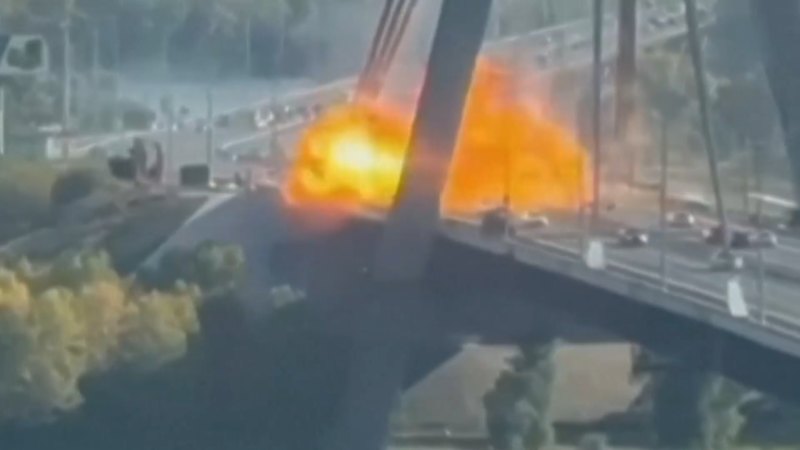
The air over Kyiv and the southern front filled with the harsh hum of precision munitions and interceptors, marking a stark escalation in the war's infrastructure campaign. Russian drone and missile strikes target major transport arteries, including vital crossings over the Dnipro River and southward supply webs, driving home a harsh military reality. This is not random destruction. This is a calculated war of attrition waged against concrete, steel, and supply lines.
Bridges are notoriously difficult to obliterate completely from the air. A massive span of reinforced concrete and structural steel can absorb multiple hits, leaving the core structural skeleton standing even if the asphalt is cratered and traffic comes to a grinding halt. Yet total collapse is rarely the primary objective of these campaigns.
Military planners understand that functional disruption achieves tactical value without requiring the expenditure of hundreds of heavy munitions. When a span over a major river or a supply artery in Zaporizhzhia or Kyiv takes a direct hit, the immediate consequence is civilian gridlock, fractured municipal logistics, and a massive drain on emergency response resources.
The psychological dimension matches the physical disruption. Major urban centers like Kyiv are split by natural barriers. The population distribution relies heavily on uninterrupted transit across these key crossings. Striking them repeatedly creates systemic anxiety, forcing urban populations to adjust to constrained movement, fuel rationing, and severe delays.
At the same time, this strategy is reciprocal. The modern battlefield features an unprecedented density of uncrewed aerial vehicles, turning logistics corridors into killing zones. Supply routes feeding occupied territories and southern positions face constant harassment from aerial drones hunting transport trucks, fuel tankers, and maintenance crews.
When a supply bridge is damaged or a transport route is dominated by loitering munitions, military planners are forced into lengthy detours. These deviations add hundreds of kilometers to supply chains, burning through precious fuel reserves and exposing military convoys to secondary ambushes. The cumulative effect is a grinding logistical slowdown that starves frontline units of ammunition, replacement parts, and reinforcements.
Engineering realities dictate the pace of recovery. Repairing a heavily damaged bridge span requires specialized heavy equipment, stable security conditions, and massive amounts of raw materials. When air raid sirens sound continuously, repair crews cannot operate heavy cranes over open water. The destruction outpaces the reconstruction. Every successful strike on a transit node buys the attacking side operational time, delaying counter-offensives and forcing defenders to expend finite air defense assets on static targets rather than mobile frontline formations.
As long as aerial strike capabilities outmatch local hardening and rapid-repair methods, these concrete and steel arteries will remain primary targets. The war has evolved past simple territorial conquest into a ruthless contest of infrastructure survival, where victory belongs to the side whose supply lines and bridges can endure the punishment just one day longer than the enemy's.