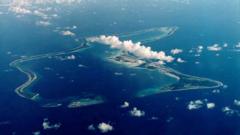
Explosions rattle the salt-encrusted shores of Qeshm Island while white-hot political theater plays out across capitals thousands of miles apart. In Washington, statements from the White House insist that communications remain active and that diplomatic channels are yielding movement. In Tehran, state apparatuses project unyielding defiance, insisting that no maritime normalisation will occur while naval blockades choke domestic revenue. Beneath this rhetorical storm, crude oil tankers navigate a minefield of maritime uncertainty in the Strait of Hormuz. The juxtaposition of kinetic strikes and quiet diplomatic exchanges defines the current phase ofلیک the confrontation between the United States and Iran. Observers watching the water lanes often miss the structural mechanics driving both sides toward the negotiating table and simultaneously pushing them toward the precipice of open conflict.
The Geography of Energy Choke Points
The Strait of Hormuz is not merely a body of water. It is the primary jugular vein of global energy logistics. Roughly twenty percent of the world's petroleum supply squeezes through a shipping lane barely twenty-one miles wide at its narrowest point, with inbound and outbound traffic sharing tightly constrained transit corridors. When an explosion echoes off the Musandam Peninsula or an oil tanker reports a sudden projectile impact near Oman, global markets react within seconds. Insurance premiums for hull and machinery coverage spike astronomically. Shipowners recalibrate risk models overnight, altering routes or pausing voyages altogether.
Yet, treating these maritime incidents as isolated acts of random violence misunderstands how modern statecraft operates in contested waterways. Every explosion functions as a punctuation mark in an ongoing dialogue conducted through proxy actors, naval patrols, and backchannel mediators in Doha and Muscat. Iran understands its geographic position gives it immense regional weight. Washington understands that keeping oil prices stable remains a political imperative, especially during sensitive electoral cycles. Neither side wants a total regional conflagration that would shatter global supply chains beyond repair, yet both are locked into a game of escalation dominance where backing down signals fatal weakness.
Two Track Diplomacy and the Art of Political Theater
Diplomacy in this theater does not resemble a peaceful conference room. It is transactional, bruised, and conducted under the constant threat of pre-emptive military action. When American administrations point to indirect talks as proof of diplomatic progress, the reality on the ground tells a much messier story. Tehran demands the complete dismantling of port blockades and the restoration of oil export pathways before any formal conversation about broader security frameworks can mature. Washington, meanwhile, insists that the nuclear file and regional proxy networks must be dismantled upfront.
These mutually exclusive demands create a permanent diplomatic deadlock. Mediators shuttle between capitals attempting to bridge chasms that are fundamentally unbridgeable through standard diplomatic compromises. When political figures remark that discussions are proceeding well or that opposing delegations are eager for an arrangement, those statements serve domestic political consumption just as much as foreign policy positioning. They create an alternative reality where conflict is managed, contained, and perpetually on the verge of resolution, even as air defense batteries track unidentified targets over strategic islands.
Behind closed doors, the friction is palpable. Intelligence reports indicate that regional allies repeatedly warn against premature escalations that could trigger widespread retaliation against energy infrastructure. Iranian leadership utilizes a calculated blend of public belligerence and private pragmatism. They signal willingness to discuss specific maritime corridors while simultaneously enforcing their own restrictions on vessel movements through the Gulf. This dual-track approach keeps adversaries off balance, ensuring that Washington never quite knows whether the next diplomatic overture will result in a breakthrough or a barrage of retaliatory missile fire.
Beneath the Waves The Hidden Subsea Vulnerabilities
Modern warfare has evolved past surface engagements involving missile boats and gunships. Beneath the dark waters of the Persian Gulf lies another invisible battlefield that rarely makes mainstream evening broadcasts. Subsea internet cables, including critical trunk lines like the 2Africa and Bay of Bengal Gateway corridors, traverse the narrow channels where tankers drop anchor and naval patrols sweep the surface.
Recent maritime tracking data reveals an unusual pattern of behavior among sanctioned vessels and auxiliary craft lingering over these exact subsea pathways. Ships turning off transponders for days at a time near crucial communications corridors send an unmistakable, chilling message to foreign intelligence agencies. If surface shipping can be disrupted by naval blockades and kinetic strikes, digital infrastructure can be severed just as easily. Two senior security officials in the region have previously hinted that Tehran maintains detailed contingency plans to target these data arteries if military strikes resume, aiming to enforce prolonged communication blackouts across financial and commercial networks. This multidimensional threat matrix ensures that any military miscalculation carries consequences that extend far beyond regional petroleum markets into global financial networks and cloud infrastructure.
The Domestic Calculus Shaping Military Restraint
Why do these crises flare up with clockwork regularity? The answer lies in the domestic political calendars governing both nations. In Washington, approaching midterm elections and intense partisan pressures create a volatile environment where foreign policy decisions are weighed against domestic approval ratings and inflation metrics. Hardliners push for decisive military intervention to permanently cripple adversary capabilities, while pragmatists warn of runaway economic fallout.
Inside Iran, the internal landscape is equally fractured. Hardline factions within the Islamic Revolutionary Guard Corps view any sign of compromise as an existential threat to the regime's revolutionary identity, while civilian administrators grapple with severe economic strain resulting from prolonged sanctions and trade restrictions. This internal friction explains why official statements from Tehran frequently contradict one another. One day brings a chilling warning about closing the shipping lanes entirely; the next brings quiet confirmation that diplomatic channels through regional intermediaries remain open.
Publicly, leaders project absolute confidence. Privately, both capitals recognize the terrifying math of an all-out war. The economic cost of a prolonged closure of the Strait of Hormuz would trigger global recessionary shocks, driving energy prices to unprecedented heights and ensuring immediate political retribution at the ballot box for any administration held responsible. Consequently, both sides dance along the razor-edge of active conflict, trading blows through proxies and cyber operations while formally maintaining a veneer of diplomatic engagement.
The Military Calculus and the Myth of Deterrence
Military planners in both nations operate under strict parameters designed to prevent total war while maintaining operational readiness. The absence of heavy casualties over extended periods has allowed political leaders to maintain a managed friction state. Neither side wants to trigger the retaliatory cascade that would follow the loss of an aircraft carrier or the destruction of major oil terminal facilities.
However, reliance on managed escalation is a dangerous gamble. A single errant missile, a misidentified radar signature, or an aggressive maneuver by an overzealous commander can instantly shatter the fragile guardrails keeping the conflict sub-threshold. When air defense systems activate over Qeshm Island or tankers catch fire off the coast of Oman, they serve as violent reminders that deterrence is an imperfect science.
The military build-up in the region is staggering. Task forces, spy planes, and advanced naval assets patrol the periphery of the Gulf, maintaining constant vigilance. Yet advanced hardware cannot eliminate the fundamental friction of human miscalculation. As long as economic blockades restrict Iranian commerce and foreign navies patrol contested waters, the physical triggers for a wider war remain primed.
The diplomatic dance over Hormuz continues because the alternative is catastrophic. Yet every explosion along the shipping lanes brings the region closer to a threshold where words no longer matter and military momentum takes complete control.