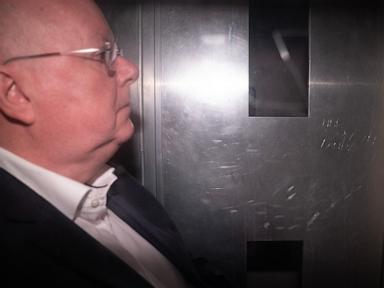
Peter Murrell, the former chief executive of the Scottish National Party and estranged husband of former First Minister Nicola Sturgeon, has been sentenced to five years and three months in prison for embezzling over £400,000 from party coffers. Arriving at the High Court in Edinburgh in a prison van, the 61-year-old former political kingmaker entered the dock in handcuffs to face the final reckoning of a 12-year campaign of systematic internal theft. The sentence delivered by Lord Young solidifies the collapse of a political partnership that once held absolute sway over Scottish public life, signaling an abrupt end to decades of unchecked bureaucratic control.
An Unchecked Monarchy in a Democratic Party
For over two decades, the Scottish National Party was run less like a modern political enterprise and more like a private family business. Murrell took the reins as chief executive in 2001. By 2010, the year he married Nicola Sturgeon, the internal architecture of the party had effectively fused the political wing with the administrative machine.
This centralization created an environment entirely devoid of meaningful oversight. Rank-and-file party members operating on pure ideological fervor poured millions into fundraising drives, specifically believing their cash was ring-fenced for a second independence referendum. Instead, the money fed a parallel universe of private luxury.
The mechanics of the deception were deceptively simple. Murrell possessed total authority over the party accounts. He used this unilateral power to enter false accounting codes into the financial ledger and submit entirely fabricated invoices. When party auditors or internal critics raised questions about the lack of visibility regarding the independence funds, they were systematically frozen out, marginalized, or dismissed as troublemakers working against the national cause.
The absolute nature of this control is precisely what allowed the fraud to continue uninterrupted from August 2010 until October 2022. Political parties require tension between their elected leadership and their bureaucratic administrators to maintain integrity. When those two entities share a breakfast table, that tension disappears.
The Banal Extravagance of a Stolen Wardrobe
The ledger of Murrell’s purchases reads like a strange mixture of high-end consumerism and domestic banality. Investigators tracking the missing £400,310.65 discovered a trail that extended from elite watchmakers to high-street cookware brands.
Among the highest-value items was a £124,550 luxury motorhome that sat parked outside his mother's house, driven a grand total of four miles before being seized by police. He purchased a Jaguar electric SUV, luxury Bremont watches valued at over £9,000, and a £3,000 robotic lawnmower.
Yet, it was the smaller, everyday acquisitions that ultimately broke the case wide open for Operation Branchform detectives. Investigators first grew suspicious during a routine look at party receipts during a period when the party’s public finances were severely strained. An officer noticed recurring invoices for Le Creuset cookware—including eight designer mugs costing £204, high-end measuring spoons, and Mickey Mouse-themed ramekins.
Embezzled Funds Allocation
=======================================
Total Stolen:        £400,310.65
---------------------------------------
Major Asset:         Luxury Motorhome (£124,550)
Vehicles & Tech:     Jaguar SUV & Robotic Mower
Luxury Goods:        Bremont Watches & Montblanc Pens
Domestic Luxuries:   Le Creuset Cookware & Coffee Machines
The prosecution revealed that Murrell spent nearly £9,000 on coffee machines and high-grade coffee granules alone. He even used stolen donor money to buy designer toilet seats and box sets of the political drama Borgen. The court noted with grim irony that many of the high-value luxury items he accumulated were never actually used, stored away as the hoarded trophies of a man who simply could not stop stealing.
The Doctrine of Plausible Deniability
The burning question that continues to haunt Scottish politics is how a First Minister could live in the same house with a multi-thousand-pound hoard of stolen goods without noticing. Nicola Sturgeon has repeatedly and aggressively maintained her total innocence, claiming she had no reason to question the source of items in her household given both she and her husband earned substantial professional salaries. The couple maintained strictly separate bank accounts.
In 2024, the Crown Office closed its file on Sturgeon and former party treasurer Colin Beattie, concluding they would face no further inquiries. Murrell took the fall alone, pleading guilty to a streamlined indictment that saved the state the cost of an explosive public trial.
The legal outcome effectively grants Sturgeon complete formal vindication while leaving her political reputation permanently compromised. In public life, a leader can be judged as either complicit or completely oblivious; neither assessment offers comfort to the electorate. The fact that Sturgeon was frequently photographed wearing a distinct luxury pendant that court documents later revealed was purchased using embezzled party funds creates an indelible image of institutional blindness.
The institutional damage extends far beyond the marital home. Current First Minister John Swinney has desperately tried to frame the party as the primary victim of a lone rogue operative. This defense ignores the structural reality. The party wasn't just a passive victim; its lack of internal governance was the active enabler.
The Long-Term Destruction of Public Trust
Lord Young explicitly stated during sentencing that the five-year-plus term was designed to serve as a severe deterrent to executives in other large organizations who believe their proximity to power shields them from accountability. While Murrell's defense advocate John Scullion KC painted a picture of a broken, isolated man who has become a figure of national ridicule, the true casualties of this decade-long deception are the ordinary donors who funded the machine.
The Scottish National Party built its entire political identity on a platform of moral superiority over Westminster establishment politics. Murrell’s systematic theft blew that narrative apart, exposing an internal culture of hubris and financial deception that directly mirrors the worst excesses of the systems they claimed to oppose.
A criminal confiscation order hearing has been scheduled for mid-September to claw back the stolen £400,310.65, which Murrell reportedly has the personal assets to repay. The money can be returned, but the psychological damage inflicted on the political movement cannot be undone. By turning a national political campaign into a personal retail fund, Murrell did more to derail the cause of Scottish independence than any external political opponent ever managed to achieve.