The Iron Harvest Beneath the Soil
The tractors roll across the Mykolaiv region at dawn. Behind each armored cab trails a heavy mechanical flail, churning the earth to a depth of thirty centimeters. Steel hammers smash into fragments of Soviet-era munitions and modern anti-personnel traps left behind by retreating Russian forces. This is not agriculture in the conventional sense. It is industrial excavation masked as crop rotation.
Beneath the black topsoil known as chernozem lies one of the densest explosive contaminations since the Second World War. Millions of hectares across southern and eastern Ukraine remain saturated with unexploded ordnance. International agencies estimate that complete remediation using standard manual clearance methods will take decades, bleeding billions of dollars from the national economy. Also making waves in related news: The House That Refused to Melt.
Yet the agricultural sector refuses to wait. Farmers cannot afford dormancy. A single season without harvest means bankruptcy for independent cooperatives and deeper fractures in global food supply chains.
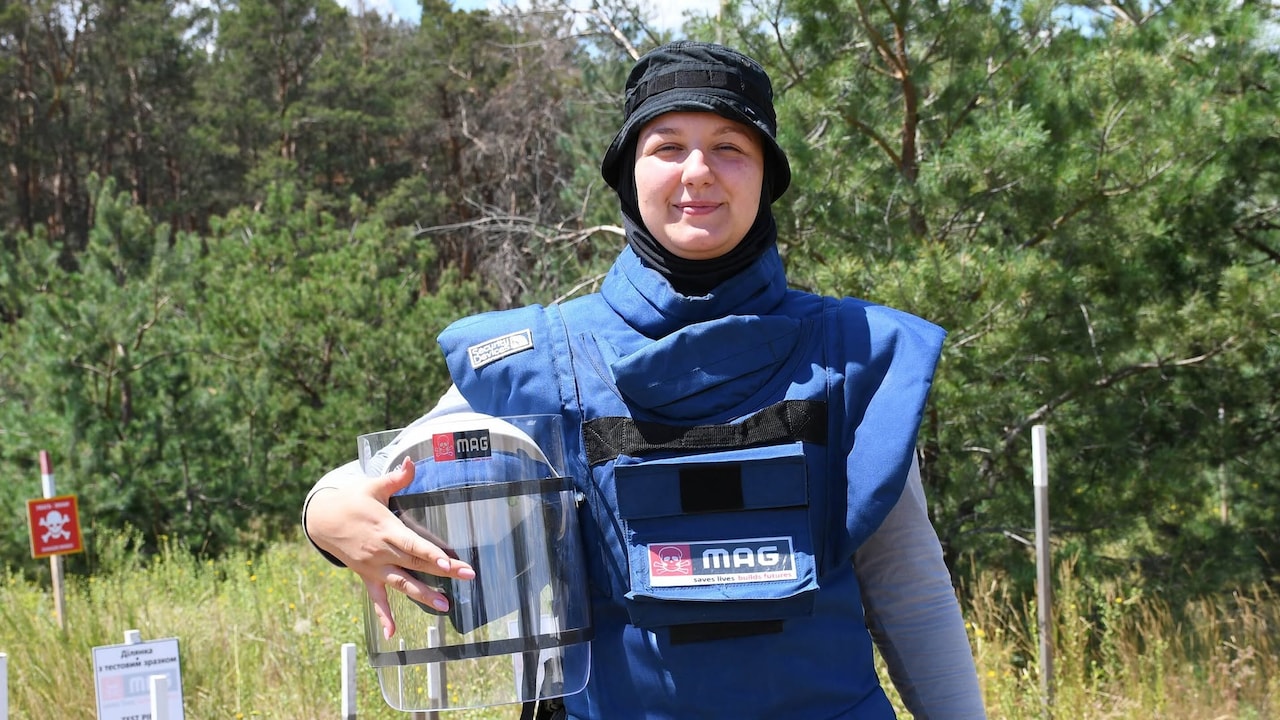
Enter the quiet counter-offensive of civilian demining initiatives. Far from the televised drama of military combat engineers, local agronomists, private tech startups, and independent landowners are taking clearance into their own hands. They are adapting remote-controlled tractors, deploying thermal drone imaging, and planting sunflowers not merely as a symbol of national resilience, but as a deliberate economic calculation. Sunflowers tolerate heavy metal stress, demand relatively low initial input costs, and yield high-value oil that can be exported via overland rail routes when ports are choked. Further information regarding the matter are detailed by BBC News.
Understanding this crisis requires looking past romanticized media narratives about rural defiance. The reality involves brutal financial math, insurance nightmares, and a chilling casualty rate among civilians who stumble upon tripwires while checking irrigation lines.
The Economic Trap of Contaminated Land
Ukraine feeds hundreds of millions of people worldwide. When twenty percent of its arable land transforms into a zone of lethal hazard, the shockwaves register immediately in grain futures from Chicago to Cairo.
The financial burden of land reclamation falls almost entirely on private operators. Commercial banks view active conflict zones through a lens of absolute risk aversion. Loans for seed and fertilizer are difficult to secure when the collateral is a field potentially seeded with butterfly mines. Government subsidies exist, but bureaucratic bottlenecks mean that state-backed clearance teams rarely reach independent medium-scale farmers in time for the planting window.
Farmers face a grim financial equation. A professional commercial survey of a single hundred-hectare plot can cost tens of thousands of dollars before a single shovel enters the ground. For a smallholder cooperative, this expense is prohibitive. Many choose a high-risk alternative. They use makeshift metal detectors salvaged from construction sites or rely on visual sweeps, accepting a terrifying margin of error.
Insurance markets offer no safety net. Policies covering agricultural war damage do not exist in any meaningful, affordable capacity. If a tractor strikes an anti-tank mine, the operator absorbs total capital loss. The machine is destroyed, the operator is dead or maimed, and the land remains toxic.
This environment breeds desperation. It also drives technological innovation born strictly from necessity rather than venture capital enthusiasm.
Adaptation and Homemade Ingenuity
Necessity forces invention into the most perilous corners of the agricultural sector. Unable to wait for international humanitarian demining organizations weighed down by strict liability protocols, local engineers and farmers are building their own mitigation tools.
In several central and southern oblasts, mechanical workshops have transformed old Soviet-era tractors into armored remote-controlled sweepers. Steel plates salvaged from destroyed armored personnel carriers are welded onto the engine blocks and cabins. Cameras stream video to an operator sitting safely inside a reinforced shipping container hundreds of meters away. These rigs are crude. They lack the sophisticated sensory arrays of military-grade robotic systems. But they work. They absorb the concussive force of blast mines, clear paths through tall grass, and allow planting crews to follow closely behind.
Agronomists are also experimenting with phytoremediation. While plants cannot neutralize high explosives, certain deep-rooting crops and industrial grasses can absorb heavy metals and chemical residues left by detonated munitions, slowly restoring chemical balance to poisoned earth. Sunflowers hold a unique position in this strategy. Their sprawling root systems and rapid growth cycle provide an immediate cash return while stabilizing soil structure that has been violently disrupted by trench warfare and shelling.
Yet, this grassroots approach carries profound dangers. Makeshift equipment lacks standardized safety certifications. When a homemade flail misses a bounding fragmentation mine buried beneath a root ball, the resulting catastrophe exposes the limits of DIY engineering.
The Global Fallout of Lost Harvests
The consequences of Ukraine's contaminated agricultural belt extend far beyond local balance sheets. Grain scarcity acts as a geopolitical accelerant.
When Ukrainian sunflower oil and wheat exports stall, food price inflation spikes across import-dependent nations in North Africa and the Middle East. Global commodity traders manipulate these supply shocks, driving up costs for staple goods in regions least equipped to absorb them. The geopolitical stability of entire governments can hinge on the price of bread, making every unexploded shell in a Mykolaiv field a silent variable in international security.
International aid packages frequently pledge hundreds of millions of dollars for humanitarian demining. However, the disbursement of these funds moves at a glacial pace compared to the rapid deterioration of abandoned soil. Bureaucratic oversight, stringent vetting procedures, and logistical bottlenecks mean that high-tech clearance machines donated by Western allies often sit in storage depots miles away from the frontlines, waiting for specialized parts or trained operators.
This disconnect exposes a fundamental flaw in how international relief operates during protracted high-intensity conflicts. Aid organizations prioritize institutional safety and compliance over speed, while farmers operating on the economic edge require immediate action to survive the next harvest cycle.
Beyond the Symbolism of the Blossom
Media coverage often fixates on the poetic imagery of yellow blossoms rising from the scars of war. It makes for compelling television. It offers a tidy narrative of renewal that comforts audiences far from the conflict zone.
The reality is devoid of poetry. The sunflower fields standing over buried ordnance are economic desperation in physical form. They represent a calculated gamble by individuals who know the odds are heavily skewed against them. Every tractor rolling through the dust represents a calculated risk against catastrophic injury.
Addressing this crisis demands a fundamental shift in how international capital and agricultural technology intersect with active conflict zones. Insurance backstops, fast-tracked equipment import protocols, and direct financial grants to independent farmer-led clearance cooperatives would achieve more in six months than years of centralized bureaucratic planning.
The earth beneath these fields will carry the metal of this war for generations. Long after the diplomatic treaties are signed and the headlines fade, farmers will still be pulling shrapnel from their plowshares. Until global institutions treat agricultural demining as an urgent international security priority rather than a secondary charitable concern, the people feeding the world will continue to do so under the constant threat of sudden death.
The tractors keep moving anyway. There is no other choice.