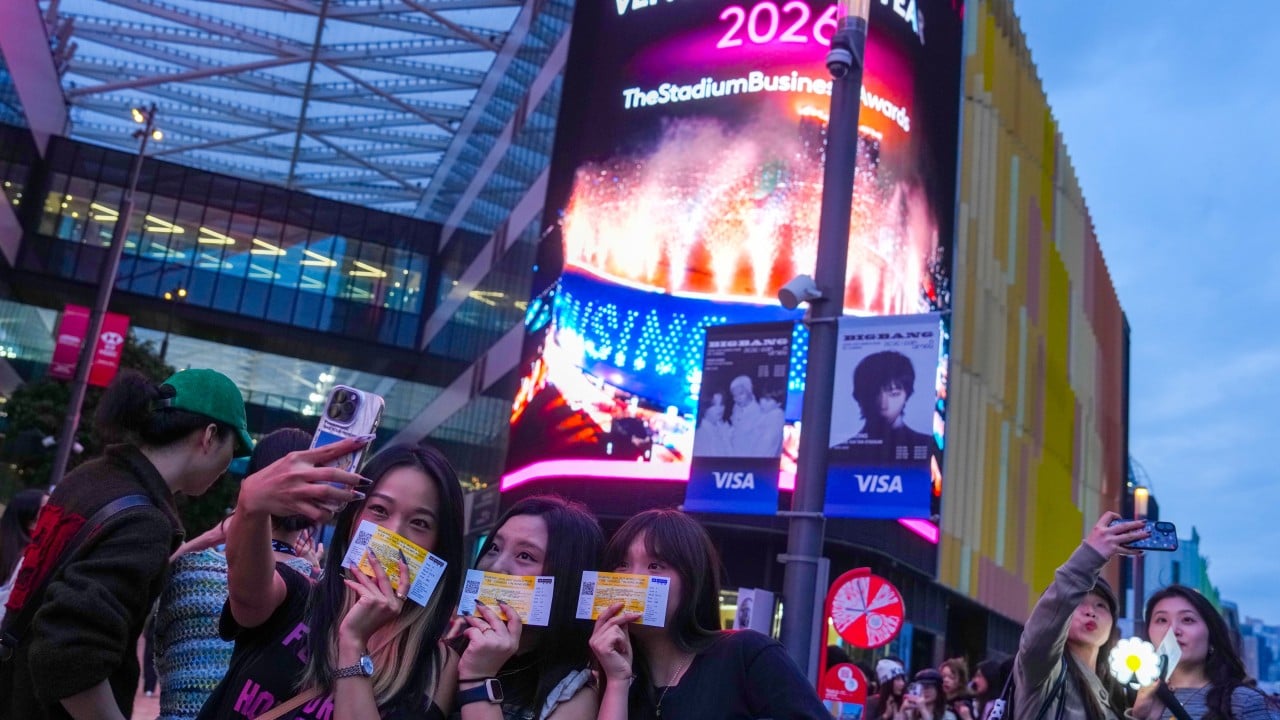
Requiring government-issued identification to verify concert tickets can stop traditional street-level scalping, yet it routinely creates massive venue bottlenecks, frustrates tourists, and leaves automated online brokers largely untouched. While tourism chiefs and venue operators frequently clash over whether strict ID matching protects fans or ruins the live event experience, the actual mechanics of live entertainment reveal a far messier reality. Security lines stretch around city blocks, international visitors face unexpected entry denials, and sophisticated secondary market brokers simply bypass physical checkpoints altogether by trading entire digital accounts instead of individual PDFs.
To understand why a seemingly simple anti-scalping measure causes so much operational chaos, you have to look at the math of stadium throughput. Meanwhile, you can read similar stories here: The Mechanics of Grotesque Satire and Peter Fluck's Architectural Legacy.
The Physics of the Turnstile Bottleneck
A modern arena holds anywhere from 15,000 to 80,000 people. Most of those attendees arrive within a tight 90-minute window before the headliner takes the stage. Standard barcode or NFC tap-to-enter systems process a fan in roughly two to three seconds.
Introduce a mandatory ID check, and that clock explodes. To understand the complete picture, we recommend the recent analysis by GQ.
Even if a security guard takes just ten extra seconds to inspect a driver's license or passport, cross-reference the name against a digital ticket, verify the photo in dim outdoor lighting, and wave the patron through, the throughput capacity of a single gate drops by more than seventy percent. Multiply ten seconds across forty thousand attendees, and you are looking at thousands of hours of collective waiting time.
Tourism boards panic over these queues for good reason. When high-spending international visitors travel across borders for a major stadium tour, their first impression of a host city is rarely the historic architecture or the local cuisine. Their first impression is standing in a stagnant, poorly managed line in the rain while an opening act plays to a half-empty bowl. Worse, confusion over acceptable forms of identification—whether a foreign national ID card works or if an original physical passport is strictly required—leads to legitimate ticket holders being turned away at the perimeter. Nobody books a return vacation to a city where they spent two thousand dollars on flights and hotels only to watch a concert from the parking lot because they left their passport in a hotel safe.
Why Brokers Laugh at Plastic Cards
The central argument for ID-linked ticketing is straightforward. If a ticket is permanently tied to the legal name of the original buyer, a scalper cannot sell that ticket to a third party for a massive markup. On paper, the secondary market dries up overnight.
In practice, professional ticket brokers figured out the workaround years ago.
High-volume resellers do not operate like the guy standing on a street corner holding a fistful of paper stubs. They run sophisticated software operations using thousands of virtual credit cards, proxy IP addresses, and burner accounts. When an artist announces a strict non-transferable, ID-verified tour, brokers simply stop selling the ticket itself. Instead, they sell access to the entire ticketing account.
Here is how a hypothetical transaction works in the modern secondary market. A broker uses an automated bot to purchase four floor seats under a newly created email address and a generic account name. Once the sale is confirmed, the broker lists the seats on a secondary exchange. When a desperate fan buys them at a 300 percent markup, the broker does not transfer the tickets. They hand over the username and password to the original ticketing account.
If the venue enforces strict ID checks at the door, brokers adapt again. Many major ticketing platforms allow a primary buyer to bring guests into the venue with them, provided the whole group enters together. Brokers hire local runners—often gig workers paid a flat hourly rate—to hold the primary account, meet the secondary buyers outside the gate, scan everyone in simultaneously, and walk away. The ID check passes without a hitch. The scalper pockets the profit. The venue's anti-scalping policy achieves nothing except slowing down the line for honest fans.
The Ticket Transfer Dilemma
Strict ID policies also collide violently with how normal human beings actually buy and use tickets. People buy concert tickets six to twelve months in advance. Life happens during those months. People get sick, flights get delayed, babysitters cancel, and relationships end.
When a venue locks a ticket to a single government ID with zero transfer flexibility, it punishes ordinary consumers for unpredictable life events. If you buy four tickets for your family and come down with the flu on the morning of the show, a rigid ID policy means your spouse and kids might be barred from entering unless you physically drag yourself out of bed to stand at the gate with your driver's license.
To prevent mass customer service revolts, promoters usually carve out exceptions. They allow official face-value ticket exchanges, or they permit name changes up to 24 hours before the event. Every single one of those consumer-friendly safety valves becomes an immediate entry point for resellers.
The Illusion of the Face-Value Exchange
Promoters love to tout closed-loop, face-value resale platforms as the ultimate cure for scalping. The concept sounds ideal: if you cannot attend, you list your ticket back on the official app for the exact price you paid, and another fan buys it.
Yet these closed ecosystems frequently suffer from severe liquidity problems and hidden friction.
- Delayed Payouts: Sellers often wait weeks after the event concludes before receiving their refund, discouraging casual fans from using the official portal.
- Junk Fees: Even when a ticket is resold at "face value," platforms routinely charge both the buyer and the seller new service fees, inflating the final cost by twenty to thirty percent.
- Off-Platform Side Deals: Because official exchanges cap prices, high-demand tickets vanish in milliseconds. Desperate buyers still flock to social media and unverified forums, paying scalpers via peer-to-peer payment apps just to get the right to buy the ticket the second the scalper releases it into the official pool.
The Privacy and Surveillance Trade-Off
Beyond the logistical nightmares at the venue gates, mandatory ID verification introduces a massive data security liability that the live entertainment industry is poorly equipped to handle.
Every time a venue demands a government ID to validate a ticket, it normalizes the collection of sensitive personal data for routine leisure activities. Some venues rely on visual inspection by minimum-wage event staff, which is prone to human error, bias, and bribery. Other venues are pushing toward biometric verification—scanning faces or palm prints at the turnstile to speed up the line while keeping tickets locked to an individual.
Biometrics solve the speed problem. A facial scan takes less than a second.
However, trading privacy for turnstile speed opens a Pandora's box of civil liberties and cybersecurity risks. Ticketing companies and stadium operators are prime targets for hackers. Losing a credit card number is an inconvenience; banks issue a new piece of plastic within forty-eight hours. Having your biometric data or passport records leaked from a poorly secured venue database is permanent. You cannot cancel your face.
Furthermore, automated facial recognition systems have well-documented accuracy disparities across different demographics. A false negative at a concert gate does not just delay entry; it subjects innocent fans to public humiliation and aggressive questioning by private security guards who lack proper training.
Who Actually Benefits from the Chaos
If ID checks slow down entry, annoy tourists, fail to stop professional brokers, and create privacy headaches, why do politicians, tourism officials, and music industry executives keep arguing about them?
Because the debate itself serves as convenient political theater.
When fans erupt in anger over dynamic pricing and $1,500 nosebleed seats, ticketing monopolies and major promoters need a visible scapegoat. Blaming third-party scalpers allows the primary industry to position itself as the protector of the common fan. Implementing visible, burdensome ID checks at the stadium gate creates the illusion of decisive action. It signals to regulators and angry consumers that the industry is fighting the bad guys, even while primary ticketing platforms continue to profit from dynamic pricing models and secondary market service fees.
Meanwhile, tourism chiefs push back against ID checks not out of a deep philosophical commitment to fan privacy, but because bad logistics hurt local hotel occupancy and restaurant spending. A city's tourism board wants friction-free entry, maximum visitor throughput, and happy travelers posting flattering videos on social media. When a concert promoter turns a stadium entrance into an airport security checkpoint, it directly undermines the hospitality narrative the city spent millions of dollars advertising.
What Actually Dismantles Scalping
History across global live events shows that you cannot solve a digital supply-and-demand problem with a clipboard and a flashlight at the front door. Physical gate checks are a twentieth-century band-aid slapped onto a twenty-first-century algorithmic marketplace.
When artists and promoters genuinely want to keep tickets in the hands of real fans without paralyzing venue entry, they target the point of purchase rather than the point of entry.
- Verified Fan Lotteries: Decoupling the purchase process from a high-speed "first-come, first-served" clicking war removes the primary advantage of automated bots. When fans register over a multi-day window and are selected randomly, speed becomes irrelevant.
- Rotating Encrypted Barcodes: Replacing static PDFs with dynamic, time-sensitive barcodes that refresh every fifteen seconds inside an official app prevents screenshot fraud and bulk harvesting, without requiring a guard to inspect a driver's license at the gate.
- Aggressive Account Auditing: Tracking purchasing patterns, device fingerprints, and payment anomalies behind the scenes allows platforms to cancel bulk bot orders before the tickets ever hit the secondary market, returning that inventory to genuine waitlisted fans.
- Delayed Ticket Delivery: Holding back the actual barcode until 24 hours before showtime starves secondary exchanges of inventory for months, cooling speculative price spikes without blocking legitimate last-minute transfers between friends.
None of these backend measures require a security guard to squint at a tourist's passport in the dark while ten thousand people wait impatiently behind them. Until the live entertainment industry stops relying on turnstile theater and fixes the broken architecture of its primary box offices, fans will keep paying the price—both in their wallets and in the endless lines outside the gates.