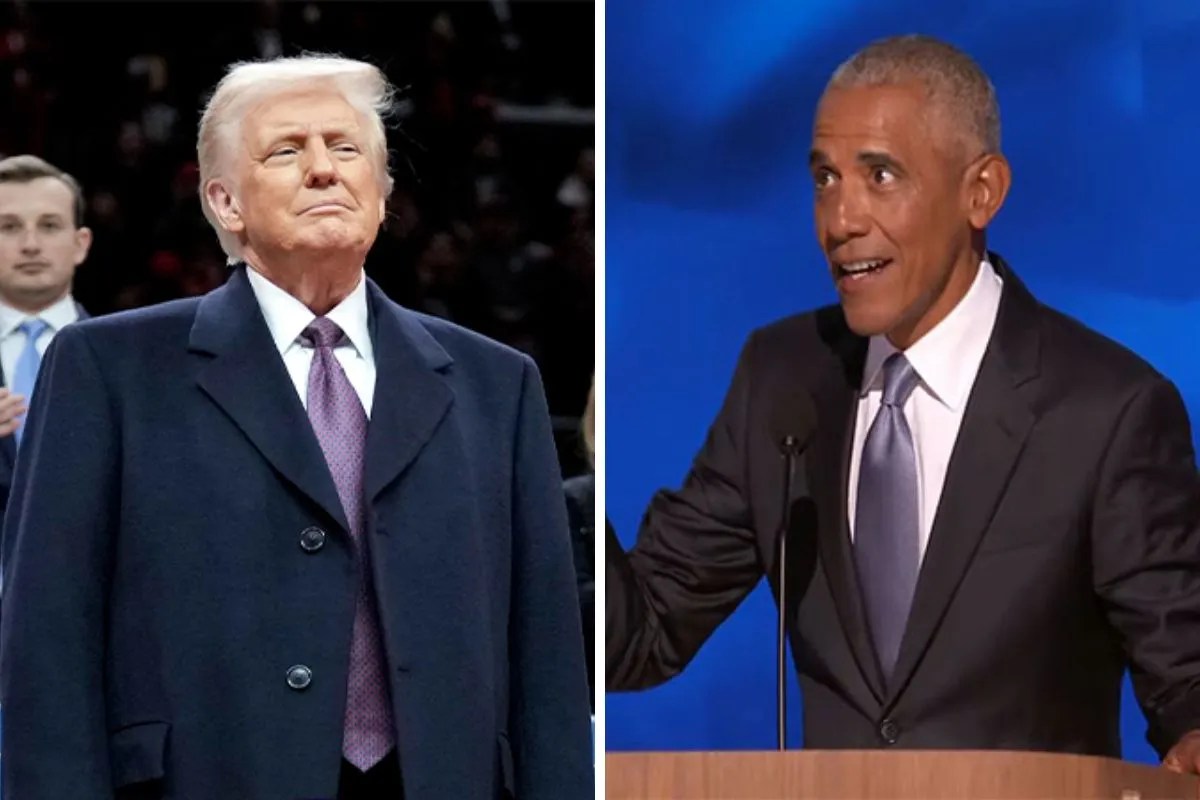
Donald Trump frequently repeated a striking claim on the campaign trail that Barack Obama sent planes stuffed with billions of dollars in cash to Iran, only to receive hostility in return. The image of unmarked cargo planes loaded with wooden pallets of foreign currency landing in Tehran captured the public imagination and fueled intense political debate. While the story sounds like a scene from a geopolitical thriller, the reality involves a complex mix of decades-old legal disputes, international arbitration, and strategic leverage. Stripping away the campaign rhetoric reveals a calculated diplomatic maneuver that was both legally grounded and highly controversial.
The core of the dispute dates back to the late 1970s. Before the Iranian Revolution, the U.S.-backed Shah of Iran paid $400 million into a Pentagon procurement fund to buy military equipment. When the Shah was overthrown in 1979 and diplomatic ties shattered, the United States withheld the weapons but kept the money. This triggered a legal battle at the Iran-United States Claims Tribunal at The Hague, an international body set up specifically to resolve financial disputes between the two nations. For over three decades, Iranian lawyers argued for the return of the principal plus billions in accumulated interest.
The Hague Verdict and the Logistics of Cash
By 2015, U.S. government lawyers realized they were about to lose the case disastrously. The tribunal was leaning toward awarding Iran the original $400 million along with billions more in interest, potentially totaling up to $10 billion. To mitigate the financial damage, the Obama administration negotiated a settlement. They agreed to return the $400 million principal along with $1.3 billion in compromised interest, cutting down the total liability significantly.
The method of payment became the primary source of controversy. The U.S. government flew $400 million equivalent in Swiss francs, euros, and other currencies into Iran on unmarked cargo planes. This was not a backroom bribe, but a logistical necessity dictated by sweeping financial sanctions.
Because U.S. law strictly prohibited direct dollar transactions with Iran, the Treasury Department had to convert American dollars into foreign currencies through Swiss and Dutch central banks. The physical cash was then loaded onto pallets. It was a clunky, archaic solution forced by the very sanctions designed to isolate Iran from the global banking system.
Leverage or Ransom
The timing of the cash delivery ignited a political firestorm. The first cargo plane landed in Tehran on January 17, 2016, the exact same day Iran released four American citizens detained in Evin Prison, including Washington Post journalist Jason Rezaian. Critics immediately labeled the payment a ransom, arguing that the administration had set a dangerous precedent by buying the freedom of American hostages.
Senior diplomatic officials later admitted that the cash was used as leverage. While the legal settlement had been finalized days earlier, U.S. negotiators refused to let the cash plane take off until the Swiss air force plane carrying the freed Americans cleared Iranian airspace.
It was a tense standoff. The administration argued that failing to maximize their leverage to secure the release of detainees would have been a failure of diplomacy. However, the optics were terrible, creating a blurred line between settling a legitimate legal debt and paying for hostages.
The Fate of the Billions
A major point of contention remains where that money went. Once the foreign currency entered the Central Bank of Iran, it became fungible. Critics pointed out that cash is untraceable, making it easy for the Iranian government to funnel those resources into regional proxy groups, cyber warfare, or its ballistic missile program.
Defenders of the deal pointed to Iran’s collapsing domestic economy. At the time, Iran faced rampant inflation, a degraded infrastructure, and a desperate need to stabilize its currency. While it is impossible to trace every banknote, independent intelligence assessments suggested a significant portion of the funds was absorbed into the state budget to plug massive fiscal deficits rather than solely funding overseas operations.
The Fallout of transactional Diplomacy
The long-term consequences of this transaction reshaped Middle Eastern policy for years to come. The delivery of cash, paired with the signing of the Joint Comprehensive Plan of Action, better known as the Iran nuclear deal, was supposed to signal a new era of engagement. Instead, it hardened domestic opposition in both countries. Hardliners in Tehran used the returned money to claim victory over the West, while political factions in Washington viewed the entire episode as a capitulation.
When the Trump administration took office, this specific transaction served as the rhetorical foundation for dismantling the nuclear deal. The argument was simple: economic appeasement did not alter Iran's regional behavior. Even after receiving the funds and signing the nuclear agreement, Iran continued its hostile rhetoric and proxy activities across Yemen, Syria, and Lebanon. The transactional approach to diplomacy had failed to buy long-term goodwill because it treated a deep ideological conflict as a financial dispute.
Diplomacy with adversarial regimes rarely offers clean choices. The administration managed to settle a massive legal liability for a fraction of what a court might have ordered, while simultaneously bringing detained Americans home. Yet, by utilizing physical cash and tying it directly to the release of prisoners, they handed their opponents a potent symbol of weakness. The planes loaded with currency demonstrated that in international relations, the mechanism of a deal can often overshadow its legal justification, leaving a legacy of deep distrust that completely derailed future negotiations.