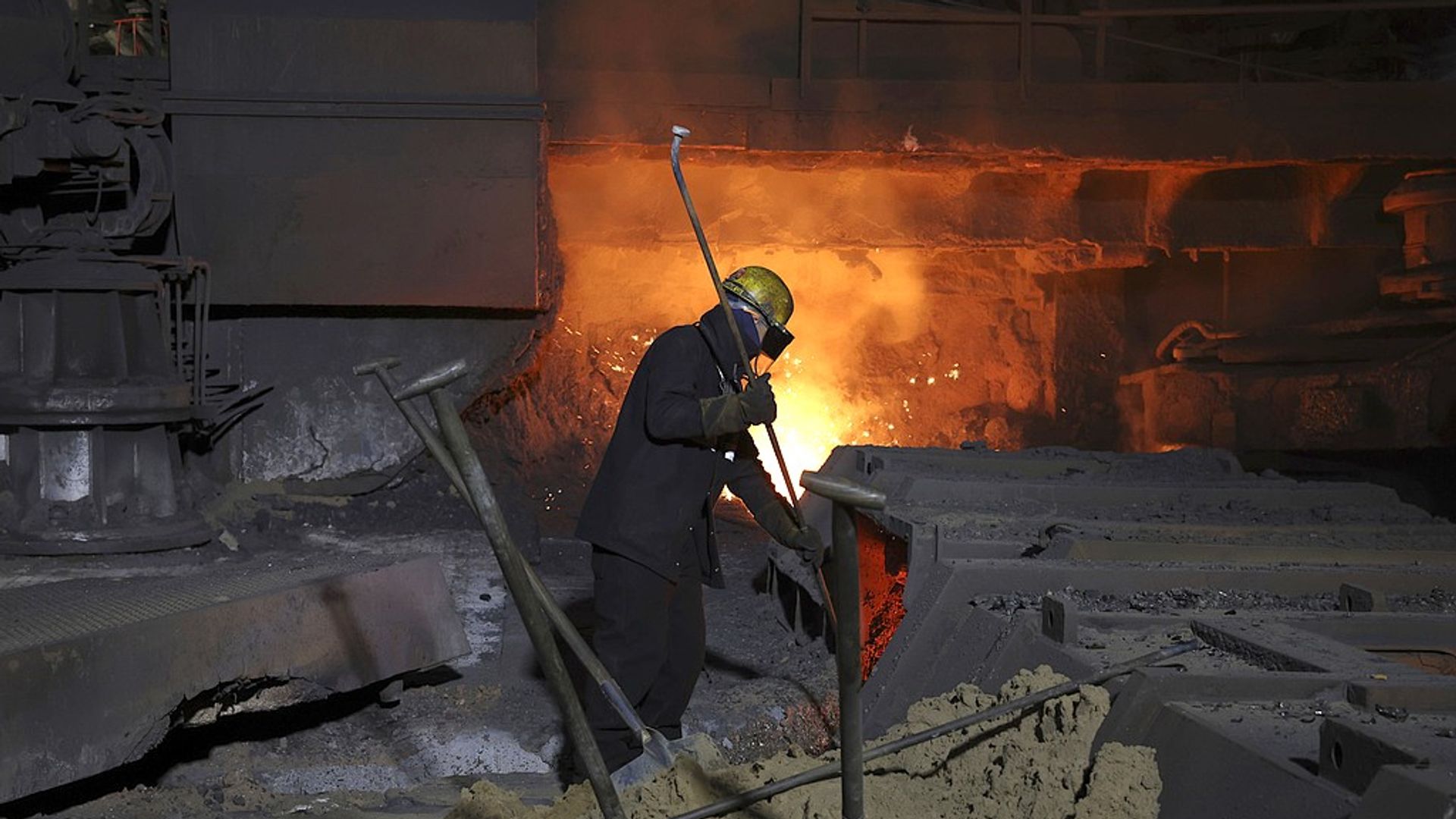
The British government is preparing to bring British Steel back into full public ownership for the first time in nearly four decades. Prime Minister Keir Starmer confirmed the move on Monday, May 11, 2026, revealing that negotiations with the current Chinese owners, Jingye Group, have effectively collapsed. Legislation will be introduced this week to allow the state to take over the Scunthorpe works, a move framed by the administration as a matter of "national resilience" but seen by critics as a desperate attempt to shore up a crumbling industrial heartland after a bruising set of local elections.
By nationalising the firm, the government is essentially betting that the taxpayer can manage a crisis that private equity and international conglomerates could not. The primary objective is to prevent the immediate closure of the Scunthorpe blast furnaces, which would have wiped out 2,700 direct jobs and sent a shockwave through a supply chain that supports thousands more. This is not a sudden whim of socialist dogma; it is the culmination of a year-long holding pattern. In April 2025, the state used emergency powers to seize operational control after Jingye threatened a shutdown. Since then, the Treasury has burned through roughly £377 million just to keep the lights on and the furnaces hot.
The Scunthorpe Standoff
The collapse of the sale to a private sector partner is the real story behind the headlines. For months, Whitehall has been scouring the globe for a buyer willing to take the Scunthorpe site off its hands. The problem was never the quality of the steel; it was the sheer cost of the "green transition" required to make the plant viable in a net-zero world. Jingye Group, which bought the company out of liquidation in 2020, eventually balked at the astronomical energy prices and the multi-billion pound price tag for replacing coal-fired blast furnaces with electric arc technology.
Starmer’s announcement makes it clear that no commercial deal was possible that offered "acceptable value" to the taxpayer. In plain English, any private buyer wanted subsidies so high that the government might as well own the thing itself. By taking full ownership, the state assumes 100% of the risk for a facility that has struggled with global oversupply and a flood of cheap imports for twenty years.
A Political Shield or an Industrial Strategy
The timing of this "activist state" intervention is impossible to ignore. Just days ago, the Labour party suffered significant losses in local council elections, with Reform UK making deep inroads into former industrial strongholds. The loss of Barnsley and the collapse of majorities in northern English towns have left the government looking vulnerable in the very areas where British Steel is the largest employer.
While the Prime Minister speaks of "sovereign capabilities," this is also a defensive political maneuver. Letting Scunthorpe die in the wake of a local election drubbing would have been a terminal blow to the government’s "Rebuild Britain" narrative. However, the cost of this shield is steep. Beyond the £377 million already spent on operations and £15 million on consultants, the state now faces the daunting task of funding the transition to Electric Arc Furnaces (EAF).
The Electric Arc Gamble
The transition to EAF is the cornerstone of the government's March 2026 Steel Strategy. It sounds clean and efficient, but it comes with a catch. Electric arc furnaces rely on scrap steel and massive amounts of electricity.
- The Energy Crisis: UK industrial electricity prices remain significantly higher than those in France or Germany. Nationalising the plant does not fix the underlying cost of the power needed to run it.
- The Job Deficit: EAF technology is less labour-intensive than traditional blast furnaces. Even under state ownership, the long-term headcount at Scunthorpe is likely to shrink.
- Primary Steel Capability: Moving away from blast furnaces means the UK loses the ability to produce "virgin" steel from iron ore, relying instead on recycled scrap. This has major implications for high-spec manufacturing used in defence and aerospace.
The Public Interest Test
The new legislation includes a "public interest test" that will consider national security and critical infrastructure. This is the legal hook used to justify the intervention. British Steel provides the rails for the UK's rail network and the structural steel for major construction projects. Dependence on international markets for these materials is a risk the current cabinet is no longer willing to take, especially given the volatility of global trade in 2026.
But nationalisation is rarely a permanent fix. History suggests that state-run industries often suffer from a lack of agility and become magnets for political interference. The government has already committed to a new trade measure—effective July 1, 2026—that will slash steel import quotas by 60% and slap a 50% tariff on anything over that limit. This is protectionism in its purest form, designed to create a captive market for the newly nationalised British Steel.
The Road to July
The transition to public ownership will be messy. The National Wealth Fund has been earmarked as the primary vehicle for future investment, but the fund is also supposed to "crowd in" private capital. It remains to be seen why private investors would jump into a sector the government had to seize because it was commercially unviable.
The immediate focus for the Scunthorpe workforce is stability. For the taxpayer, however, the focus is the bill. We are now entering an era where the government is not just a referee in the economy, but a lead player in heavy industry. Whether the state can run a 19th-century industry better than the private sector in a 21st-century economy is a question that will be answered in the soot and heat of the Lincolnshire furnaces over the next five years.
The era of the "arm's length" government is over. The state now owns the means of production for the most fundamental building block of the British economy. There is no longer anyone else to blame if the fires go out.