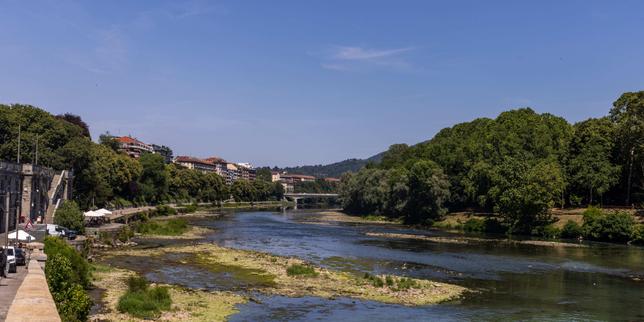
The Po, the Arno, and the Ticino are dropping toward historic lows, triggering alarm bells from Lombardy to Tuscany. This is not a simple seasonal dry spell. Northern Italy is entering a structural water crisis driven by a lethal combination of decaying infrastructure, agricultural mismanagement, and shifting Alpine weather patterns. While regional governments blame unpredictable weather, the reality is a systemic failure to capture, store, and distribute water in an altered climate. The economic engine of Italy is burning through its liquid capital, and the current strategy of emergency declarations is no longer working.
For decades, the Po River basin functioned as a predictable machine. Winter snow accumulated in the Alps, acting as a natural reservoir that melted gradually through the spring and summer to feed the plains below. That machine has broken down.
The Myth of the Unprecedented Drought
Every time a river bed dries up in Lombardy, local politicians call it an unprecedented act of God. It is a convenient narrative that shifts the blame away from decades of deferred maintenance and poor planning. The data tells a different story. The reduction in river flows is the predictable consequence of a documented trend: the shrinking of the Alpine snowpack.
When precipitation hits the Alps now, it increasingly falls as rain rather than snow, or the snow melts too early in the year. Instead of a slow, sustained release of water throughout the summer, northern Italy experiences intense winter and spring runoff that washes straight into the Adriatic Sea, followed by months of bone-dry conditions. The water arrives all at once when fields do not need it, and vanishes entirely when they do.
Italy has failed to adapt its infrastructure to this shift. The country captures less than 11% of its annual rainfall. The rest is lost to the sea because there is nowhere to store it. Regional networks rely on a network of small canals and reservoirs designed for an era when the Alps did not fail as a natural storage system.
The Leaky Arteries of Lombardy
The crisis deepens when you look at how water moves through the system. Italy possesses some of the lekiest aqueducts and distribution networks in Europe.
In many urban and agricultural districts across Lombardy and Tuscany, between 30% and 42% of treated water leaks directly into the ground before it ever reaches a tap or a crop. Imagine running a business where more than a third of your inventory vanishes in transit every single day. That is the reality of the Italian water grid.
National Average Water Loss in Transit: ~40%
Captured Annual Rainfall: <11%
The infrastructure is old. Many of the major irrigation channels and municipal pipes were laid in the immediate post-war period or during the economic boom of the 1960s. They are cracking under stress. Repairing these networks requires massive, disruptive capital expenditure that regional utilities have kicked down the road for election cycle after election cycle.
Agriculture is Trapped in the Past
The biggest consumer of water in the north is not the tourist industry or the growing cities. It is agriculture. The Po Valley produces roughly a third of Italy’s agricultural output, including water-intensive crops like rice, corn, and soy.
The method used to irrigate these fields is overwhelmingly flood irrigation. Farmers literally submerge entire fields to grow rice or satisfy the heavy demands of livestock feed crops. It is incredibly wasteful. In a world of abundant Alpine meltwater, flood irrigation was cheap and easy. In a world of water scarcity, it is unsustainable.
Switching to precision drip irrigation, which delivers targeted water directly to plant roots, requires significant upfront investment. While some corporate farms in Lombardy have made the transition, thousands of smaller, family-owned operations cannot afford the technology. The government offers subsidies, but the bureaucratic red tape required to access them means the money often arrives years too late.
Irrigation Breakdown in High-Risk Zones:
- Flood/Furrow Irrigation: ~60% (High Waste)
- Sprinkler Systems: ~30% (Medium Waste)
- Precision Drip: ~10% (Low Waste)
Furthermore, there is a stubborn cultural resistance to changing crop varieties. Suggesting that farmers switch from traditional corn or rice to drought-resistant grains is treated as an attack on Italian heritage. But heritage means very little when the soil turns to dust.
The Looming Industrial and Energy Shock
The water crisis is rapidly expanding beyond the farm gate. The Po River basin is also the industrial heartland of the nation, home to chemical plants, manufacturing hubs, and power generation facilities that rely heavily on river water for cooling and processing.
When river levels drop below critical thresholds, thermal and nuclear power plants are forced to reduce their output because the returning water would cook the remaining river ecosystem, or because the intake valves can no longer draw enough volume. At the same time, hydroelectric power generation, which accounts for a vital slice of Italy's renewable energy portfolio, has plummeted in recent years due to dry mountain reservoirs.
This creates a vicious loop. As water scarcity drives up energy costs, manufacturing becomes more expensive, impacting global supply chains that rely on northern Italian components.
The Toothless Regulatory Response
Italy’s regulatory framework for water management is a chaotic patchwork of overlapping authorities. Rivers cross regional borders, leading to political infighting between Lombardy, Piedmont, Emilia-Romagna, and Veneto over who gets to draw water during a shortage.
When the Po runs low, upstream regions like Lombardy are often accused of hoarding water in their alpine lakes and reservoirs, leaving downstream regions like Emilia-Romagna to watch their crops die. The national government occasionally steps in to appoint a "Water Commissioner" with emergency powers, but these appointments are temporary band-aids. They manage the immediate pain rather than fixing the underlying system.
What is needed is a total overhaul of water pricing. Currently, agricultural water is incredibly cheap, giving users little economic incentive to conserve it. If you price water like a finite, precious commodity rather than an infinite resource, behavior changes overnight. But no regional politician wants to tell the powerful agricultural lobby that their water bills are about to triple.
The Encroaching Sea
The ultimate consequence of letting the rivers run dry can be seen at the mouth of the Po. As the river’s outward pressure drops, salt water from the Adriatic Sea rushes inland, pushing up to 20 kilometers into the delta.
This saltwater intrusion poisons the underground aquifers, making the water useless for irrigation and drinking. It kills the local flora and ruins the soil for future planting generations. Once an aquifer is contaminated with salt, reclaiming it is an incredibly slow and expensive process.
The crisis in Lombardy and Tuscany is a warning. Northern Italy is running out of time to rebuild its pipes, build modern storage basins, and transition its agricultural sector away from nineteenth-century practices. The water is not coming back on its own.