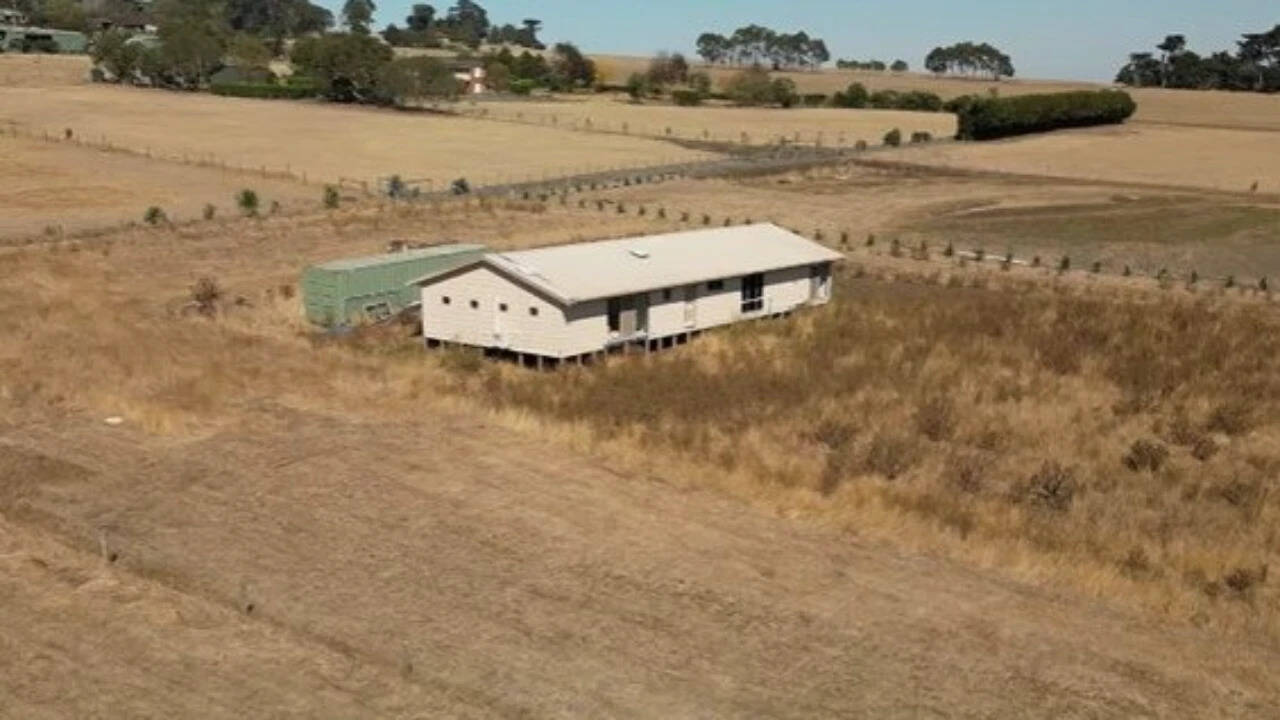
Half a million dollars gone. Foundation poured. Framing up. Then a surveyor drops a bomb: the house sits on the wrong parcel.
Every real estate moralist on earth reads a story like that and reaches for the exact same tired sermon. Hire three surveyors before you touch dirt. Double-check the plat map. Treat property lines like sacred relics. Buy more insurance, more inspections, more red tape.
That advice is lazy consensus dressed up as wisdom.
When a couple drops $500,000 and ends up with a house sitting on the wrong site, the real tragedy rarely starts with a misread survey pin. It starts with how residential land is priced, how municipal zoning operates, and how builders treat site selection as an administrative checklist instead of a capital-allocation problem. Worse, treating "right lot vs. wrong lot" as a simple binary misses the sharpest truth in residential development: sometimes the mislocated structure exposes value the original design completely missed, while the textbook "right" lot traps owners in a money pit they never saw coming.
Let us strip away the melodrama and look at what actually happens when a build lands on the wrong parcel.
The Lazy Consensus Around "Measure Twice, Pour Once"
Standard commentary treats a mispositioned build like a cooking error. You added salt instead of sugar, so the soufflé collapsed. Fix the recipe next time.
That framing collapses the second you look at real property mechanics. A parcel in a subdivision or rural corridor is not a blank canvas with a neat barcode. You have legal title (ownership of a specific recorded lot), physical footprint (where the slab, footings, and utilities actually sit), and regulatory authority (what the city or county permits on that ground).
When a house lands on the wrong site, one of three things usually happened behind the scenes:
- The plat and the ground disagreed. Older metes-and-bounds descriptions, unrecorded easements, or sloppy monumentation put theoretical boundaries at war with physical reality.
- Subcontractor drift went unchecked. Stakes get kicked out, re-set by eye, or misread across phases.
- Permit and site plans lived in separate silos. Architectural drawings show setbacks relative to a hypothetical line while field crews work off an outdated stake.
I have watched developers and private owners burn serious money trying to prevent every single one of those failures with thicker binders and extra sign-offs. More paperwork rarely fixes a broken chain of custody between a surveyor's hub and a concrete truck. Paper does not pour footings. People do.
Yet the standard takeaway never questions the underlying premise: that landing on the wrong parcel automatically destroys the economic logic of the project.
Precision Terms Before We Talk About Pain
Before tearing apart the usual warnings, separate three concepts that commentators routinely mash together:
- Encroachment means a structure, driveway, or utility crosses a boundary line onto someone else's land.
- Misplacement (wrong-site build) means the primary structure sits on an adjacent or unintended parcel, often one the builder assumed was theirs or thought was subject to a pending assembly.
- Title defect means a cloud on ownership, an unrecorded interest, or a conflicting grant that clouds who holds fee simple absolute.
People use "wrong site" like a single curse word. Legally and financially, an encroachment of eighteen inches on a side yard is a completely different animal from a $500,000 house sitting on Parcel B while the owner holds the deed to Parcel A.
Confusing those categories leads to terrible decisions. You do not solve a parcel-level mismatch with a neighborly fence agreement. You solve it with real property law, valuation math, and hard-nosed negotiation.
Why "Wrong Site" Does Not Automatically Mean "Total Loss"
Imagine a scenario where a builder and a couple put $500,000 into a custom build, only to discover the footprint sits on the neighboring parcel owned by a quiet holding company or an inactive estate.
The knee-jerk reaction is panic. Tear it down? Buy the other lot at ransom prices? Litigate until the lawyers own the drywall?
Now look at the economics coldly.
Demolition of a $500,000 structure does not erase $500,000. You lose the sunk construction cost, pay hauling and disposal fees, lose carrying costs on construction debt, and still own an empty lot where you originally wanted to live. Meanwhile, the neighbor sitting on the parcel underneath your house holds a piece of dirt that suddenly has a finished residence attached to it—except that neighbor cannot easily sell it cleanly, insure it normally, or finance it without resolving title and possession.
In real estate disputes, leverage is asymmetric. Neither party holds clean cards alone.
When both sides understand that reality, a "wrong-site" disaster often turns into a forced land-swap, a discounted purchase of the underlying parcel, or a structured buyout where the owner ends up with the exact house they wanted—plus superior topography, better sun exposure, or road frontage they never would have picked on paper.
I have seen investors walk into distressed land messes thinking they were rescuing a victim, only to realize the "mistake" forced a parcel consolidation that doubled the utility of the site. The original plan put a house in a mediocre pocket. The misplacement dragged the house onto the better half of the block.
Nobody puts that in the headline because "Couple Accidentally Upgrades Lot Through Survey Chaos" does not generate clicks. "Spent $500,000, Built on Wrong Site" does.
The Question Nobody Asks: Why Was the Lot Boundary So Fragile?
Search results around stories like this obsess over predictable "People Also Ask" questions.
How do you check if a house is on the right lot?
Can a builder be sued for building on the wrong property?
Does title insurance cover building on the wrong land?
Every one of those questions assumes the system worked fine until one person tripped.
It did not.
Residential land records in North America and many other jurisdictions carry decades of fragmented surveys, informal lot-line adjustments, and municipal GIS maps that look authoritative while carrying zero legal weight. County GIS portals are wonderful for rough orientation and terrible for engineering. Yet buyers, lenders, and even some project managers treat a colored polygon on a browser screen like a gospel truth.
Ask the sharper question instead: Why did the project structure allow a half-million dollars of irreversible capital to enter the ground before physical boundary verification was locked to construction control?
When capital hits concrete, reversibility drops near zero. A framing change costs thousands. Moving a slab costs hundreds of thousands. Yet many residential contracts treat boundary staking as a one-time event before excavation, with zero re-verification when the foundation layout goes down.
That is not a romantic tragedy. It is sloppy risk engineering.
What Heavy Hitters in Land and Risk Actually Teach
Look at how serious operators in commercial land development and title risk treat parcel certainty.
Real estate scholars and practitioners like Richard Epstein on property rights and institutional risk, alongside seasoned title underwriters and land-use attorneys who spend careers untangling boundary conflicts, hammer one core principle: possession, record title, and physical improvements must be reconciled before capital becomes immovable.
In commercial work, an ALTA/NSPS Land Title Survey is standard practice for a reason. It maps record boundaries, easements, encroachments, utilities, and physical improvements onto a single certified instrument. Residential buyers routinely skip equivalent rigor to save a few thousand dollars on a six-figure build—then act shocked when a $3,000 shortcut creates a $500,000 headache.
Even more revealing is how property law treats innocent improvers. Many jurisdictions have doctrines—often rooted in equitable principles or statutory "betterment" rules—designed to prevent unjust enrichment when someone builds in good faith on another's land. The law does not always hand the neighbor a free mansion just because a stake moved three feet. Courts look at good faith, notice, relative hardship, and value added.
That nuance vanishes when commentators treat real estate law like a cartoon where the person holding the deed automatically keeps the house and burns the builder at the stake.
Addressing the Questions Everyone Types at 2 a.m.
Can you sue the builder for building on the wrong lot?
Yes, you can sue. Collecting $500,000 from a residential builder is a very different matter.
Many small and mid-sized residential builders operate through single-project LLCs with thin capitalization, narrow commercial general liability policies, and exclusions for faulty workmanship or boundary errors. A judgment on paper does not refill a construction account. Before filing suit, smart counsel checks policy language, bond status, and personal guarantees—not just contract clauses.
Does title insurance cover building on the wrong site?
Standard owner's title insurance insures title as of the policy date against defects, liens, or encumbrances existing at that time. It generally does not insure against a builder putting a house on the wrong parcel after closing, unless specific endorsements or pre-existing record defects apply. Reading the exclusions beats assuming coverage.
What happens if the neighbor refuses to sell the wrong lot?
Then the math turns ugly fast. If you cannot acquire the underlying parcel and cannot leave the structure where it sits, removal, restoration, and damages enter the picture. Even then, a stubborn neighbor holding a house they cannot easily mortgage or transfer often softens once litigation costs and quiet-title friction mount on both sides.
Actionable, Unconventional Moves When the Ground Is Wrong
If you are staring down a mislocated build—or structuring a build right now so you never join that club—skip the platitudes and run these moves:
- Freeze emotional spending immediately. Do not pour another yard of concrete, install cabinetry, or pay milestone draws while parcel alignment is in doubt. Every dollar spent after notice weakens "innocent mistake" arguments.
- Order a boundary and improvement survey tied to record deeds, not GIS. Get exact coordinates, setback lines, and a written legal description of where the footprint sits.
- Map both parcels' economics side by side. Calculate three numbers: cost to buy the wrong parcel, cost to relocate or demolish and rebuild on the right parcel, and net market value in each scenario. Let arithmetic pick the path, not pride.
- Negotiate a lot swap or purchase before filing a scorched-earth lawsuit. Litigation burns cash for both sides. Offer a clean exchange of the intended lot plus cash consideration, or a buyout structured around appraised land value rather than emotional extortion.
- Audit builder insurance and entity structure on day one of any future build. Require proof of coverage, verify survey sign-offs at foundation layout—not just pre-dig—and tie draw releases to physical verification.
The Downsides of Playing It Contrarian
Taking a hard-nosed, value-driven view of wrong-site builds has real drawbacks, and pretending otherwise would be dishonest.
First, treating a boundary disaster as a negotiation puzzle assumes rational counterparties. Sometimes the adjacent owner is hostile, litigious, or locked in probate for years. No spreadsheet fixes a court docket moving at glacial speed.
Second, pushing for a parcel swap or buyout can trigger tax consequences, lender consent requirements, and title re-underwriting that delay occupancy for months. Carrying mortgage interest or rent while lawyers draft corrective deeds drains patience and cash.
Third, relying on post-hoc legal remedies or valuation math is vastly inferior to getting the layout right before concrete hits dirt. Contrarian thinking helps you survive a wreck; it should never replace basic physical verification before irreversible work starts.
What Actually Matters When Dirt Moves
A $500,000 house on the wrong site is an indictment of sloppy project controls and lazy risk assumptions. It is also proof that property value lives in the intersection of title, geography, and negotiation—not in a neat box on a plat map.
Stop worshipping checklists that nobody enforces in the mud. Lock physical control to legal boundaries before you pour, and when the ground turns out wrong, play the math like an operator instead of mourning like a tourist.