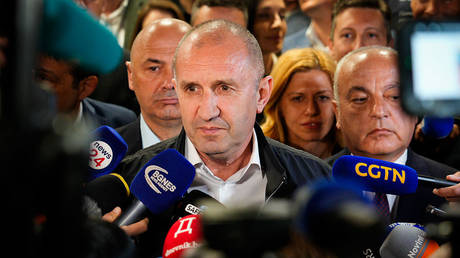
Bulgaria just upended the European political board. If you’ve been following the Balkan political circus, you know the country has been stuck in a loop of failed governments and snap elections for years. But the latest vote on April 19, 2026, feels different. Rumen Radev, the former president who stepped down to lead his new Progressive Bulgaria (PB) party, didn't just win—he crushed the competition.
The headline everyone’s buzzing about isn't just the win, though. It’s Radev’s blunt insistence that dialogue with Russia must be restored. For a NATO and EU member, that’s a statement that sets off alarm bells in Brussels and Washington. But if you look closer at the ground reality in Sofia, this isn't just about "pro-Russian" sentiment. It's about a desperate, pragmatic pivot in a country tired of being a geopolitical pawn while its own economy stagnates.
The Pragmatic Pivot or a Trojan Horse
Radev isn't some wide-eyed radical. He’s a former air force general. He knows exactly how the power balance works. When he says Bulgaria needs a "practical approach" toward Moscow, he’s tapping into a deep-seated exhaustion among Bulgarian voters. People are tired of high energy prices and the feeling that their foreign policy is being dictated by external interests that don't always align with the local checkbook.
Critics, of course, are calling him a "Trojan horse" for the Kremlin. They point to his past comments—like calling Crimea "currently Russian" back in 2021—as proof that he’s ready to sell out European unity. But Radev’s argument is that you can’t simply ignore a major energy supplier and a historic neighbor forever. He’s framing this as a "victory of hope" over fear, suggesting that Bulgaria can maintain its European path while still being realistic about its eastern borders.
Breaking the Deadlock with a Hard Right Turn
For years, Boyko Borissov and his GERB party played a balancing act. They were the "pro-European" choice that kept things stable, even if that stability felt like a slow decline. That era ended this week. Borissov’s influence has cratered, and his refusal to join a coalition means he’s effectively sidelined himself.
Radev’s Progressive Bulgaria secured nearly 40% of the vote according to the latest counts. That’s a massive mandate in a country where 15% used to be enough to lead a coalition. It gives him the leverage to actually move the needle on relations with Moscow without asking for permission from the old guard.
Why Energy is the Real Driver
Don't let the "historical ties" narrative fool you. While there’s plenty of talk about Russia liberating Bulgaria from the Ottoman Empire in 1878, the real driver here is fuel. Bulgaria is still heavily reliant on Russian energy infrastructure.
While the country has made strides in solar and wind, fossil fuels still make up over 30% of the energy mix. More importantly, the Balkan Stream pipeline remains a vital artery. In March 2026 alone, Bulgaria and Hungary received nearly 384 million Euros worth of Russian pipeline gas. Radev knows that "restoring dialogue" is code for "ensuring our factories stay open and our homes stay warm" without paying the massive premiums associated with emergency LNG shipments from the west.
The Zelensky Clash and the Weapons Debate
One of the biggest friction points is military aid. Radev has been vocal about his opposition to sending weapons to Ukraine. He’s argued that "sending more weapons will not resolve the war" and famously clashed with President Zelensky on live TV.
To many Bulgarians, especially those in rural areas or older demographics, this feels like common sense. They see a small country being dragged into a continental conflict that they can't afford to fight. Radev’s win suggests that this "Bulgaria First" sentiment has finally reached a tipping point.
What This Means for Europe
Europe is already fractured. With Hungary’s Viktor Orbán consistently blocking or delaying EU initiatives regarding Russia, a pro-Radev Bulgaria creates a new "block of dissent" within the Balkans.
- Schengen and the Euro: Bulgaria officially entered the Eurozone on January 1, 2026, but the transition hasn't been smooth. Inflation is up, and Radev has suggested the people should have had a referendum. This skepticism toward Brussels is now a core part of the government's identity.
- The Shadow Economy: Russia’s fossil fuel revenues hit a two-year high in early 2026, largely because they found ways to bypass sanctions. Bulgaria, with its strategic Black Sea ports, is a tempting partner for those looking to "normalize" trade relations.
- The Decline of Extremism: Interestingly, while Radev moved toward Russia, the far-right Vazrazhdane (Revival) party saw its support collapse. It seems voters preferred Radev’s "pragmatic" Russian stance over the fringe, more aggressive rhetoric of the hard right.
Navigating the New Reality
If you're looking for what happens next, watch the coal mines. Bulgaria recently voted to keep its coal fleet online until 2038, risking billions in EU green energy funds. This was a signal. It told the EU that Bulgaria values its own energy security over Brussels' climate timelines.
Radev is going to double down on this. Expect to see:
- Renewed Gas Negotiations: A push to formalize long-term, stable pricing with Gazprom, likely through intermediaries or the Balkan Stream.
- Infrastructure Projects: Possible movement on the stalled Belene nuclear project, which relies on Russian reactor technology currently sitting in storage.
- Diplomatic De-escalation: A reduction in the "war rhetoric" coming from Sofia, replaced by calls for a negotiated settlement in Ukraine.
Bulgaria isn't leaving the EU. It isn't leaving NATO. But under Radev, it’s going to start acting like a country that puts its own geography and economy ahead of the alliance's consensus. For the rest of Europe, the "Bulgarian model" might just become the new blueprint for how smaller nations handle the growing divide between the East and West.
Keep an eye on the official final results expected later this week. If Radev hits that 121-seat threshold in the National Assembly, he won't need to compromise with anyone. That’s when the real dialogue begins.