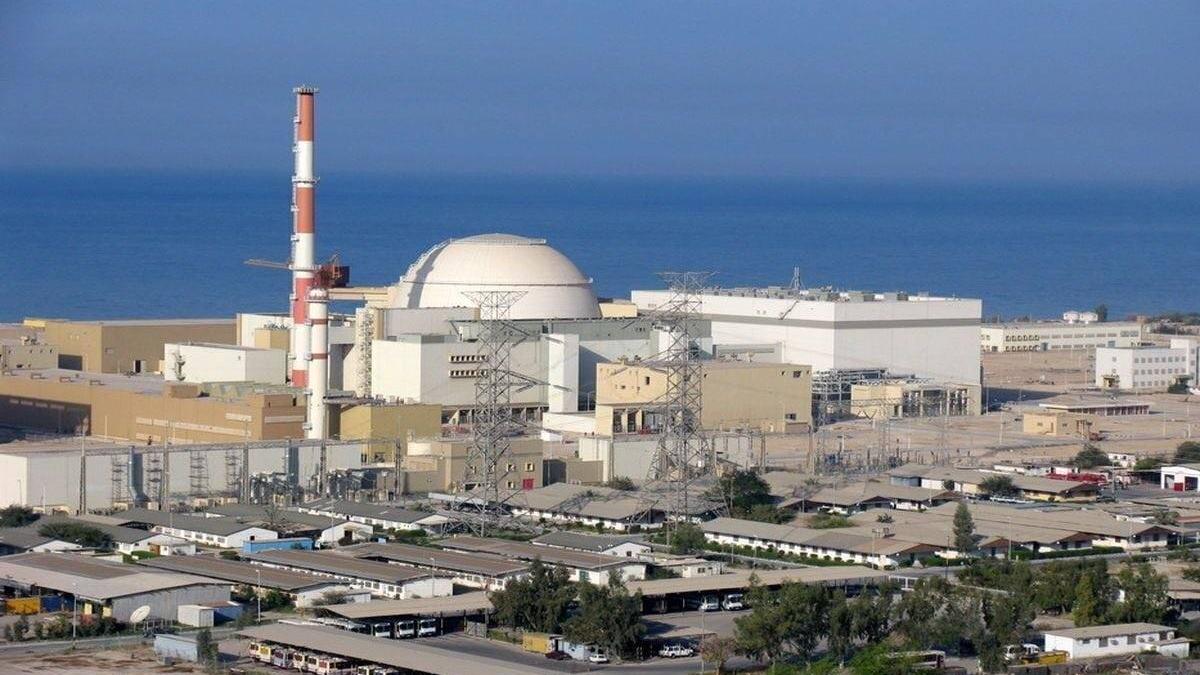
Fear sells. Especially when that fear is radioactive.
The recent posturing by Iranian Foreign Minister Abbas Araghchi regarding "contamination risks" at the Bushehr nuclear power plant following regional strikes is a masterclass in geopolitical gaslighting. It’s a narrative designed to exploit a global public that still thinks any damage to a nuclear facility results in a second Chernobyl.
It won’t. It can’t.
If you are reading the mainstream panic about "environmental catastrophes" in the Persian Gulf, you are being fed a diet of outdated physics and strategic hyperbole. The reality of modern nuclear containment is far more boring—and far more resilient—than the headlines suggest. We need to stop treating nuclear facilities like giant glass ornaments and start looking at the actual engineering that keeps the isotopes where they belong.
The Concrete Fortress You Are Ignoring
The loudest voices in the room are currently screaming about the "Bushehr catastrophe." They conveniently ignore the physical reality of a VVER-1000 reactor. These aren't the unshielded graphite piles of 1986.
A VVER-1000 is wrapped in a containment building that is, for all intents and purposes, a fortress. We are talking about 1.2 meters of pre-stressed concrete lined with steel. It is designed to withstand internal pressure surges, external projectile impacts, and even direct hits from aircraft.
When Araghchi warns of "contamination," he is banking on your ignorance of Defense in Depth.
Nuclear safety isn't a single wall; it’s a series of concentric failures that must happen simultaneously for the environment to be at risk. You have the fuel pellets themselves (ceramic and stable), the zirconium cladding of the fuel rods, the primary reactor pressure vessel (heavy-duty steel), and finally, the massive concrete containment dome.
To get "contamination" into the Persian Gulf, a strike would have to penetrate every single one of those layers perfectly. Even in a worst-case kinetic strike, the most likely outcome isn't a plume of death; it’s a localized, messy cleanup within the footprint of the plant. The "regional disaster" narrative is a political tool, not a scientific projection.
Why Liquidators Won't Be Needed
The "contamination" argument relies on the idea of a massive atmospheric release. But look at the geography and the physics of the Bushehr site.
The reactor sits on the coast. For a "regional catastrophe" to occur, you would need a core meltdown followed by a breach of the containment and a failure of the various scrubbers and safety systems. Even then, the isotopes involved—primarily Iodine-131 and Cesium-137—behave predictably.
Iodine-131 has a half-life of about eight days. It’s a short-term threat that vanishes before the diplomats can even finish their first round of talks. Cesium is more persistent, but it doesn't just "float" across borders like a ghost. It binds to soil. It stays put.
The idea that a strike on Bushehr would poison the entire Gulf’s desalination supply is a clever bit of psychological warfare aimed at the UAE and Saudi Arabia. It’s designed to make Iran’s neighbors pressure the U.S. and Israel to back off. It’s not about the water; it’s about the leverage.
The "Dirty Bomb" Fallacy
Critics often argue that even if the reactor doesn't melt down, a strike could turn the facility into a "de facto dirty bomb."
This is where the logic falls apart under the weight of actual data. To create a dirty bomb effect, you have to pulverize the spent fuel or the core and loft it high into the atmosphere. Conventional high explosives—the kind used in precision strikes—are excellent at punching holes, but they are remarkably inefficient at aerosolizing heavy ceramic fuel pellets.
If you hit a spent fuel pool, you get a localized mess. You get a high-radiation zone that makes the site unusable. You do not get a cloud of radiation drifting over Dubai.
I’ve seen how people react to "leaks." They treat a few gallons of tritium-tainted water (which is less radioactive than a banana) like a death sentence. Araghchi knows this. He is weaponizing your "radiophobia" to shield a strategic asset.
The Real Risk Is Not Radiation
If we want to be honest about the dangers at Bushehr, we have to stop talking about the core and start talking about the Grid.
The real danger of a strike on a nuclear plant isn't the radiation; it's the loss of off-site power (LOOP). A nuclear reactor needs electricity to keep its cooling pumps running even after it's shut down. If the pumps stop, the heat builds.
This is what happened at Fukushima. It wasn't the earthquake that caused the meltdown; it was the loss of power to the cooling systems.
If a strike hits the switchyard at Bushehr—which is a much "softer" target than the reactor dome—the plant goes into an emergency state. It has to rely on diesel generators. If those generators fail, or if the fuel for them is cut off, then we talk about a meltdown.
But here’s the kicker: even a total station blackout at a modern plant leads to a slow-motion crisis, not an instantaneous explosion. There are hours, sometimes days, to intervene. The "contamination risk" is a managed risk, yet the headlines treat it like an inevitability.
Stop Asking the Wrong Questions
Most people are asking: "How far will the radiation spread?"
The right question is: "Why are we pretending this is a unique threat?"
We live in a world where chemical plants, oil refineries, and fertilizer factories sit near major population centers. A strike on a major hydrofluoric acid tank would kill more people in ten minutes than a containment breach at Bushehr would in ten years. But "nuclear" has a special brand of terror attached to it.
We allow ourselves to be manipulated by this asymmetry. By focusing on the "contamination" bogeyman, we ignore the strategic reality: Bushehr is being used as a human—and radioactive—shield.
Iran isn't worried about the environment. If they were, they wouldn't be building reactors in a high-seismic zone. They are worried about the loss of a multi-billion dollar piece of leverage. Every time a Western outlet repeats the "environmental disaster" talking point, they are doing Tehran’s PR for them.
The Brutal Truth of Kinetic Warfare
Let’s run a thought experiment. Imagine a state-of-the-art penetrator munition hits the Bushehr reactor.
The missile has to defeat the air defenses, hit a specific angle on a reinforced dome, and penetrate meters of high-density concrete. Even if it succeeds, it hits the reactor vessel—a massive steel pot.
What happens? The reactor scrams (shuts down) instantly. The pressure drops. The cooling water might leak into the containment sump. The radiation stays inside the building. The facility is totaled. The economic loss is staggering.
The environmental impact outside the fence? Negligible.
The "contamination" narrative is the ultimate "boy who cried wolf." It relies on the 1950s version of nuclear science where everything is a ticking time bomb. It ignores the fact that we have spent sixty years making these things nearly impossible to break from the outside.
The Actionable Reality
We need to stop rewarding this rhetoric with panic.
- Verify the Source: When a government official warns of a disaster, ask if that disaster serves their immediate diplomatic needs. In this case, it does.
- Understand Scale: Learn the difference between "detectable radiation" and "dangerous radiation." We can detect a single atom of Cesium from across an ocean. That doesn't mean it can hurt you.
- Demand Better Engineering Analysis: Stop settling for "experts" who specialize in political science. Start listening to the structural engineers and the health physicists who understand the integrity of containment vessels.
The fear of a "Nuclear Gulf" is a ghost story told by people who want to keep the lights off. It’s time we stopped being afraid of the dark and started looking at the blueprints.
Bushehr isn't a bomb waiting to go off; it’s a reinforced concrete box that is remarkably hard to break. The contamination risk isn't a scientific certainty—it's a political choice.
Stop falling for the theater. The isotopes don't care about the politics, and the concrete doesn't care about the threats.