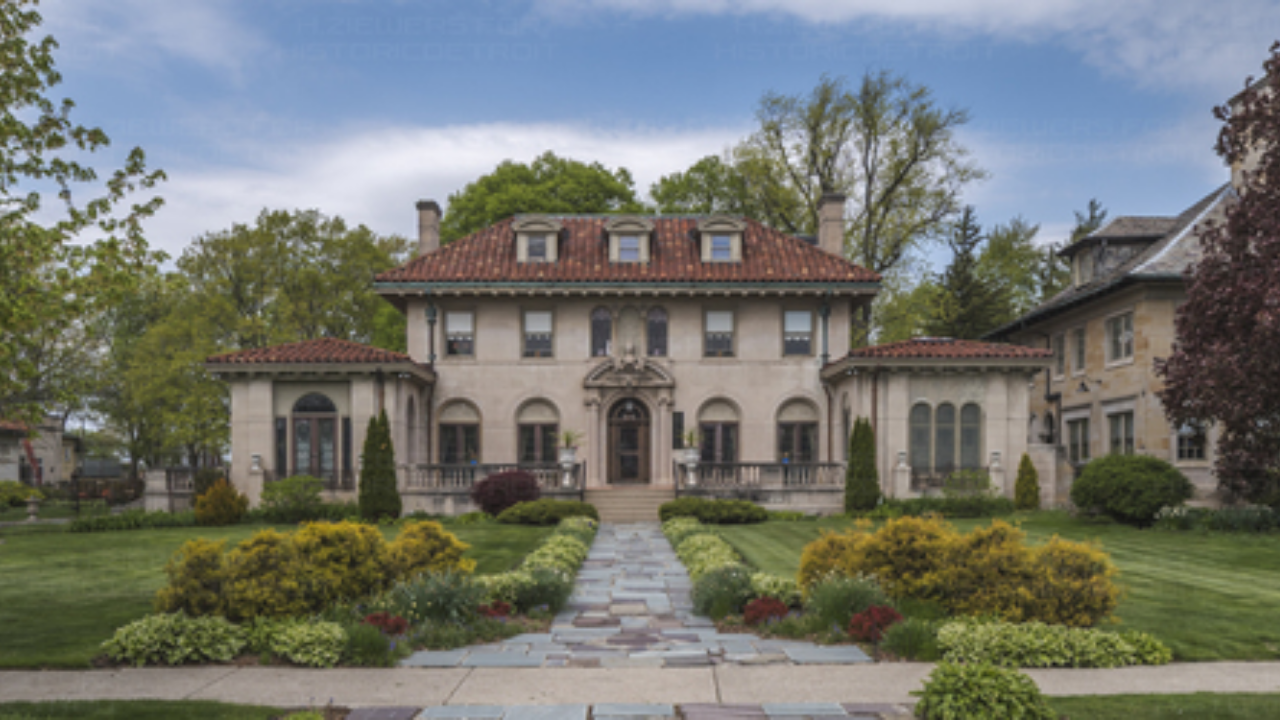
The internet loves a good rags-to-riches real estate porn story. A savvy local lawyer scoops up Berry Gordy Jr.s historic Detroit estate for pocket change in 2002, sits on it while the city crumbles, and flips it years later for a cool $1.65 million. Cue the applause. Cue the headlines about visionary investing and historic preservation paying off.
It is a fairy tale for people who do not understand math, asset allocation, or the brutal reality of historical upkeep in Rust Belt urban cores.
Strip away the Motown pedigree, the nostalgia, and the romanticized myths of urban resurrection, and look at the ledger. Buying that house for $250,000 in 2002 and selling it for $1.65 million two decades later is not a masterclass in wealth generation. It is an expensive, low-yield vanity project wrapped in celebrity glitter.
I have watched amateur investors make this exact mistake across every major legacy market in America. They fall in love with a name, buy a white elephant in a declining neighborhood, and mistake historical significance for liquidity. Let us look past the press releases and do the actual accounting.
The Myth of the Detroit Real Estate Jackpot
Hype thrives on gross margins. A jump from $250,000 to $1.65 million sounds like a sixfold return on investment. People hear those numbers and start drafting their own plans to scour foreclosure lists for abandoned recording studio compounds.
That is not how real estate economics function.
A home of that magnitude—over 10,000 square feet, built in the gilded age of Detroit manufacturing, dripping with architectural quirks that require specialized labor—is a financial sponge. Every square foot of historic plaster, custom mahogany paneling, and mid-century renovation demands constant capital injection.
Imagine a scenario where our lawyer friend purchased an unglamorous index fund or a diversified portfolio of light commercial real estate in 2002 instead of tying up hundreds of thousands of dollars in a single residential monolith on Boston Boulevard. Over a twenty-year horizon, standard equity benchmarks would have compounded reliably without demanding a single dime of property taxes, insurance surcharges, or emergency roof repairs.
A historic mansion does not sit quietly in a portfolio. It demands maintenance tributes. Roof leaks do not care about the hit records once cut in the basement. Property assessments in Detroit during the early 2000s were erratic, but insurance on a vacant or semi-occupied historical landmark in a recovering zip code eats cash flow alive.
When you factor in holding costs, renovation expenses, property taxes, and the opportunity cost of capital locked inside wood and brick for twenty years, that $1.65 million exit price looks pedestrian. The internal rate of return on this deal is easily beaten by a boring suburban duplex portfolio bought with standard leverage.
Sentimentality is a Poor Asset Class
We assign value to things based on emotional resonance rather than utility. Berry Gordy wrote hits there. Diana Ross walked those hallways. Smokey Robinson hung out by the pool.
The market does not care about your emotional resonance. The market cares about replacement cost, net operating income, and buyer pools.
When you buy a piece of music history, you limit your exit strategy to a tiny fraction of buyers who are wealthy enough to maintain a multi-million-dollar estate and narcissistic enough to care about its provenance. Normal high-net-worth buyers want modern amenities, efficient climate control, and low maintenance overhead. They do not want to explain to dinner guests why they cannot alter a load-bearing wall because it was part of Hitsville USA's extended footprint.
By tying the valuation to a celebrity's past, the investor essentially bought a museum without an endowment. Museums rely on donations and ticket sales to survive. Private homeowners rely on their own checking accounts.
When the renovation bills came due—and in a house built in 1926 with mid-century modifications, they always come due—the owner was writing checks out of pocket for structural upgrades that would never be fully recouped at sale. Historic preservation is a hobby, not an investment strategy. Conflating the two is how generational wealth goes to die.
The Liquidity Trap
Let us address the elephant in the ballroom: liquidity.
Real estate is already an illiquid asset class. Historic luxury real estate in a city undergoing generational economic shifts is hyper-illiquid. When our lawyer tried to sell, how many qualified buyers were standing in line with $1.65 million cash in hand within the Detroit city limits?
A handful. Maybe zero on any given Tuesday.
If you need to exit an investment in a hurry, a massive estate with niche historical appeal is a liability. You become a price taker, not a price maker. The buyer dictating terms holds all the cards because they know you are the custodian of a white elephant that costs thousands of dollars a month just to keep warm in January.
Smart capital chases velocity. Money needs to move, compound, and work across multiple vectors. Locking up capital in a trophy asset with a vanishingly small buyer pool means you miss every other economic cycle happening around you. While that house sat appreciating on paper, entire technology sectors boomed, crashed, and rebundled, and urban real estate markets in sunbelt metros multiplied by orders of magnitude with a fraction of the maintenance friction.
Stop Buying Collector Items and Start Buying Cash Flow
The obsession with finding the abandoned castle of a legend is a symptom of speculative tourism. People want the narrative. They want the dinner party story. They want to feel like they rescued a piece of cultural heritage.
If you want to rescue heritage, set up a non-profit foundation, secure tax credits, and turn it into a public trust. Do not buy it as a residential flip expecting standard market returns.
Real wealth is built on boring fundamentals. It is built on predictable yields, scalable assets, and strict risk management. The moment you let nostalgia dictate your balance sheet, you stop being an investor and start being a curator.
Curators go broke. Investors get paid.
The next time you see a headline about a bargain-basement historic mansion selling for millions decades later, look past the headline number. Subtract the carrying costs, the inflation adjustment, the sweat equity, and the opportunity cost of two decades locked in bricks and mortar. You will usually find that the smartest move was never buying the castle at all.
Sell the nostalgia. Keep the cash.