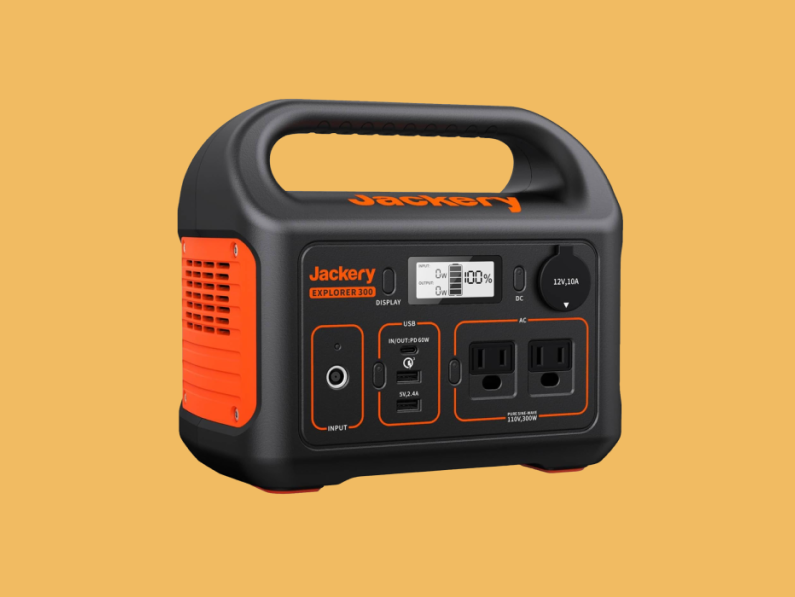
Every gear roundup on the internet repeats the exact same comforting lie. They list nine glossy portable power stations, rate them from heavy to heavier, and tell you that buying a two-thousand-watt lithium monolith will solve your camping trips, your weekend cottage getaways, and your neighborhood blackouts all at once.
It is a seductive piece of marketing fantasy. And it is completely wrong. Meanwhile, you can explore related events here: The Structural Mechanics of Super Intelligence Policy and State Competition.
I have seen corporate offices blow tens of thousands on oversized emergency battery banks that sat gathering dust until their internal chemistries degraded into expensive paperweights. I have watched weekend campers lug forty-pound lithium bricks across muddy clearings only to realize they are using less than five percent of their stored capacity to charge a couple of iPhones and a headlamp.
The lifestyle gadget industry wants you to buy for the absolute worst-case scenario. They want you to conflate peak household survival with casual outdoor recreation. We need to strip away the lazy consensus, stop paying for massive inverter overhead you will never touch, and look at the physics of mobile energy through a lens of brutal efficiency. To understand the bigger picture, we recommend the excellent article by TechCrunch.
The Watt Hour Fallacy and the Weight Trap
The fundamental error in almost every gear review is the obsession with massive headline numbers. Writers love to headline a unit's raw capacity in watt-hours (Wh) or its inverter output in watts (W) as if bigger is universally superior.
Physics does not care about your marketing brochure. Every time you step up from a 300Wh class pocket generator to a 2,000Wh chest-style power station, you are adding dead weight. A typical high-capacity lithium iron phosphate (LiFePO4) unit scales rapidly past fifteen or twenty kilograms. If you are throwing that into the back of a Ford Transit conversion van, fine. If you are trying to hike fifty yards to a tent site, you have turned a weekend leisure trip into a cross-fit punishment.
Furthermore, bigger inverters have a dirty secret: idle draw. An inverter capable of pushing 2,000 watts continuously burns a significant amount of power just sitting there turned on, converting DC from the battery to AC for your wall plugs, even if nothing is plugged into it. You are burning through your precious reserve energy to power the internal cooling fans and conversion circuits of an oversized box.
Match your gear to your actual physics, not your anxieties. If your daily load consists of a CPAP machine, a Wi-Fi router, and a laptop, a massive 3,000W output inverter is an active liability. You are paying extra money for heavy copper windings and high-current transistors that only exist to make your hair dryer run for three minutes before draining the pack.
Chemistry Matters More Than Brand Names
Let us address the battery chemistry elephant in the room. Too many buyers still get lured into buying older Lithium-ion (NCM) chemistries because they are slightly lighter per watt-hour upfront. That is a short-sighted trap.
Traditional NCM cells typically rate out at roughly 500 to 1,000 charge cycles before degrading to eighty percent of their original capacity. Meanwhile, modern LiFePO4 architecture routinely clears 3,000 to 5,000 cycles under identical conditions. When you buy an NCM station for a summer blackout backup, you are buying a consumable with a ticking clock. By year four, sitting in your garage through fluctuating seasonal temperatures, its internal resistance climbs and its actual usable runtime plummets.
Do not compromise on chemistry to save two pounds of backpack weight. If it does not use LiFePO4 cells, walk away. The thermal stability is superior, the lifespan spans a decade instead of a few seasons, and the safety profile under high ambient summer temperatures inside a closed tent or car trunk is night and day.
The Myth of the Universal Blackout Solution
The biggest conceptual failure in modern consumer tech journalism is the phrase "all-in-one backup." Reviewers treat a summer blackout like a camping trip where you just happen to be indoors.
During an actual grid failure, running heavy heating elements, coffee makers, or space heaters off a portable power station is a fool's errand. A standard 1,500-watt coffee maker will drain a mid-tier 1,000Wh power station in less than forty minutes. Heating anything with resistance electricity via a portable battery is thermodynamically inefficient.
Instead of looking for a mythical single box to run your entire household, look at modularity and direct-DC loads. The most resilient setups rely on dedicated small-scale harvesting:
- Keep your communication gear running via native USB-C Power Delivery (PD) inputs that bypass the AC inverter entirely.
- Use 12V automotive fridge-freezers directly plugged into the DC car port rather than routing through an inefficient AC power brick.
- Separate your high-draw emergency requirements from your communications infrastructure.
Stop Overpaying for Wattage You Do Not Use
The industry wants you paralyzed by the fear of running out of juice. They want you to buy the flagship model with seventeen redundant AC outlets and an app you will delete after two weeks.
Reevaluate what you are actually trying to achieve. If you are camping, buy the smallest LiFePO4 unit that covers your lights, drone batteries, and phone charges for the weekend—typically in the 300Wh to 500Wh range. Keep it under six kilograms so you can actually move it without straining a rotator cuff. If you are prepping for a grid failure, invest in a dedicated home integration panel or split your loads across a reliable solar generator ecosystem with expandable battery modules rather than a single, immovable lead-acid or heavy lithium anchor.
Stop buying specs on a screen and start matching your energy footprint to reality. Drop the weight, prioritize cycle life over initial hype, and stop letting gadget marketers dictate how much dead mass you haul into the wild.