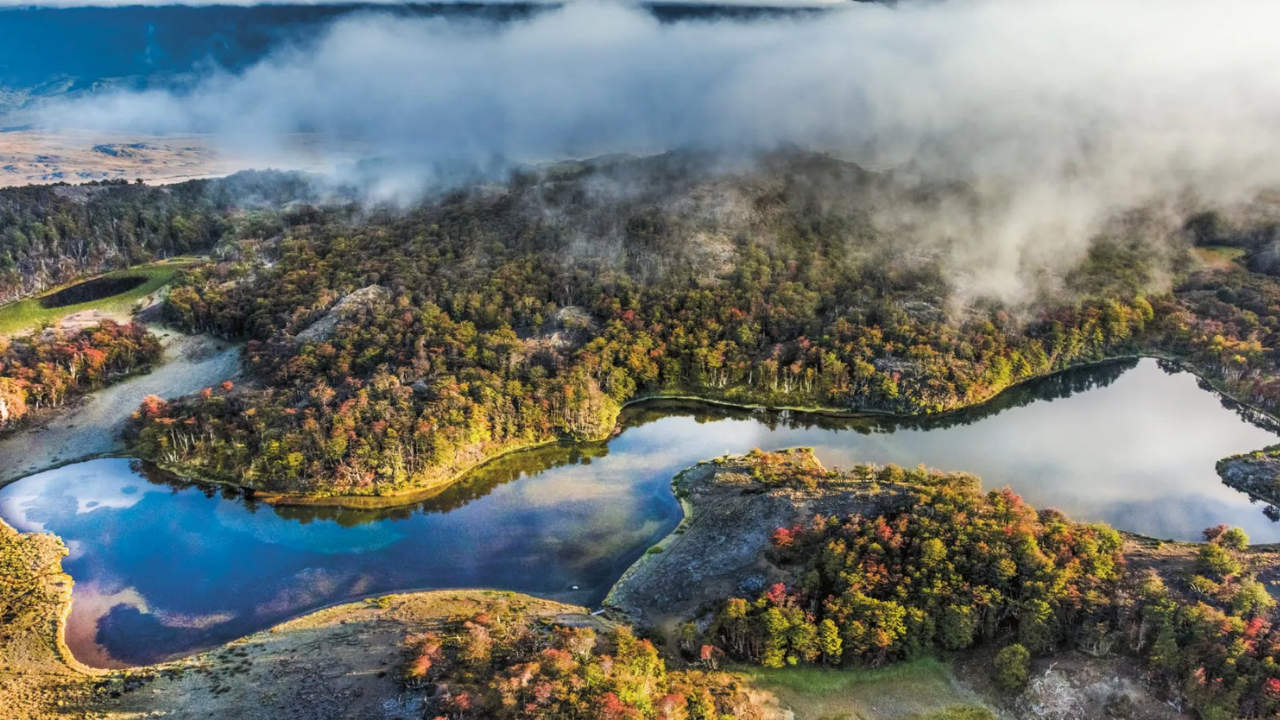
Philanthropy has a shiny new toy. Instead of funding soup kitchens or building schools, billionaires now prefer buying up massive chunks of foreign wilderness, slapping a conservation label on the deed, and waiting for the history books to canonize them. Kris Tompkins and her late husband, outdoor apparel royalty, turned this into an art form. In 2004, her group dropped millions on a 174,500-acre Chilean ranch in the remote Pumalín region, pouring personal fortunes and aggressive land-banking into a project that took fourteen years to hand back to the state as a national park. The media wept tears of joy. Environmentalists threw parades.
Everyone missed the glaring structural flaw in the entire operation.
Rethinking conservation through the lens of private land accumulation requires looking past the glossy PR campaigns. When a foreign private entity acquires massive swaths of sovereign territory under the banner of ecological altruism, it creates a dangerous precedent of eco-feudalism. We are told this is salvation for endangered ecosystems. I call it billionaire feudalism with green shutters.
Let us look at the mechanics of how this works. You take a fortune amassed from selling fleece vests and nylon jackets. You deploy that capital into developing nations—typically in South America where land is cheap, regulations are flexible, and local governments are eager for foreign investment. You purchase tracts of land the size of small European countries. You displace traditional ranching economies, rewrite the local land-use patterns to fit your aesthetic vision of pristine wilderness, and then, after years of friction with local communities who view you as an out-of-touch imperialist, you gift it back to the government on your own terms.
That is not philanthropy. That is top-down social engineering wrapped in a Patagonia label.
The lazy consensus in environmental circles is that private land purchase is the only bulletproof way to save land from exploitation. If the state is incompetent or corrupt, wealthy individuals should step in and act as benevolent land barons. This argument crumbles under basic scrutiny. When a private citizen or foundation owns hundreds of thousands of acres, they bypass democratic accountability. They decide what a forest is for, who gets access, and which local livelihoods are expendable.
During the Pumalín acquisition process, local farmers, loggers, and fishermen did not celebrate a savior; they protested an eviction of their way of life. Small-scale agricultural economies were strangled to make room for tourist trails and rewilding experiments. The narrative painted by the foundation was a heroic battle against greedy exploiters. The reality on the ground was a clash between traditional rural populations and eco-colonialists who viewed working landscapes as dirty and empty wilderness as pure.
Ecosystems do not heal better simply because a billionaire signs the title deed over to a park ranger. In fact, locking up vast tracts of land without integrating local human economies typically backfires. Conservation that ignores the people living adjacent to the boundary lines usually results in poaching, illegal timber harvesting, and deep-seated community resentment. Real conservation requires building economic models that make living forests more valuable to locals than cleared pastures. Buying everything up and putting a fence around it is lazy. It requires zero operational ingenuity. It only requires a massive bank account.
Look at the aftermath. National parks created through massive private land donations still require state funding for maintenance, fire management, infrastructure, and staffing. When foreign foundations dump these massive liabilities onto cash-strapped developing nations, they often create a fiscal trap. Chile inherited millions of acres of parks, but maintaining them strains public budgets. It is the equivalent of buying someone an expensive vintage car they cannot afford to fuel or insure, and then expecting them to smile and thank you for the burden.
We need to stop romanticizing eco-billionaires. When someone accumulates enough wealth to buy a hundred thousand acres of Patagonia, the correct response is not applause. The correct response is asking why an economic system allows wealth concentration on a scale that permits private citizens to dictate the geography of entire nations.
True environmental stewardship is messy, decentralized, and deeply integrated with the communities who depend on the land for survival. It does not look like a tech mogul or apparel tycoon flying in on a private jet to save the locals from themselves.
Stop cheering for the landlords of the apocalypse, even when they paint their fences green.