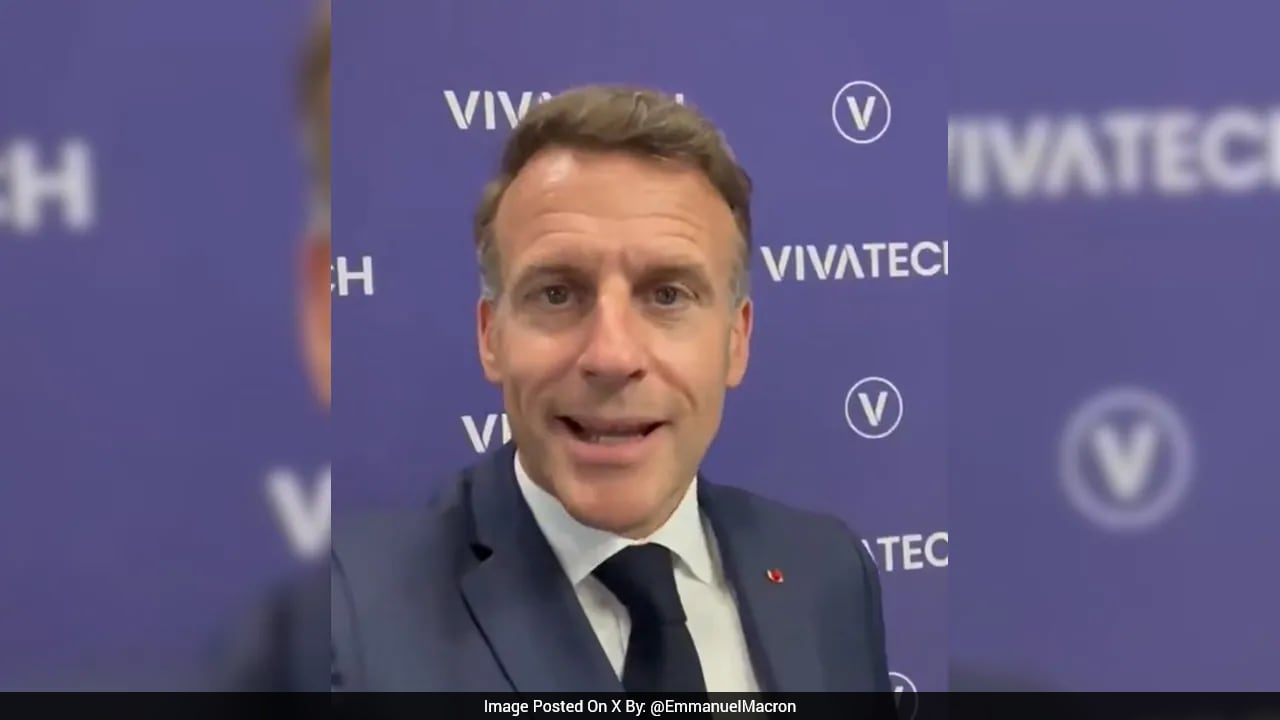
When French President Emmanuel Macron bid farewell to Indian Prime Minister Narendra Modi at the G7 summit with the Hindi phrase "Mujhe bahut khushi hui," it was widely reported as a simple, heartwarming moment of personal camaraderie. It was not. In the high-stakes theater of modern geopolitics, every syllable is focus-grouped, and every cultural nod is a calculated investment. Macron’s choice to use Hindi was a deliberate diplomatic maneuver designed to solidify France's position as India’s primary European partner at a time when traditional Western alliances are fracturing. France needs India's market and strategic weight in the Indo-Pacific, and a little linguistic flattery is a cheap price to pay for billions in defense and aerospace contracts.
For decades, Western nations have approached New Delhi with a mixture of lecture and transactional opportunism. Paris, however, has perfected a different playbook. By treating India with highly visible, personalized respect, France secures a unique level of access. This linguistic charm offensive at the G7 serves a dual purpose: it flatters a domestic Indian audience fiercely proud of its global footprint, and it signals to Washington and Beijing that Paris speaks directly to the Global South without needing a translator.
The Architecture of Public Diplomacy
Diplomacy is rarely conducted exclusively behind closed doors. The public-facing elements—the bear hugs, the joint press statements, the carefully timed social media posts in local languages—are engineered to build public support for complex state objectives. When Macron posted his Hindi farewell, he was bypassing traditional media gatekeepers to speak directly to hundreds of millions of Indian citizens.
This is a proven strategy. Modern statecraft relies heavily on creating a sense of inevitability around bilateral relations. By projecting an image of deep, unbreakable personal friendship between leaders, governments make it politically costly for future administrations to reverse course. The "Mujhe bahut khushi hui" moment ensures that even when friction points arise over trade tariffs or climate targets, the public perception remains overwhelmingly positive.
The Defense Hardware Undercurrent
Beneath the warm words lies a cold, hard economic reality. India is the world's largest arms importer, and France has successfully positioned itself as New Delhi’s most reliable, no-strings-attached supplier. Unlike the United States, which often ties military sales to human rights compliance or strategic exclusivity, France sells weapons with minimal geopolitical lecturing.
- Rafale Jet Ecosystem: The Indian Air Force’s reliance on French aviation is expanding, with ongoing discussions for naval variants and additional squadrons.
- Scorpène Submarines: Project 75 has seen deep industrial collaboration, transferring sensitive manufacturing capabilities to Indian shipyards.
- Strategic Autonomy: Both nations share a fundamental distrust of a strictly bipolar world dominated by Washington and Beijing, making their defense partnership a structural necessity rather than a temporary alliance.
This deep defense integration requires constant political maintenance. A leader who speaks your language, even clumsily, is a leader you trust with your national security supply chains.
Redefining the Indo Pacific Balance
The geographic pivot of global power has shifted decisively to the Indo-Pacific. For France, this is not a distant foreign policy interest; it is a matter of sovereign territory. With over one million French citizens living in island territories across the Indian and Pacific Oceans, and a massive Exclusive Economic Zone to protect, Paris views itself as a resident power in the region.
It cannot secure these vast maritime expanses alone. The French military lacks the raw numbers to counter Chinese expansionism or safeguard vital shipping lanes independently. India, with its massive naval presence and strategic location bridging the East and West, is the logical anchor for French ambitions. The G7 interaction was a public reaffirmation of this maritime axis, demonstrating that while other European nations waffle on their Indo-Pacific strategies, France is fully committed to its partnership with New Delhi.
The Multipolar Illusion
Both New Delhi and Paris frequently champion the concept of a multipolar world. However, their definitions of this concept vary in subtle but critical ways.
France desires a multipolar world where Europe, led by Paris, acts as an independent global power bloc that is not entirely subservient to American foreign policy. India desires a world where it takes its rightful place as a major pole, free from Western hegemony entirely. This friction is manageable for now because both nations agree on the immediate goal: preventing a duopoly where the US and China dictate global rules. Macron’s Hindi diplomacy is a nod to this shared worldview, signaling that France respects India’s status as an independent superpower, not just a regional counterweight to China.
The Limitations of Charm Statecraft
While cultural gestures generate positive headlines, they face a hard ceiling when confronted with structural economic realities. The trade relationship between France and India remains heavily skewed toward defense and aerospace, failing to achieve the broad economic integration seen between India and nations like Germany or the United States.
Bilateral Trade Disparity (Hypothetical annual breakdown for contextual scale)
+------------------------+------------------------+
| Sector                 | Percentage of Total    |
+------------------------+------------------------+
| Defense & Aerospace    | 62%                    |
| Pharmaceuticals        | 14%                    |
| Luxury Goods & Retail  | 12%                    |
| Tech & Engineering     | 12%                    |
+------------------------+------------------------+
This lopsided economic foundation means the relationship is vulnerable to shifts in defense procurement policies. If India successfully implements its "Make in India" self-reliance initiative to the point where it no longer needs to import major French platforms, the core pillar of the alliance weakens. Charismatic farewells and linguistic nods cannot replace deep, diversified economic ties that involve small and medium enterprises across both nations.
Furthermore, bureaucratic inertia in both Paris and New Delhi frequently stalls initiatives outside the military sphere. Joint solar energy projects and educational exchange programs routinely get bogged down in red tape, proving that personal chemistry at the executive level does not automatically translate into efficient institutional cooperation.
Beyond the G7 Photo Op
The G7 summit in Italy was dominated by urgent crises, from the ongoing conflict in Ukraine to economic competition with China. In this high-stress environment, the brief interaction between Macron and Modi was a calculated breath of fresh air designed to project stability. For Macron, facing severe domestic political challenges and a turbulent electorate at home, projecting the image of an influential global statesman respected by the leader of the world's most populous nation was a vital domestic distraction.
For Modi, the validation from a key European power reinforces his narrative of India as a "Vishwa Mitra" (a friend to the world), capable of navigating complex global rivalries without compromising its strategic autonomy. The Hindi phrase was not a spontaneous outburst of joy; it was a highly effective diplomatic tool that delivered exactly what both leaders needed at that precise political moment. Trust in international relations is built on mutual utility, not vocabulary. The true test of the Franco-Indian alliance will not be found in how warmly their leaders say goodbye, but in how effectively their bureaucracies execute the complex, unglamorous work of joint military patrols, technology transfers, and supply chain diversification in an increasingly volatile world.


