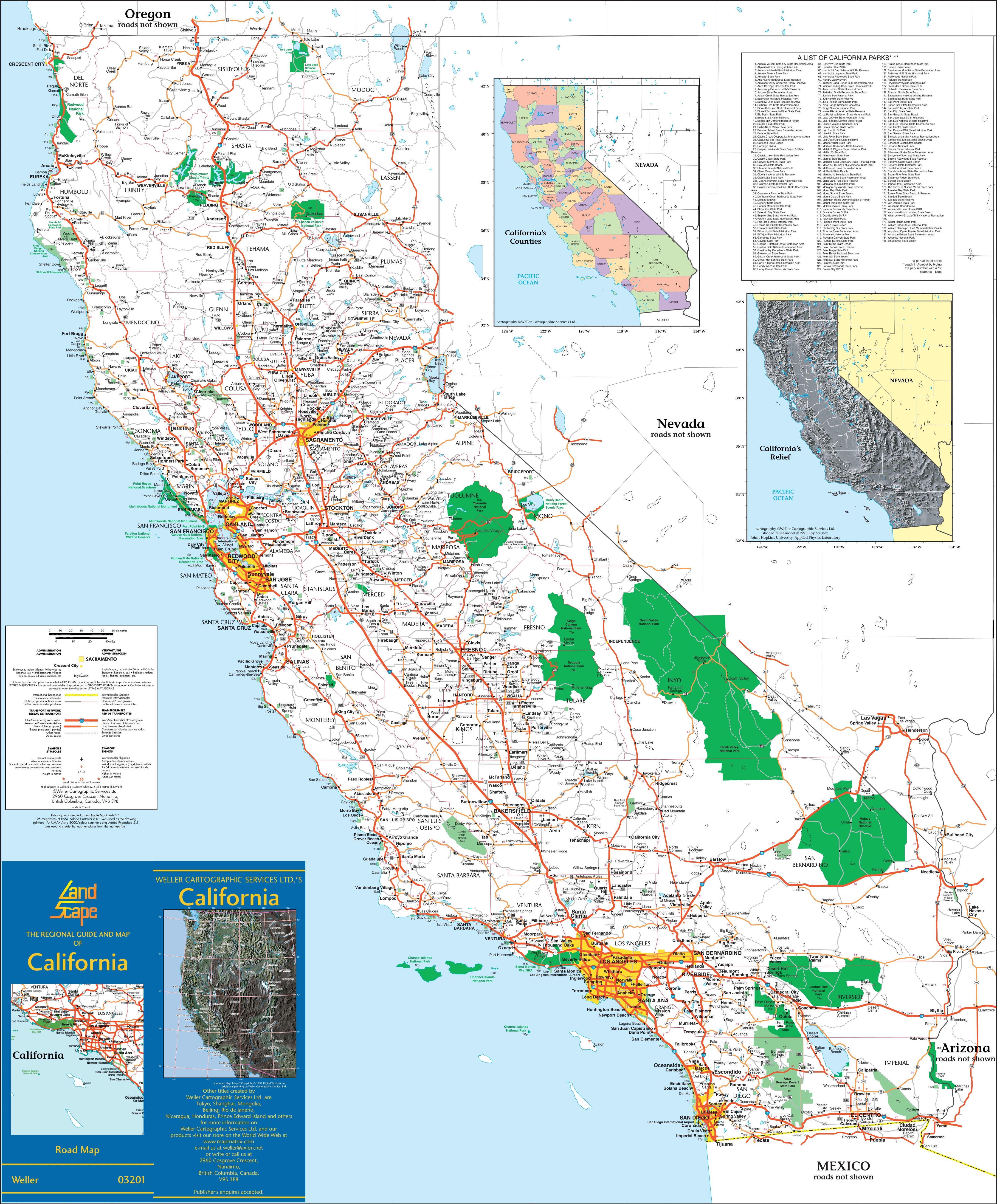
California is hurtling toward its 2030 deadline to protect thirty percent of its territory, checking off box after box across desert basins and mountain ranges. Yet beneath the Pacific surf, the state is stalling out. While terrestrial conservation thrives on political momentum and private land trusts, ocean governance is paralyzed by competing economic lobbies, regulatory inertia, and deep-seated jurisdictional gridlock.
When Governor Gavin Newsom signed the executive order in late 2020 pledging to conserve thirty percent of California's land and coastal waters by 2030, environmentalists cheered. It was an ambitious, sweeping promise meant to align the nation's most populous state with global biodiversity targets. Six years down the line, the math tells a starkly bifurcated story. On dry dirt, the state is marching ahead of schedule. In the blue expanse, progress crawls at a glacial pace. You might also find this connected story useful: Inside the Navy Secret Drone Unit Rewriting Taiwan Strait Defense.
To understand why California is succeeding on dry ground while floundering in the water, you have to look past the press releases and examine the machinery of state power.
The Mechanics of Terrestrial Acceleration
The terrestrial success story rests on a foundation of low-hanging fruit and aggressive federal partnerships. Expanding protected areas across the Mojave Desert, acquiring private timberlands in the north through conservation easements, and partnering with Indigenous tribes for co-management models have yielded massive acreage gains. Land conservation is familiar territory. Ranchers, timber companies, and conservation groups understand the playbook of easements, buyouts, and state-funded acquisitions. A hectare of desert tortoise habitat secured in Inyo County translates cleanly onto a bureaucratic spreadsheet as a win. As discussed in latest coverage by The Washington Post, the implications are significant.
Furthermore, the Bureau of Land Management and the U.S. Forest Service own vast swaths of California interior. Transferring administrative protection status or creating new national monuments requires presidential decrees or federal-state coordination, paths that, while politically fraught, possess well-worn legal tracks. When a mountain range gets a conservation designation, the physical footprint remains stable. You draw a line on a map, restrict off-road vehicles or mining claims, and the job is largely done.
Oceans do not stay inside a polygon.
The Ghost of Past Marine Battles
To grasp why ocean conservation faces such intense pushback, one must look at the historical scars left by the Marine Life Protection Act of 1999. That multi-year regulatory process created a patchwork of marine protected areas along the California coast, leaving generations of commercial and recreational fishers feeling burned by state mandates. Many fishers invested heavily in sustainable practices or gear modifications only to find their traditional fishing grounds abruptly closed off by administrative fiat.
That accumulated distrust did not vanish; it hardened. When the modern thirty-percent initiative rolled out, coastal communities immediately recognized familiar warning signs. They saw a top-down bureaucratic machine preparing to redraw ocean boundaries without offering meaningful economic buffers for working waterfronts.
Marine ecosystems are fluid, dynamic, and economically vital to powerful commercial sectors that view strict protection zones as a direct threat to their livelihoods. When state officials attempt to apply the same thirty percent calculus to coastal waters, they crash headfirst into a wall of resistance from commercial fishing fleets, aquaculture operators, ports, and coastal municipalities.
Consider the definition of conserved in a marine environment. On land, a conserved area often means strict limits on development. In the water, conservation can range from fully protected marine reserves where no extraction is permitted to open-access zones with minor seasonal restrictions. This ambiguity creates a dangerous loophole. State agencies can easily pad their ocean conservation tallies with areas that offer very little actual ecological sanctuary, creating paper parks that exist to satisfy political quotas rather than safeguard marine life.
The Jurisdictional Fracture Between State and Federal Waters
The California Department of Fish and Wildlife and the California Coastal Commission share a tangled web of oversight responsibilities, but neither agency possesses the unvarnished authority or funding required to push through contentious marine designations over the objections of local industry. Commercial fisheries, already battered by climate disruptions, rising ocean temperatures, and restrictive federal groundfish quotas, view the state thirty-percent push as an existential threat. When a fisherman in Morro Bay or Eureka is told that a traditional fishing ground is being carved out for biodiversity conservation, they do not see a climate solution; they see the final nail in the coffin of a generations-old coastal economy.
This friction is magnified by the division between state waters, which extend three miles offshore, and federal waters beyond. Marine life does not recognize these administrative boundaries. A school of rockfish or a migrating whale moves freely across the three-mile line, shifting between state jurisdiction and federal management councils. Aligning California state conservation targets with federal fisheries management requires a degree of intergovernmental coordination that rarely materializes in practice. State regulators enact closures inside their three-mile zone while adjacent federal waters remain open to intense commercial extraction, blunting the biological efficacy of the state's protective measures.
The Economic Vacuum in Coastal Towns
This economic friction exposes a deeper failure of state strategy. The original executive order was heavy on ambition and remarkably light on economic transition plans for coastal communities. Unlike inland regions where conservation dollars often substitute for declining timber or grazing economies, ocean-dependent communities lack comparable compensation mechanisms. You cannot easily transition a commercial urchin diver or a squid boat captain into a conservation ecotourism guide without massive structural investments in local infrastructure, training, and economic diversification.
Instead of building collaborative bridges, state regulators have too often resorted to top-down mandates that alienate the very people who know the water best. Local fishermen argue, with considerable justification, that they are being penalized for ecological degradation driven by offshore oil extraction, agricultural runoff, and global carbon emissions—factors over which they have zero control. They see marine protected areas as a convenient political substitute for tackling harder, more politically connected polluters.
The governance fracture extends further into tribal consultation. While California has made commendable strides in returning land management authority to Native American tribes, marine co-management is legally and logistically complex. Indigenous tribes with ancestral ties to the California coastline hold deep traditional ecological knowledge, yet their jurisdictional rights over state waters remain ambiguous under historical public trust doctrines. Integrating tribal sovereignty into marine spatial planning requires rewriting decades of state maritime law, a tedious legislative lift that few lawmakers are eager to tackle in an election year.
Ecological Realities Beyond the Map
Beyond regulatory and economic hurdles lies a stark biological truth. Drawing a boundary line on a nautical chart does nothing to stop a marine heatwave, ocean acidification, or toxic algal blooms fueled by land-based runoff. Along the North Coast, massive kelp forest collapses driven by purple urchin explosions and warming waters have decimated commercial abalone and red sea urchin fisheries. Simply declaring an area a conservation zone does not resurrect dead kelp ecosystems unless the underlying physical drivers of climate change and trophic imbalance are addressed.
Too often, state agencies treat thirty percent as an accounting exercise—a numeric target to be checked off via administrative reclassification rather than an active commitment to ecological restoration. If a marine area is designated as conserved on paper while its foundational habitat degrades from thermal stress and pollution, the metric becomes entirely meaningless.
The Audit Clock and the Danger of Paper Parks
Meanwhile, the clock is ticking down to 2030.
If California hits its overall thirty percent target purely by piling up desert acreage while the ocean fraction lags behind, the state will fail its core ecological mission. A terrestrial-heavy tally ignores the reality that California is fundamentally a maritime state. Its economic identity, its climate stability, and its unique biodiversity hotspots are inextricably linked to the health of the California Current, the kelp forests battered by marine heatwaves, and the coastal wetlands functioning as nurseries for migratory marine species.
Fixing the blue half of the equation requires a radical shift in state tactics. First, California must abandon the accounting sleight-of-hand that counts weakly managed ocean zones as fully conserved. Second, the state needs to put real financial skin in the game, creating dedicated economic transition funds for coastal fishing families and marine industries displaced by new sanctuary boundaries. Third, marine spatial planning must move away from adversarial decree and toward genuine co-design with fishers, scientists, and tribal nations who share a common stake in a living ocean.
Right now, the state is coasting on its land victories, hoping that desert sand will obscure ocean failure. The Pacific does not care about political deadlines or bureaucratic scorecards. It only reacts to the accumulated weight of neglect.
When the 2030 audit finally arrives, California will either stand as a pioneer of integrated ecological defense or a cautionary tale of a state that mistook easy dirt for the harder work of healing the sea.