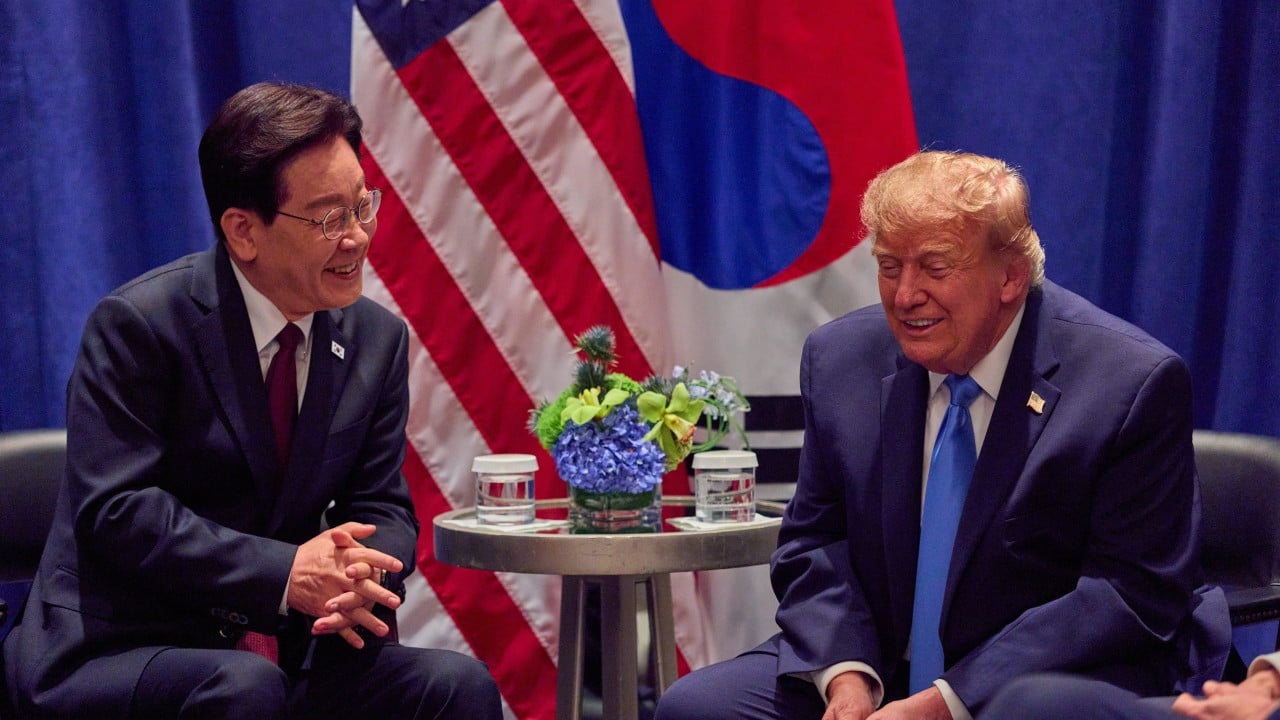
The pundit class loves a clean narrative. Right now, their favorite bedtime story goes like this: South Korea bent the knee to Washington, handed over billions in semiconductor and battery investments, got slapped with tariff threats anyway, and now stands as a cautionary tale of pathetic appeasement.
That reading is lazy. Worse, it is dangerously wrong.
If you look at Seoul’s trade posture through the lens of twentieth-century mercantilism, sure, it looks like capitulation. You give up domestic capital. You build fabs in Texas and battery plants in Georgia. You absorb the blow of the Inflation Reduction Act (IRA) and the CHIPS and Science Act. And in return, you still get lectured about trade surpluses and currency manipulation.
To the armchair strategist, that looks like getting mugged and thanking the thief.
In reality, Seoul is executing one of the most calculated industrial survival plays in modern economic history. They aren't placating Washington out of weakness. They are buying an insurance policy against total geopolitical obsolescence—and embedding themselves so deeply into the American industrial base that Washington cannot afford to let them fail.
The Myth of the "Free" Trade Partner
Let’s dismantle the core premise of the "placation" argument first. Critics argue that by rushing to invest in the United States, South Korea gave away its bargaining chips before the negotiation even started. They claim Seoul should have held the line, demanded ironclad tariff exemptions upfront, and played hardball like a sovereign equal.
This assumes a world that no longer exists.
Global trade is no longer governed by the World Trade Organization’s dispute settlement mechanism—which has been effectively paralyzed since 2019. It is governed by supply chain securitization, industrial subsidies, and raw geopolitical alignment. When the United States decides to reshore critical manufacturing, the choice facing export-dependent economies isn't "negotiate a better deal or walk away." The choice is "get inside the tariff wall or starve outside of it."
I have sat in boardrooms in both Seoul and Washington watching executives tear their hair out over compliance costs for US federal subsidies. Nobody in Gangnam is under any illusions about American generosity. Samsung, SK Hynix, Hyundai, and LG Energy Solution know exactly how transactional Washington is. They saw the fine print on the CHIPS Act guardrails—the profit-sharing clauses, the restrictions on expanding capacity in China, the exhaustive financial disclosures.
They signed up anyway. Why? Because the alternative was watching their primary competitors—TSMC, Intel, Panasonic, and domestic American startups—absorb tens of billions in federal grants while Korean exports got priced out of the world’s largest consumer market.
Calling that "useless placation" is like calling a fireproof suit a waste of money because the building hasn't burned down yet.
Buying Indispensability in the Rust Belt
Here is the nuance the critics completely miss: capital isn't just money. In American politics, capital is votes.
When Hyundai Motor Group commits over $12 billion to build an electric vehicle and battery megasite in Bryan County, Georgia, it isn't doing Joe Biden or Donald Trump a favor. It is buying political hostages in a swing state. When Samsung pours $17 billion—and later expands commitments toward $40 billion—into Taylor, Texas, it is locking in the support of Republican governors, senators, and local mayors who will fight tooth and nail against any administration that tries to kneecap those operations.
Think about the mechanics of congressional lobbying. A Korean trade ambassador begging the US Trade Representative for a tariff waiver has almost zero domestic political capital. A consortium of American governors, union leaders, and local chambers of commerce demanding that Washington protect 20,000 high-paying manufacturing jobs in their districts? That moves mountains.
This is the classic Hostage-Taking Strategy of foreign direct investment, a concept well-documented in international political economy by scholars like Raymond Vernon and Theodore Moran. Once you sink billions of dollars into fixed physical assets—cleanrooms, gigafactories, specialized local supply chains—your interests and the host country's domestic political interests fuse.
Does it guarantee total immunity from erratic tariff threats? Of course not. Broad, across-the-board tariff proposals from Washington hit everyone indiscriminately at first. But when the exemptions are handed out—and in Washington, tariff regimes are always riddled with exemptions for well-connected industries—who gets to the front of the line? The companies employing thousands of workers in Georgia, Texas, Michigan, and Ohio.
The China Trap Nobody Wants to Talk About
To understand why Seoul had no choice but to pivot aggressively toward the United States, you have to look at the ledger on the other side of the Yellow Sea.
For twenty years, South Korea ran a wildly profitable economic arbitrage. It imported raw materials, used cheap Chinese labor and massive Chinese demand to manufacture intermediate goods, and sold finished products to the West. China became Korea’s largest trading partner by a mile, accounting for roughly a quarter of all Korean exports.
That model is dead. And Beijing killed it, not Washington.
China’s "Made in China 2025" initiative wasn't a cooperative trade framework; it was a systematic blueprint to replace foreign suppliers with domestic champions. Over the last decade, Korean conglomerates watched their market share in China collapse across smartphones, displays, petrochemicals, and automobiles. Hyundai’s sales in China fell off a cliff. Samsung’s smartphone market share in China dropped below one percent. Even in semiconductors, Chinese state-backed firms are aggressively moving up the value chain.
By 2023, South Korea posted its first annual trade deficit with China in over thirty years.
Imagine a scenario where Seoul took the pundits' advice: told Washington to pound sand, refused to invest in US manufacturing, and tried to stay "neutral" to preserve its relationship with Beijing. Korea would have found itself locked out of the US market by protectionist industrial policy while simultaneously being cannibalized in the Chinese market by state-subsidized domestic rivals.
That isn't strategic autonomy. That is economic suicide.
What Everyone Gets Wrong About Trade Surpluses
Let’s address the elephant in the room—and the favorite talking point of trade hawks in Washington: South Korea’s surging trade surplus with the United States.
In 2023 and 2024, Korea’s bilateral trade surplus with the US hit record highs, crossing $40 billion and climbing past $50 billion. To a naive observer, this proves Seoul is "ripping off" America while pretending to be an ally, which in turn triggers retaliatory tariff threats from Washington—leading the pundits to declare Korea's diplomacy a failure.
Look closer at what is actually inside that trade surplus.
It isn't cheap consumer junk flooding Walmart shelves. A massive chunk of that export surge consists of capital goods, semiconductor manufacturing equipment, and intermediate battery components being shipped directly to—you guessed it—the very factories Korean companies are building in the United States.
When LG Energy Solution builds a battery plant in Michigan, it doesn't source specialized electrode-coating machinery from a local supplier in Detroit because those suppliers don't exist at scale in North America anymore. It imports the machinery from South Korea. On a customs ledger, that shows up as a Korean export and widens the US trade deficit. In physical reality, it is the literal foundation of American reindustrialization.
Economists at the Peterson Institute for International Economics (PIIE) have repeatedly pointed out that bilateral trade balances are a terrible metric for evaluating modern supply chains. When you force foreign manufacturers to build factories on your soil, your imports of their capital equipment spike before those factories ever produce a single finished unit for domestic sale.
Criticizing Seoul because its US trade surplus triggered American political pushback misses the structural joke: the surplus is happening because Korea is building the factories America asked for.
The Brutal Downsides of Seoul’s Gamble
Now, let’s be honest about the risks. Pretending Seoul’s strategy is a guaranteed triumph would be just as dishonest as calling it useless. There are massive, painful downsides to betting the house on the American industrial market, and Korean policymakers are losing sleep over them.
First, there is the hollowing-out effect at home. Every won spent building a fab in Texas is a won not spent in Yongin or Pyeongtaek. South Korea’s domestic capital expenditure is under immense strain, and small-to-medium Korean suppliers who cannot afford to follow the chaebols to North America are getting squeezed out. Labor unions in Korea—notoriously militant and politically powerful—are furious about the offshoring of future high-tech jobs.
Second, execution costs in the US are brutal. Building a semiconductor fab in the United States costs roughly 30% to 50% more than building the exact same facility in South Korea or Taiwan, and it takes significantly longer. Permitting delays, environmental reviews, litigation, and a severe shortage of skilled American semiconductor engineers have forced both Samsung and TSMC to push back timelines and eat massive cost overruns.
Third, policy whiplash in Washington is real. The US political system can change its mind on industrial policy every four years. A company can break ground on a $10 billion EV battery plant under an administration subsidizing green energy, only to watch the next administration gut EV tax credits and slap tariffs on imported battery minerals.
Seoul knows all of this. The difference between an industry insider and a columnist is understanding that strategy is never about choosing between a good option and a bad option. It is about choosing the least lethal poison.
How Middle Powers Actually Survive Trade Wars
If you are watching this unfold from Tokyo, Berlin, Taipei, or Brussels—and wondering what lesson to take from South Korea’s experience—stop listening to commentators telling you to "stand up" to Washington with empty diplomatic posturing.
Middle powers do not survive hegemonic trade wars through pride. They survive through asymmetric entanglement.
Here is what actually works when dealing with a protectionist superpower:
- Trade Cash for Hard Assets, Not Promises. Diplomatic memorandums of understanding are worth nothing when an election cycle turns hostile. Physical infrastructure, local payrolls, and integrated supply chains create permanent political constituencies that outlast any single president.
- Weaponize Supply Chain Bottlenecks Quietly. You don't threaten a superpower with retaliation—you lose that fight every time. Instead, you dominate the midstream choke points they cannot easily replace. South Korea doesn't need to threaten an embargo on High Bandwidth Memory (HBM) chips; every AI hyperscaler in Silicon Valley already knows their data centers grind to a halt without SK Hynix and Samsung.
- Diversify Below the Radar. While the headlines focus on Washington and Beijing, smart trade ministries aggressively lock in bilateral deals across Southeast Asia, India, and Europe—building alternative demand centers without making a theatrical show of "decoupling" from anyone.
- Accept Friction as the Cost of Entry. If you are an export-driven economy selling high-value goods into a wealthy nation, you will always be a target of populist trade rhetoric. Treating every tariff threat as an existential diplomatic failure is amateur hour. You price the friction into your margins, hire the best trade lawyers in D.C., and keep shipping.
The Verdict on Seoul’s Playbook
The pundits calling South Korea’s strategy "useless placation" are grading a chess match using the rules of checkers.
They see Seoul absorbing tariffs, enduring regulatory headaches, and spending tens of billions of dollars on foreign soil, and they call it a loss. They don't see that Korea has successfully locked itself into the core of the Western technology stack for the next thirty years while its competitors in less nimble economies are still drafting white papers about "strategic autonomy."
Placation is giving away your leverage for nothing in return. Investing billions to become the indispensable backbone of your biggest customer’s economy isn't placation.
It’s a hostile takeover disguised as a polite bow.