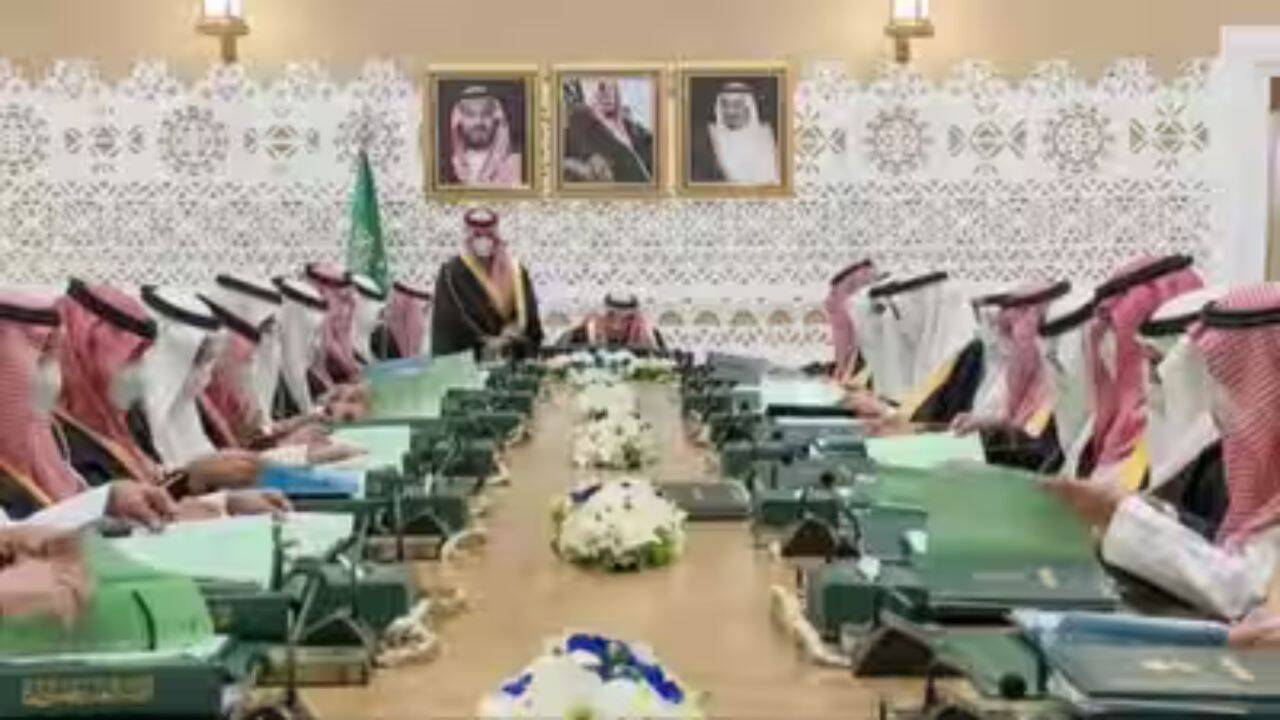
The summit got pushed to 2027. Financial press went into overdrive. Headlines screamed about panic, flight, and collapse.
They got it backwards.
Every time a high-profile conference moves on a calendar, lazy pundits treat the venue as a barometer of capital allocation. If the Future Investment Initiative (FII) skips a fall gathering in Riyadh and reschedules for 2027, the standard story writes itself: Houthi attacks in the Red Sea spooked foreign executives, maritime risk spiked, and global money packed its bags.
That is a comfortable story for writers who live on drama. It is a terrible guide to how sovereign capital, industrial supply chains, and institutional allocators actually behave.
Real capital does not make multi-billion-dollar decisions based on whether five thousand bankers eat canapés in October or wait until the next year. A postponed summit is a scheduling and security optics decision. Capital commitment is an underwriting decision. Confusing the two costs investors money.
What the Lazy Consensus Misses About Risk and Capital
Start with the premise in the competitor headline: Houthi attacks fuel investment uncertainty.
Yes, Red Sea shipping disruptions create real friction. Rerouting vessels around the Cape of Good Hope adds transit days, raises fuel burn, and forces logistics planners to recalculate safety stock. Anyone who tells you maritime security incidents do not affect freight economics is ignoring basic supply chain math.
Yet treating a shipping corridor threat as an automatic death sentence for Saudi investment misunderstands two distinct layers of risk: operational transit risk versus sovereign capital commitment.
When a container ship takes a longer route from Asia to Europe, that is a logistics cost. When a sovereign wealth fund or industrial joint venture evaluates a ten-year project in the Gulf, that is a balance-sheet and structural economics decision. Lumping them into one vague bucket called "investment uncertainty" sounds analytical. In practice, it blurs distinct mechanics that price completely differently.
Institutional allocators do not buy a conference badge and wire a billion dollars on the spot. Most mega-deals discussed at flagship summits are months—sometimes years—in the making before a stage announcement ever happens. Term sheets are drafted by legal teams, technical feasibility is vetted by engineers, and co-investment tranches are negotiated behind closed doors. Delaying the public showcase does not erase underlying commercial work. Sometimes it simply strips away theater while the actual negotiation continues quietly.
I have sat in boardrooms where executives burned millions chasing headlines—rushing into markets during hyped summits or pulling back prematurely because a conference got delayed. The disciplined operators ignore the stage lights and look at underwriting discipline, cash flow visibility, and counterparty incentives.
Are People Asking the Wrong Question About the Postponement?
When a major Riyadh event shifts to 2027, the reflex question from casual observers is: Does this mean foreign investors are losing confidence in Saudi Arabia?
That is the wrong question.
A better question is: What changes when public grandstanding is delayed while underlying sovereign priorities remain intact?
Saudi Arabia's economic transformation—anchored by the Public Investment Fund (PIF) and Vision 2030 priorities—is driven by domestic structural goals: diversifying fiscal revenues beyond crude oil, building local industrial capacity, absorbing youth employment, and attracting strategic co-investors in sectors like energy transition, logistics, mining, and digital infrastructure. Those imperatives do not vanish because a summit moves to 2027.
At the same time, capital allocators are more selective than they were during the frothy years of cheap money and headline-chasing mega-projects. Higher global interest rates and tighter scrutiny on capital efficiency have forced both sponsors and foreign partners to care more about return on invested capital, execution timelines, and realistic phasing.
If postponing the summit signals anything about deal flow, it is a shift toward caution on timing and optics, not a wholesale abandonment of the market. Serious partners rarely walk away from a major capital pool solely because an annual gathering moved on the calendar.
Addressing the Questions Everyone Types Into Search
Let's strip away the polite phrasing and tackle the exact questions people ask whenever a headline like this hits their feed.
Does postponing the FII summit to 2027 mean foreign investment in Saudi Arabia is drying up?
No. Treating a postponed conference as proof that foreign capital is drying up confuses visibility with volume.
Flagship forums amplify announcements; they do not manufacture economic fundamentals. Foreign direct investment and cross-border joint ventures depend on project bankability, regulatory clarity, off-take agreements, and risk-adjusted returns. A conference delay can slow publicity and informal networking for a season. It does not freeze every commercial contract in the Kingdom overnight.
How much do Houthi Red Sea attacks actually change long-term Gulf investment math?
They change near-term logistics costs and regional risk premiums, not every long-term thesis equally.
For trade-exposed logistics, port operators, and importers relying on specific maritime lanes, Red Sea instability is a direct operational headache. Higher insurance premiums, schedule unreliability, and longer lead times force real adjustments.
For long-duration energy, infrastructure, or domestic industrial investments, regional security is one variable inside a broader underwriting model that also weighs sovereign balance-sheet strength, feedstock or resource advantages, and multi-decade demand. Serious underwriters stress-test geopolitical shocks rather than treating a single headline as a permanent verdict.
Should companies pause their Saudi plans until 2027?
Pausing purely because a summit was pushed to 2027 is lazy strategy.
If your business depends on event sponsorships, media exposure, or casual networking, a schedule shift affects your marketing calendar. If your business depends on commercial contracts, regulatory approvals, or strategic partnerships, you should evaluate deal milestones on their own merits—not outsource your timeline to an event planner.
What Serious Operators Actually Do When Headlines Scream
When regional tensions flare and high-profile gatherings get postponed, amateur operators freeze or overreact. Seasoned operators run a tighter playbook.
- Separate logistics exposure from capital exposure. Map exactly where your revenue or supply chain touches Red Sea transit versus where your assets or partners sit. Do not let a shipping bottleneck distort a long-term capital decision.
- Audit counterparty execution, not press releases. Look at who is actually deploying capital, hitting milestones, and structuring realistic joint ventures. Announcements are cheap; signed commitments with clear governance carry weight.
- Price in schedule slippage honestly. Regional friction and shifting macro conditions routinely stretch timelines. Build realistic buffers into budgets and delivery schedules rather than pretending risk does not exist.
- Keep negotiations out of the spotlight. High-visibility forums often inflate expectations and encourage posturing. Quiet bilateral discussions frequently produce cleaner commercial terms.
Imagine a scenario where an industrial equipment firm cancels its planned expansion talks in Riyadh simply because the FII summit moved to 2027, assuming all momentum stopped. Meanwhile, a competitor uses the quieter environment to negotiate tighter local manufacturing terms directly with industrial buyers and locks in multi-year supply agreements before public attention returns. Who wins when the calendar resets?
Where This Contrarian View Can Burn You
Every contrarian stance carries blind spots, and pretending otherwise is dishonest.
If you dismiss geopolitical risk too lightly, you can get blindsided. Escalation in regional conflicts can widen quickly, spill into adjacent corridors, or trigger sharper market volatility than baseline models assume. Treating a summit postponement as purely harmless noise is just as dangerous as treating it as an existential collapse.
Likewise, overestimating the speed of large state-led projects can hurt returns. Even without external shocks, ambitious transformation programs face execution bottlenecks, cost inflation, and reprioritization. Being contrarian about media panic does not mean ignoring real execution risk or overpaying for hype.
The edge comes from disciplined realism: refusing both hysterical pessimism and blind optimism.
The Real Lesson Behind the 2027 Delay
Conferences exist to project momentum. Markets exist to price risk and allocate capital.
When the two diverge, smart operators watch the capital, not the stage.
Move quietly, underwrite ruthlessly, and let the crowd chase the next headline.



