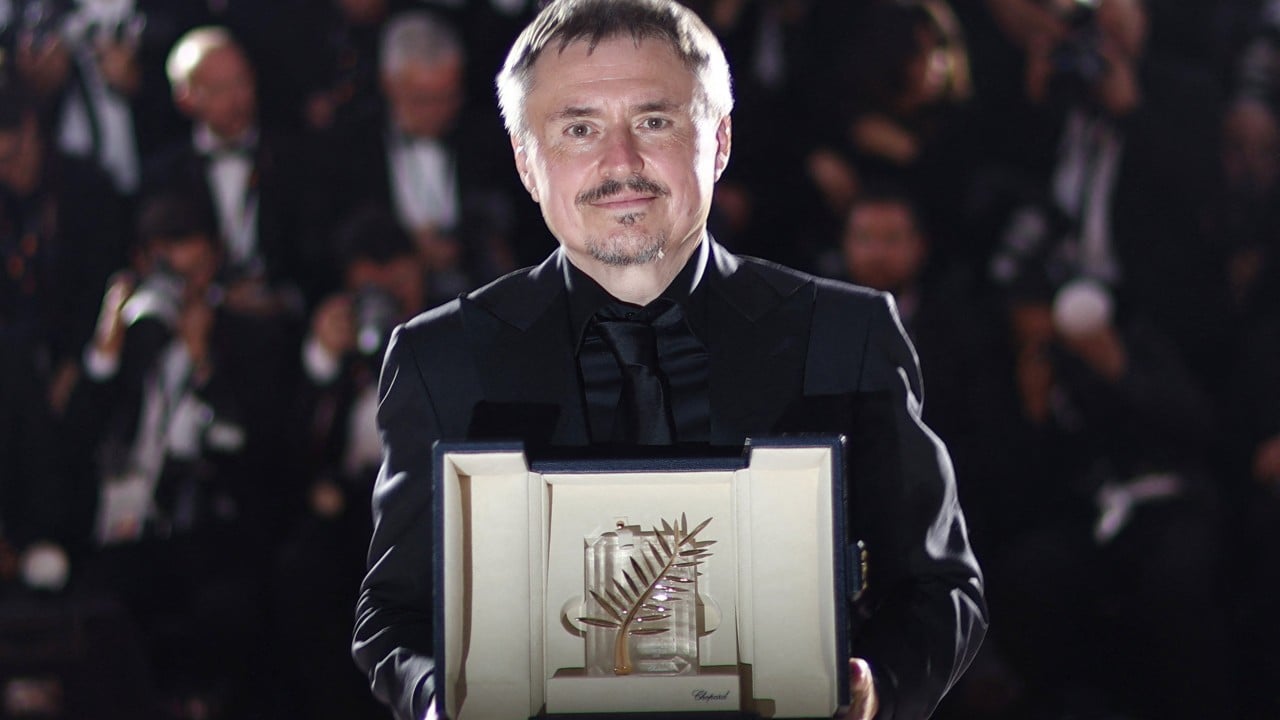
The international press is currently drowning in its annual wave of self-congratulatory euphoria. Cristian Mungiu has captured another Palme d’Or at Cannes for his latest bleak, austere, and impeccably framed drama, Fjord. The critics are weeping. The cinephiles are swooning. The industry trade papers are already drafting their breathless retrospectives on how Eastern European realism has once again saved the soul of cinema from the Hollywood machine.
They are entirely wrong.
The crowning of Fjord is not a victory for art. It is the definitive symptom of a creative ecosystem that has grown terrified of risk, calcified by its own snobbishness, and completely disconnected from the cultural zeitgeist. For three decades, I have watched the international festival circuit transform from a laboratory of radical experimentation into an insular country club where the same dozen directors trade the same trophy for making the exact same movie.
Mungiu is an undeniable master of his specific craft. His 2007 winner, 4 Months, 3 Weeks and 2 Days, was a visceral, necessary jolt to the system. But rewarding the same hyper-repressed, slow-burned misery porn in 2026 is the cinematic equivalent of giving IBM an award for making a slightly more reliable mainframe computer. It is safe. It is predictable. And it is actively driving audiences away from independent film.
The Myth of the Uncompromising Festival Darling
The standard narrative surrounding the Palme d’Or is built on a fundamental lie: that the festival rewards the most daring, uncompromising visionaries of our time.
Let’s dismantle that premise entirely. The modern Cannes competition lineup is actually one of the most risk-averse programming slates in the entertainment industry. The jury doesn't look for radical innovation; it looks for a highly specific, codified aesthetic that satisfies the intellectual vanity of a few hundred critics sitting in the Grand Théâtre Lumière.
To win at Cannes today, a film typically requires three ingredients:
- A grueling runtime characterized by long, unbroken static takes where characters stare blankly into the middle distance.
- A hyper-localized socio-political tragedy that allows wealthy Western European audiences to experience a comfortable frisson of guilt.
- A total absence of genre elements, stylistic exuberance, or—heaven forbid—entertainment value.
When a festival consistently rewards this exact template, it ceases to be an engine of discovery. It becomes a factory floor producing high-minded content for a niche cartel of distributors and curators. I have watched independent production companies sink millions into financing grim, slow-moving dramas specifically designed to catch the eye of the Cannes selection committee, only for those films to die a quiet death on a streaming platform because nobody outside of a five-block radius in Paris actually wants to watch them.
Why the European Realism Monopoly is Killing Indie Film
The defense of films like Fjord always boils down to a single argument: This is pure cinema, unpolluted by commercial considerations.
This is absolute nonsense. The festival-industrial complex is just as commercialized as Hollywood; it just trades in a different currency. Instead of box office returns, it deals in cultural capital, state subsidies, and tax incentives.
By monopolizing the highest honors in world cinema, the European realism cartel has created a monoculture that actively suppresses alternative forms of cinematic expression. Consider what gets pushed to the margins while Mungiu collects his hardware:
| Film Style / Movement | Festival Treatment | Market Reality |
|---|---|---|
| Austere Realism (Fjord) | Main Competition, Top Prizes | Heavily Subsidized, Zero Audience Engagement |
| High-Concept Genre Cinema | Out of Competition, Midnight Screenings | Self-Sustaining, Culturally Vibrant, Ignored by Juries |
| Radical Formalist Experimentation | Banished to Sidebars (Un Certain Regard) | Starved of Distribution, Mainstream Erasure |
When did we collectively decide that "prestige" must equal "misery"? Why is a perfectly composed, two-hour shot of a family disintegrating in a gray apartment considered higher art than a brilliant piece of surrealist horror, a kinetic action film that subverts the mechanics of movement, or a biting satire that actually engages with the chaotic reality of modern life?
By treating genre and stylistic audacity as inherently inferior, Cannes has trapped independent cinema in a prison of its own making. The average moviegoer has been conditioned to believe that any film carrying a festival laurel will be an grueling, homework-like experience. We are training audiences to stay away.
The Flawed Premise of "People Also Ask"
If you look at what people actually ask about Cannes and the Palme d'Or, the disconnect becomes glaringly obvious. The questions themselves are rooted in a flawed understanding of how the industry actually operates.
"Does winning the Palme d'Or guarantee commercial success?"
The short answer is absolutely not, and the gap is widening every year. While historic winners like Parasite or Pulp Fiction managed to bridge the chasm between critical adulation and mainstream cultural relevance, the modern reality is far bleaker. Most winners barely clear seven figures at the global box office. The award guarantees a temporary marketing bump among a tiny demographic of arthouse loyalists, but it does nothing to solve the systemic distribution crisis facing independent film.
"How do juries choose the Palme d'Or winner?"
The public imagines a group of brilliant minds locked in a room having a pure, unfiltered debate about artistic merit. The truth is far more political. Festival juries are temporary coalitions of massive egos, often compromised by personal alliances, industry debts, and regional biases. A film like Fjord often wins not because it was everyone's favorite, but because it was the least objectionable compromise among a divided jury. It is the consensus candidate of the intellectual elite.
Stop Funding Homework: A Manifesto for Survival
If independent cinema is going to survive the next decade, we need to completely blow up the current prestige hierarchy. We must stop treating the festival circuit as a holy sanctuary and start viewing it for what it is: a broken marketing platform that is failing the very artists it claims to protect.
Here is the unconventional blueprint for rewriting the rulebook:
1. Burn the "Arthouse" Aesthetic
Stop financing films that look like they were directed by a committee of depressed European curators. We need to reintegrate genre, spectacle, and narrative momentum into serious filmmaking. A movie can be deeply philosophical while still possessing a pulse.
2. Diversify the Jury Pools
Stop populating festival juries exclusively with former winners, institutional critics, and high-brow auteurs. Inject voices from the wider cultural landscape—novelists, video game designers, visual artists, and genre filmmakers. Force the festival to confront art outside of its own echo chamber.
3. Measure Success by Cultural Impact, Not Laurels
An independent film that sparks a massive, messy, global conversation on social media is infinitely more valuable to the health of the medium than a film that wins a trophy in France and is forgotten by November. We must value vitality over prestige.
The celebration of Mungiu’s victory is not a sign of a healthy artistic culture. It is the final, desperate gasp of a dying regime holding onto its monopoly on taste. The real future of cinema isn't happening in the main competition at Cannes. It's happening in the fringes, in the unclassifiable genre experiments, and in the spaces where filmmakers are still brave enough to risk making something that might actually entertain someone.
Take the trophy, put it on the shelf, and let the dust settle. It's time to make movies that people actually want to watch.