The media has a pathological obsession with the final words of death row inmates.
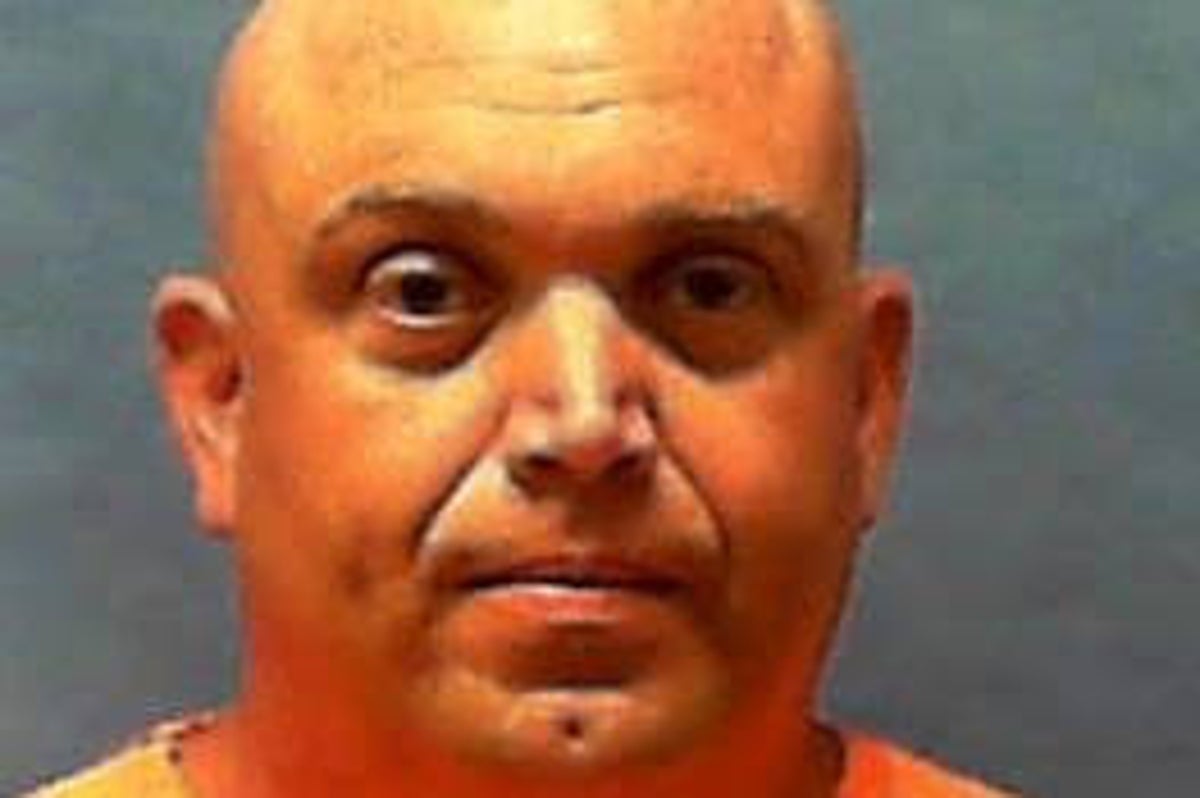
When Andrew Richard Lukehart was strapped to a gurney at Florida State Prison and executed for the 1996 murder of five-month-old Gabrielle Hanshaw, journalists scrambled to copy down his last utterance. He looked at the viewing gallery, said "I'm sorry," and then recited Luke 23:34: "Father, forgive them, for they know not what they do."
Instantly, the predictable machinery of true-crime journalism spun into action. Out came the clickbait headlines. The breathless breakdowns of a killer’s "revealed" psychology. The subtle, insidious framing that positions these final sentences as a profound window into the human soul.
It is a complete farce.
We need to stop treating death chamber transcripts like sacred texts. The assumption driving this coverage—that the proximity of death forces a human being into a state of absolute honesty or cosmic realization—is fundamentally flawed. I have analyzed the criminal justice apparatus for over a decade, tracking how violent offenders manipulate systems from indictment to the injection table. The truth about last words is far colder, uglier, and more bureaucratic than the public wants to admit.
The Illusion of the Deathbed Epiphany
The media treats the death chamber like a secular confessional. The prevailing narrative suggests that when a person faces the absolute end, the mask drops. They either offer a moment of pure, transcendent remorse or double down on villainy.
It is a comforting myth. It implies that the state’s ultimate punishment forces a psychological reckoning.
But psychology does not work that way, and neither does severe personality pathology. Lukehart did not suddenly transform into a penitent theologian when the IV was inserted. This is a man who, while on probation for fracturing an eight-month-old infant's skull, took the life of another child by inflicting five distinct blows to her head, hid her body in a swamp, and spent fifteen hours lying to police with a concocted kidnapping story.
When a career abuser quotes scripture on the gurney, it is not an epiphany. It is the final act of a lifelong script.
Psychiatric evaluations of capital offenders consistently show high rates of antisocial personality traits, narcissism, and deep-seated coping mechanisms rooted in externalizing blame. Imagine a scenario where a person has spent thirty years in a concrete cell rewriting their own history to survive their own conscience. By the time they reach the gurney, their self-delusion is calcified. The "last words" are not a reflection of reality; they are a reflection of the narrative the inmate has manufactured to protect their ego from the horror of their own actions.
The Audacity of the Victim Script
Look closely at the verse Lukehart chose: “Father, forgive them, for they know not what they do.”
In the biblical context, these are the words of an innocent victim being executed by an oppressive state. By uttering them, an executed child killer subverted the roles entirely. He cast himself as the martyr, the crucified figure, and the state—along with the society demanding justice—as the ignorant executioners.
This is not a breakthrough of remorse. It is a masterful, perhaps unconscious, exercise in psychological deflection.
The media rarely calls this out because doing so requires breaking the unspoken rule of execution reporting: maintain the somber, passive tone of an objective observer. So instead, outlets print the quote verbatim, allowing the killer to hijack the cultural narrative one last time.
Consider how other inmates utilize this final platform:
- The Spiritual Pivot: Invoking salvation not to show humility, but to claim a moral high ground over the witnesses.
- The Bureaucratic Grievance: Spending final seconds complaining about procedural delays or prison food.
- The Empty Apology: Shouting a rapid "sorry" to check a box before focusing entirely on their own comfort.
By treating these statements as breaking news, media outlets give violent criminals the one thing they crave most: total control over the room. For five minutes, the victim is forgotten, the brutality of the crime is sidelined, and the entire world is forced to decipher the cryptic utterances of a monster.
The Industrialization of Capital Metrics
While the public consumes the theater of the final statement, they completely miss the actual mechanics of the modern capital punishment system. The coverage focuses on the micro—one man’s words—while ignoring the macro reality of state-sanctioned execution in the current landscape.
Florida executed nineteen people in 2025, a record-breaking surge under the current administration. Lukehart was the eighth execution in the state for 2026 alone. Nationwide, the numbers are climbing, driven by states like Florida, Texas, and Alabama accelerating their death warrants.
The system is not an emotional crucible; it is a factory.
State Executions (Recent Benchmarks)
+----------------+----------------+
| Jurisdiction   | Executions     |
+----------------+----------------+
| Florida (2025) | 19             |
| Florida (2026) | 8 (to date)    |
| Texas (2025)   | 5              |
| Alabama (2025) | 5              |
+----------------+----------------+
When an institution executes people at this cadence, the death chamber becomes highly standardized. The protocol is clinical. The warden checks the time. The microphone is lowered. The statement is recorded. The drugs flow: a sedative, a paralytic, a cardiac arrestor.
There is no room for drama in the protocol. The dramatic weight is entirely a projection of the audience. The state wants efficiency; the media wants a story; the public wants catharsis. The killer’s last words are simply the grease that keeps the content wheel turning.
Stop Looking for Meaning in the Chamber
If you read an article hoping that a killer's final words will provide closure, sense, or justice, you are asking the wrong question. You are looking for a logical conclusion to an inherently illogical act of violence.
A person who destroys a five-month-old life does not possess the emotional vocabulary to offer you closure. Their final words are shaped by legal coaching, religious messaging provided by prison chaplains, institutional exhaustion, and decades of isolation. They are the most manufactured words a person will ever speak.
The uncomfortable truth is that the execution chamber offers no answers. It only offers an end.
The media must stop dressing up the final gasps of death row inmates as profound cultural moments. Print the date. Print the time of death. Print the name of the victim—Gabrielle Hanshaw—and the names of those who were left behind to carry the trauma.
But turn off the microphone on the gurney. The killer has already taken enough airtime.


