Silence.
That is the first thing you notice when you step off a hospital ward and walk onto a jet bridge at six in the morning, the air smelling faintly of de-icing fluid, burnt coffee, and cold metal. For a twelve-year-old boy who has spent more days listening to the rhythmic beep of infusion pumps than the roar of a jet engine, that quiet is heavy with possibility.
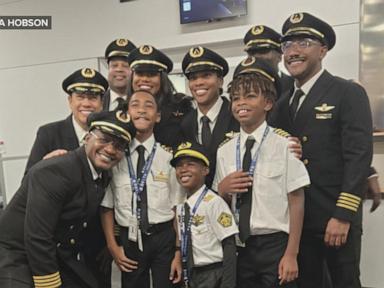
When a twelve-year-old boy wearing pilot wings goes viral after a Delta DREAM Flight, most people scroll past with a smile and a heart emoji. They see a cute clip. A feel-good story for a rainy Tuesday. A kid getting to sit up front, say a few lines over the intercom, or wave from a flight deck while millions of strangers watch on their phones.
Dismissing it as just a viral clip misses the entire point.
Behind the camera angles and the share buttons sits a quiet collision between childhood and fragility, between routine air travel and a day engineered to give a sick child back the feeling of being weightless. A DREAM Flight is not a promotional stunt disguised as charity. It is a deliberate break in a brutal calendar. When you live inside medical schedules, appointments, blood draws, and waiting rooms, time stops feeling like an open runway. It starts feeling like a holding pattern.
I have sat in enough fluorescent-lit waiting rooms to know how small a child's world can become when their body refuses to cooperate. You watch the clock on the wall move in slow motion while a kid stares at their shoes, trying to be brave for parents whose shoulders are permanently tight. You feel helpless because you cannot fix the lab results, and you cannot speed up the recovery. When someone offers a moment of pure joy—a moment where the child is not a patient number or a diagnosis, but simply a kid with a dream—you grab onto it with both hands.
Why a Viral Clip Hits Harder Than We Expect
Watch how fast sympathy travels online when it meets genuine wonder.
A twelve-year-old stepping into the role of "Captain William" works because the contrast is immediate and human. Adults spend their lives negotiating expectations, bills, delays, and fatigue. A twelve-year-old has not yet learned to ration excitement. When you put pilot stripes on a kid who knows what fear tastes like, viewers do not just watch him—they root for him. They project their own wishes onto him: that he gets to feel strong, that his family gets a breath of relief, that the sky opens up for a little while.
Yet viral attention has a strange double edge. The moment a personal milestone becomes public content, the story can flatten into a headline. A whole life gets shrunk down to thirty seconds on a screen. People ask who the boy is, what his illness is, whether the flight was real or staged, and how airlines organize these flights in the first place.
Those questions are natural. Curiosity is how people connect. Still, there is a difference between treating a moment like entertainment and understanding what makes that moment possible.
To see how a DREAM Flight works without losing sight of the human stakes, consider a hypothetical scenario. Imagine a boy named Leo—not William, just a stand-in to picture the logistics behind the scenes. Leo is twelve, lives with a serious chronic condition, and loves aviation. Weeks before takeoff, volunteers, airline staff, medical coordinators, and families align dozens of moving pieces so that nothing feels rushed or clinical. On the day of the flight, the usual friction of modern travel—long security lines, tight connections, crowded gates—melts away into careful choreography. Every crew member knows why they are there. Every smile has weight.
That hypothetical mirrors the spirit of why initiatives like Delta's DREAM Flights exist across the aviation world. Airlines fly thousands of routine commercial segments every single day, turning flight into a commodity measured in seat pitch, baggage fees, and on-time percentages. A DREAM Flight flips the script. Suddenly, the airplane is not just moving passengers from point A to point B. It is lifting spirits off the ground.
The Invisible Weight Behind Every Takeoff
Flight is an easy metaphor for freedom, almost too easy.
Let me be clear: comparing a child's medical journey to an airplane climbing above storm clouds is a metaphor, not a literal equivalence. Turbulence does not disappear just because you reach cruising altitude, and a joyful afternoon does not erase difficult treatments. Calling a single flight a cure would be dishonest and careless.
Even so, anyone who has walked beside a sick child knows what altitude feels like emotionally. Down on the ground, everything feels dense. Every symptom carries a question mark. Every new medication brings another round of side effects and hope mixed with dread. Up in the air, looking out at a sea of white cloud tops under a sharp blue sky, the scale of things shifts. For an hour or two, the gravity of daily worry loosens its grip.
That is where trust matters most. When stories like Captain William's circulate online, readers sometimes wonder how much is genuine emotion and how much is corporate polish. That skepticism is understandable. We live in an era saturated with polished brand campaigns, and it is healthy to ask what is real.
In moments like this, the human truth usually shows up in the small details rather than the cameras. It shows up in how a pilot kneels down to speak at a child's eye level instead of towering over them. It shows up in a parent's exhale when their child laughs without wincing. It shows up in the quiet pride of a twelve-year-old wearing a uniform that feels slightly too big in the sleeves and just right in the chest.
What Aviation Gives a Kid Who Has Had to Grow Up Fast
Serious illness has a way of aging children prematurely.
Kids facing heavy medical realities often learn vocabulary no twelve-year-old should need. They learn how to hold still during uncomfortable procedures. They learn to read the expressions on doctors' faces. They grow polite, observant, and resilient—sometimes out of sheer necessity.
Giving a child like that a day where they are celebrated as "Captain" does something quietly radical. It hands back agency and play. Instead of being the one examined, monitored, and instructed, the child is welcomed into a space built around their curiosity. They get to ask questions about instruments, buttons, weather, and flight paths. They get to be twelve again, even if only for a few hours.
Consider what happens next when a video of that moment reaches millions of strangers:
A stranger in another city watches it between errands. Maybe they feel a lump in their throat. Maybe they think of a cousin, a neighbor, or their own child. Maybe they decide to volunteer, donate, or simply treat a tired service worker or fellow traveler with a little more patience that afternoon. Compassion rarely arrives with sirens. Most often, it slips in through a crack in our routine.
The Real Reason People Kept Watching
Viral videos fade fast. Tomorrow brings another clip, another debate, another trending sound.
What lingers from Captain William's moment is not the algorithm that pushed it onto feeds. It is the reminder of what human beings look like when we stop treating one another like obstacles and start treating one another like neighbors. A commercial airliner is made of aluminum, composite skin, wiring, and jet fuel, yet on a day like that, the strongest lift comes from care.
A boy in pilot wings looks out toward the horizon, the engines humming steady beneath his feet, carrying a dream light enough to float and strong enough to steady everyone watching from below.