The High Cost of the "Pause"
Mainstream reporting treats a ceasefire like a finish line. It isn't. In the current theater spanning Southern Lebanon and the Iranian-American diplomatic backchannel, the expiration of a truce is framed as a failure of diplomacy. This is a fundamental misunderstanding of how regional power dynamics actually function.
Diplomacy, in its current neutered state, has become a tool for re-arming rather than resolving. When the media tracks the "minutes until the deadline," they ignore the reality that these pauses are often the most dangerous periods of a conflict. They provide a tactical breather for groups to reorganize, move assets under the cover of "humanitarian windows," and recalibrate GPS-guided munitions.
Stop looking at the Wednesday night deadline as a cliff. Start looking at it as the moment the facade of stability finally drops.
Southern Lebanon and the Demolition Fallacy
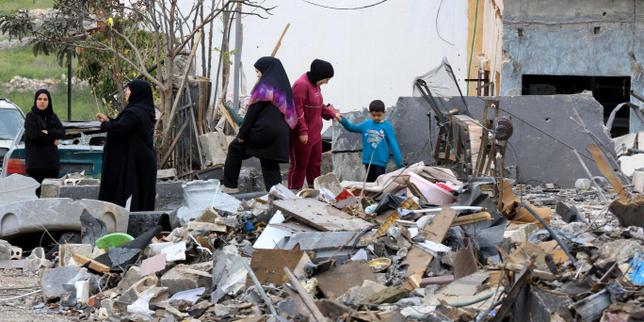
The press focuses on "demolition operations" in Southern Lebanon as if they are merely punitive or symbolic acts of destruction. This is an amateur lens.
In urban and subterranean warfare, "demolition" is the literal restructuring of the geography to deny the enemy the ability to exist. If you aren't removing the physical capacity for a non-state actor to launch 122mm rockets, you aren't winning; you’re just gardening. The "lazy consensus" suggests these operations are an escalation that prevents peace. The reality is the opposite: leaving the infrastructure intact ensures a 50-year war.
I’ve watched analysts cry foul over "infrastructure damage" without once mentioning the tactical necessity of neutralizing the "Metro"—the complex tunnel networks that make traditional border security impossible. You cannot have a border if the ground beneath it is a Swiss cheese of reinforced concrete and fiber-optic command lines.
The Geometry of Neutralization
The objective isn't to hold territory in the 20th-century sense. It is to create a "gray zone" where the cost of re-entry for insurgent forces exceeds their capacity to rebuild.
- Buffer Depth: A 5km buffer is a suggestion. A 20km buffer is a strategy.
- Asset Denial: Taking out a launch pad is temporary. Collapsing the specialized storage facility beneath it is permanent.
- Detection over Destruction: The true victory in Southern Lebanon isn't the explosion; it's the mapping.
The Iran-US "Expiration Date" Theatre
The looming Wednesday deadline between Tehran and Washington is being treated like a ticking time bomb. This is political theater designed to satisfy domestic audiences in both capitals.
Iran uses these deadlines to squeeze concessions out of a West that is terrified of $120-a-barrel oil. Washington uses them to signal "toughness" while quietly hoping the status quo holds until the next election cycle. Neither side actually wants the "big one," but both are addicted to the brinkmanship.
The mistake everyone makes is assuming these agreements are meant to lead to a "Grand Bargain." They aren't. They are short-term lease agreements on stability. When the lease expires, the rent goes up.
Why the "Sunset Clause" is a Weapon
- Technological Creep: While diplomats argue over enrichment percentages, Iranian engineers are perfecting drone swarms and ballistic reentry vehicles. A ceasefire doesn't stop R&D.
- Proxy Maintenance: A pause in direct tensions allows Tehran to funnel resources to its "Ring of Fire"—the proxies currently being dismantled in Lebanon.
- Sanctions Erosion: Long-term "temporary" deals create "compliance fatigue." Businesses start looking for loopholes the moment the rhetoric softens, effectively ending the leverage of sanctions before a permanent deal is even signed.
The Brutal Truth About Humanitarian Windows
It’s uncomfortable to say, but humanitarian pauses are frequently hijacked. In every conflict I’ve analyzed over the last two decades, the "break" in fighting is when the most significant intelligence leaks occur.
You see a convoy of food; the intelligence officer sees a replenishment of batteries for tactical radios. You see a medical evacuation; the commander sees a way to exfiltrate high-value targets under a white flag. By demanding these pauses without ironclad verification—which is impossible in the chaos of the South—the international community often extends the duration of the suffering they claim to want to end.
If you want a war to end, you let it reach its logical conclusion. You don't hit the "pause" button every time one side starts to lose. That only guarantees a "forever war."
Stop Asking "When Will it End?"
The question is flawed. "End" implies a return to a 1990s-style peace that no longer exists. We are in an era of perpetual, low-intensity kinetic friction.
People ask, "What happens Thursday morning?"
The honest answer: The same thing that happened Tuesday, just with more expensive missiles.
The obsession with "de-escalation" is a Western luxury. For the players on the ground, "escalation" is often the only path to a lopsided victory that actually stops the killing for more than a few months. If the goal is to stop the rockets from hitting civilians in Galilee, you don't sign a piece of paper with a regime that doesn't recognize your right to exist. You make it physically impossible for them to fire.
The Risk of My Own Perspective
Is this approach cold? Yes. Does it risk a regional conflagration? Potentially.
But the alternative—the "managed conflict" of the last twenty years—has led us exactly to where we are now. We’ve tried the diplomacy of "red lines" that turn out to be pink. We’ve tried the "ceasefires" that are treated as reload screens.
The downside of the contrarian view—total military resolution—is the immediate human cost. It is high. It is visceral. It is documented in 4K on every social media platform. But the cost of the "peace process" is a slow-motion catastrophe that kills more people over thirty years than a decisive six-month campaign ever could.
The Failure of "Proportionality"
International law experts love the word "proportionality." In a boardroom, it sounds fair. In a trench, it’s a death sentence.
If an enemy fires 100 rockets at your cities, a "proportional" response is to fire 100 back. That solves nothing. It creates a stalemate. To actually end a threat, the response must be disproportionate. It must be so overwhelming that the enemy’s command structure collapses.
The operations in Southern Lebanon are being criticized for being "disproportionate." That is exactly why they might actually work. For the first time in a generation, the "rules of the game" are being rewritten by the side that realized the old rules were designed to make them lose slowly.
The New Rules of Engagement
- Rule 1: If you hide a missile in a kitchen, the kitchen is no longer a kitchen; it’s a silo.
- Rule 2: A treaty signed by a proxy is not worth the ink if their patron is still writing the checks.
- Rule 3: Peace is not the absence of fighting; it is the presence of an unchallengeable deterrent.
The Wednesday Mirage
As the deadline for the US-Iran ceasefire approaches, watch the markets and the headlines. They will panic. They will talk about "last-minute saves" and "shuttle diplomacy."
Ignore them.
Whether the paper is signed or not, the underlying reality remains: Iran needs the chaos to maintain its regional relevance, and the demolition in Lebanon is the first real threat to that relevance in forty years.
The "peace" we are being sold is a lie. It is a temporary lull before a much larger storm, and the only way to survive that storm is to stop pretending that a Wednesday deadline matters more than the concrete being poured in the tunnels or the missiles being moved through the Bekaa Valley.
True stability isn't found at a negotiating table in Geneva or a briefing room in DC. It’s found when one side no longer has the teeth to bite. Everything else is just noise.
The deadline isn't the end of the peace. It’s the end of the delusion.
Get ready for Thursday.