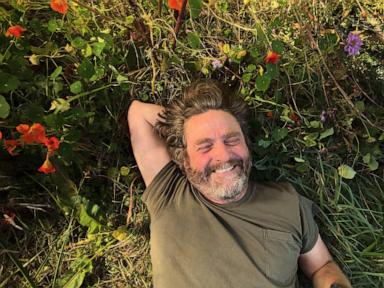
The industry is currently patting itself on the back because Netflix decided to drop a Zach Galifianakis gardening series on Earth Day. The press releases are predictable. They talk about "bringing humor to sustainability" and "humanizing the climate crisis." They want you to believe that watching a funny man struggle with a shovel is a gateway drug to environmental stewardship.
It isn't. It’s a sedative.
We’ve reached a point where we’ve outsourced our interaction with the physical world to streaming platforms. When we watch a celebrity play-act at permaculture, we aren't learning. We are participating in a parasocial performance of virtue. This isn't about the dirt; it’s about the optics. If you actually want to save the planet, turn off the television and go break a fingernail.
The Myth of the Relatable Amateur
The "lazy consensus" in entertainment media is that if you make a difficult task look funny and approachable, more people will do it. This is a fundamental misunderstanding of human psychology.
When you see a high-production-value version of "struggle," it validates your own inaction. You watch Zach Galifianakis bumble through a garden and think, Look, even he finds it hard! I’ll just stick to my grocery store spinach. It turns a vital survival skill into a comedy bit. Gardening isn't a hobby for the elite to find themselves; it is a brutal, calculated negotiation with biology.
The media frames gardening as "gentle" or "healing." Ask anyone who has actually tried to maintain a 1/4 acre plot without synthetic pesticides. It is a war against pests, fungal pathogens, and erratic weather patterns. By coating the reality in a layer of deadpan humor, Netflix is selling a version of nature that doesn't exist. They are selling "Nature Lite"—all of the aesthetic, none of the backache.
The Earth Day Industrial Complex
Releasing a show on Earth Day is the ultimate corporate signaling. It’s the annual ritual where companies that profit from massive server farms—which consume astronomical amounts of electricity and water for cooling—tell you to plant a tomato.
Let’s talk about the carbon footprint of a "green" show. You have a crew of forty people. You have catering. You have transport. You have high-intensity lighting. You have the energy cost of streaming 4K video to millions of devices. The net environmental impact of producing and distributing a show about gardening is almost certainly higher than the collective impact of every garden planted because of the show.
This is the "Efficiency Paradox" in action. As we make information about sustainability more accessible, we increase the energy consumption required to consume that information, often negating the benefits of the message itself.
Stop Treating Soil Like Dirt
The biggest failure of mainstream gardening media is the refusal to address the technical reality of the Pedosphere. They treat soil as a blank canvas, a brown stage for the celebrity to stand on.
Soil is a living, breathing respiratory system. It is a complex matrix of minerals, organic matter, gases, liquids, and countless organisms. Most "lifestyle" gardening shows encourage what I call "Performative Planting":
- Buy plastic-wrapped seedlings from a big-box store.
- Dig a shallow hole in depleted, compacted suburban clay.
- Dump a bag of peat-based "garden soil" (which is actually mined from carbon-sequestering peat bogs—another environmental disaster).
- Watch it die in three weeks because you didn't understand the Cation Exchange Capacity (CEC) of your land.
The CEC is the soil's ability to hold onto essential nutrients like calcium, magnesium, and potassium. It’s the "battery" of your garden. If you don't understand the chemistry of the ground beneath you, you aren't gardening; you're just decorating with doomed organisms.
The Dangerous Allure of the "Garden Aesthetic"
The competitor article raves about the "visual charm" and "quirky sets." This is exactly the problem. The "aesthetic" of gardening has become more important than the utility.
We see celebrities in pristine linen shirts holding a single, perfect heirloom carrot. In reality, real gardening is ugly. It’s messy. It’s covered in aphids. It involves the smell of rotting fish emulsion and the sight of your prize squash being hollowed out by vine borers.
When we prioritize the "humor" and the "look," we create a generation of gardeners who quit at the first sign of a real infestation. They feel like they’ve failed because their experience doesn't match the curated, color-graded footage on their iPad.
The Logistics of the Lie
I’ve worked on sets where we’ve done "outdoor lifestyle" shoots. Do you want to know the secret? Half the time, the plants are "staged." We’ve literally stuck cut flowers into the ground or buried plastic pots five minutes before the cameras rolled.
While I’m not saying this specific series is faking its harvest, the industry is built on the lie of the "Instant Garden." Real growth takes seasons. It takes years of amending soil with compost and cover crops like clover or winter rye to fix nitrogen.
$$N_2 + 8H^+ + 8e^- + 16ATP \rightarrow 2NH_3 + H_2 + 16ADP + 16P_i$$
That is the chemical equation for nitrogen fixation. It’s a slow, biological process that doesn't fit into a 22-minute episode. By skipping the boring, slow parts, these shows create a false expectation of speed that discourages actual, long-term commitment.
The Parasite of Passive Consumption
"People Also Ask" online often focuses on "How can I start a garden for cheap?" or "What are the best plants for beginners?"
The honest, brutal answer? You don't start by watching a show. You start by observing your own backyard for an entire year. You watch where the shadows fall in the winter. You see where the water pools during a spring storm. You learn your "hardiness zone" and the specific micro-climates of your property.
Passive consumption of entertainment is the opposite of the active observation required for stewardship. Every hour you spend watching someone else garden is an hour you didn't spend building a compost pile or scouting for invasive species. We are becoming a society of observers who know the "vibe" of everything but the mechanics of nothing.
The Hidden Cost of Peat and Plastic
If these shows actually cared about the earth, they would spend half their runtime railing against the garden center industry.
- Peat Moss: Most potting soils use peat. Peatlands are the most efficient carbon sinks on the planet. We are destroying them to grow petunias that will die in a frost.
- Plastic Pots: The "nursery pot" is a massive source of non-recyclable plastic waste.
- Transport: That "local" plant you bought was likely trucked hundreds of miles from a massive industrial greenhouse.
A show with a "humorous" celebrity isn't going to tackle the supply chain of the horticultural industry because it’s too depressing for a Tuesday night binge-watch. It’s easier to make a joke about a weird-looking gourd.
Why We Need Experts, Not Entertainers
We have devalued expertise in favor of "relatability." We want our teachers to be our friends. We want them to be "just like us."
But the people who can actually help us navigate a collapsing climate aren't "just like us." They are obsessives. They are soil scientists. They are old-timers who have saved seeds for forty years. They aren't funny. They are often grumpy, pedantic, and deeply concerned with the minutiae of mycorrhizal fungi.
We are trading real knowledge for a dopamine hit. We are choosing to be entertained by the problem rather than being educated on the solution.
The Scenario: The Post-Show Crash
Imagine a scenario where 500,000 people watch this series and feel "inspired." They go to the store. They buy $200 worth of supplies. They plant. They don't know about soil pH. They don't know about water requirements.
Three months later, 450,000 of those gardens are dead. That is millions of pounds of wasted organic material, plastic, and water. This is the "Inspiration Gap." Inspiration without education is just a recipe for waste.
Instead of a comedy series, we need a boring, technical, deep-dive into the boring stuff. We need to talk about the Nitrogen Cycle, the Hydrologic Cycle, and the Carbon Cycle without trying to make it "accessible" through a celebrity lens.
[Image of the nitrogen cycle in soil]
The Brutal Truth About "Saving the World"
Gardening won't save the world. Not the way they show it on TV. A few raised beds in a wealthy suburb is a drop in the ocean compared to industrial monoculture and the massive loss of topsoil globally.
If we want to change things, we have to stop treating the environment as a "topic" for entertainment. We have to stop looking for "fresh takes" from Hollywood. The most counter-intuitive thing you can do in 2026 is to stop being a consumer of "green content" and start being a producer of your own life.
The soil doesn't care about your sense of humor. The rain doesn't care about your irony. The earth is a physical system governed by laws that don't change because a show is "trending."
Stop watching. Start digging. Learn the chemistry or get out of the way.