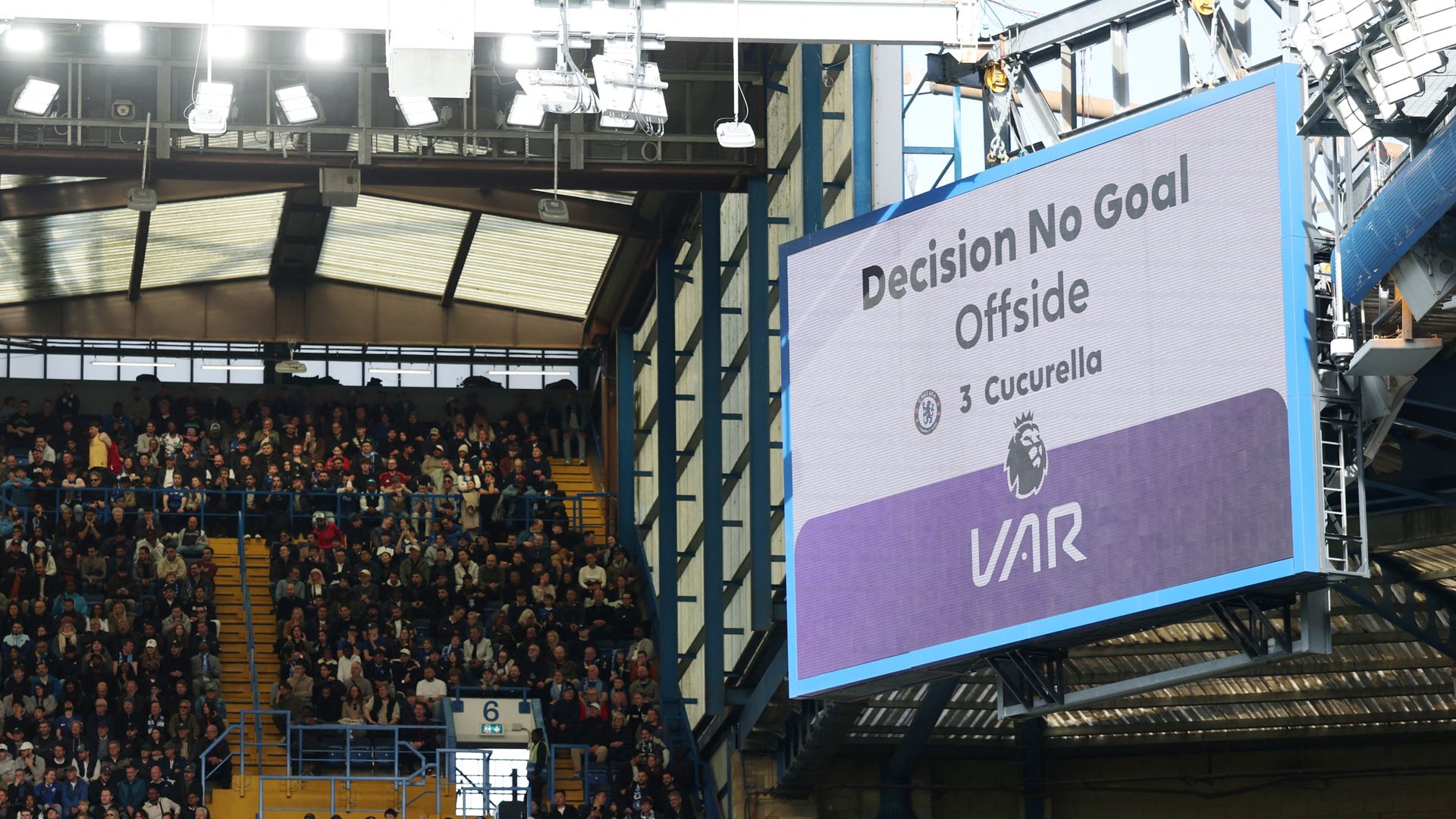
English football’s second tier has drawn a line in the sand. While the Premier League grapples with three-minute delays and pixelated offside lines, the EFL Championship has consciously chosen to remain in a different era. The decision by Championship clubs to reject the Video Assistant Referee (VAR) system is not merely a rejection of technology. It is a calculated business move designed to protect the "product" of the most unpredictable league in world football.
For the uninitiated, the argument for VAR usually centers on fairness. Proponents argue that in a league where a single goal can be worth £100 million in promotion revenue, getting the big decisions right is a moral and financial necessity. But the reality on the ground tells a different story. Championship owners and executives have watched the top flight’s soul-searching over the last few seasons and decided the price of "perfection" is simply too high. If you liked this post, you should check out: this related article.
The Financial Wall and the ROI Problem
Installing VAR is not a simple software update. It requires a massive infrastructure overhaul. Most Championship stadiums would need significant camera upgrades, high-speed fiber-optic cabling, and dedicated rooms for officials. The estimated cost of implementation across the 24 clubs is staggering, often cited in the region of £10 million to £15 million annually for the collective.
For a Premier League club, that is a rounding error. For a Championship club operating on the razor's edge of Profit and Sustainability Rules (PSR), it is a non-starter. Many of these clubs are already losing millions every month just to keep pace with the dream of promotion. Adding a multi-million pound bill for a system that many fans actively hate represents a poor return on investment. For another angle on this development, check out the latest update from Bleacher Report.
Financial survival in the EFL is about managing thin margins. When a club like Luton Town or Coventry City weighs the cost of VAR against the salary of a striker who might score 15 goals, the striker wins every time. The technical requirements alone—specifically the need for a minimum of 12 cameras at every match to ensure "minimum standards"—make the venture a logistical nightmare for older grounds like Kenilworth Road or Loftus Road.
The Preservation of the Matchday Experience
The most potent weapon against VAR isn't money. It is the fan. In the Championship, the matchday atmosphere remains the primary selling point. It is raw, fast-paced, and often chaotic. The introduction of VAR introduces a specific type of anxiety: the "silent check."
This delay kills the immediate euphoria of a goal. Fans have begun to celebrate with a hesitant glance at the referee rather than a roar of pure joy. Championship clubs have recognized that their "brand" depends on this emotional immediacy. By rejecting the technology, they are marketing themselves as the "authentic" alternative to the sanitized, over-analyzed Premier League experience.
There is a growing sentiment among match-going supporters that they would rather a human referee make a mistake in real-time than a computer make a "correct" decision four minutes later. This isn't just nostalgia; it's a preference for the flow of the game. The Championship plays more games than the Premier League—46 rounds plus playoffs. The cumulative time added for VAR checks across that schedule would likely lead to player burnout and even more disjointed spectacles.
The Refereeing Standard Gap
We must address the elephant in the room: the quality of officiating. The PGMOL (Professional Game Match Officials Limited) is already stretched thin. If the Championship were to adopt VAR, it would require a massive influx of qualified Video Assistant Referees.
The current pool of officials is struggling to manage 10 Premier League games a weekend without controversy. Expecting them to oversee another 12 Championship games with the same level of scrutiny is a recipe for disaster. We would likely see "VAR-lite," a stripped-back version of the tech that lacks the precision of the top-tier system. This would create a worst-of-both-worlds scenario: the delays of the Premier League with the inaccuracy of the current Championship system.
The Myth of the Level Playing Field
The most common argument for VAR in the Championship is the "Fairness Fallacy." The idea is that because the stakes are so high, we cannot allow a missed offside or a soft penalty to decide a club’s fate.
However, VAR does not eliminate controversy; it merely shifts the focus. Instead of arguing about a referee's positioning, we argue about the thickness of a digital line drawn on a screen. By maintaining the status quo, Championship clubs avoid the constant litigation of the "clear and obvious" threshold that has plagued the top flight. They accept that human error is a variable in sport, much like a striker missing an open goal or a goalkeeper fumbling a cross.
This acceptance of imperfection is becoming a badge of honor. It keeps the focus on the pitch rather than the van in the parking lot.
The Technological Alternatives
The rejection of VAR doesn't mean the Championship is stuck in the 1970s. Goal-Line Technology (GLT) is already in place and is universally accepted because it is instantaneous and objective. It provides a binary "yes or no" within seconds.
The future for the Championship likely lies in Semi-Automated Offside Technology (SAOT) rather than a full VAR suite. SAOT uses limb-tracking and AI to determine offsides in seconds, providing a visual representation that is much easier for fans to digest. By skipping the current iteration of VAR, the EFL may be positioning itself to "leapfrog" the messy middle-ground and move straight to more efficient, less intrusive systems when they become affordable.
The Power Dynamics of the EFL
It is also worth noting the political landscape. The EFL is not a monolith. The 24 Championship clubs have very different priorities than the clubs in League One and League Two. However, there is a collective desire to maintain a distinct identity from the Premier League.
Rejecting VAR is a way for the Championship to assert its independence. It signals to the fans and the broadcasters that the league understands its audience. Broadcasters like Sky Sports actually benefit from the "pure" version of the game, as it ensures matches finish on time and maintain a high tempo that translates well to television.
The Human Element in High-Stakes Sport
We often forget that referees are athletes too. In the Championship, referees have to be more decisive because they have no safety net. This builds a different kind of officiating character. Some argue that the lack of VAR actually improves the development of referees, forcing them to rely on their intuition and positioning rather than waiting for a voice in their ear.
For the players, the lack of VAR changes the tactical approach. Defenders can't rely on a tight offside review to save them from a lapse in concentration. Attackers know that if the flag stays down, the goal stands. This creates a psychological environment that is vastly different from the top flight. It is more intense, more physical, and arguably more honest.
The Global Context
Look across Europe, and you see the same struggle. While the Bundesliga and La Liga have embraced technology, they have faced similar fan revolts. In some leagues, fans have gone as far as throwing tennis balls on the pitch to protest the interruptions. By watching these protests from the sidelines, the Championship has avoided a PR nightmare.
The league has effectively let the Premier League be the "beta tester" for football technology. They have seen the bugs, the crashes, and the user dissatisfaction. And they have decided not to buy the product.
This isn't about being anti-progress. It's about being pro-football. The Championship is currently one of the most-watched leagues in Europe because of its drama and its relentless pace. If you take away the pace and replace the drama with a three-minute review of a fingernail being offside, you destroy the very thing that makes people buy tickets.
The Championship has looked at the "perfection" offered by VAR and decided that the flaws of the human game are actually its greatest strength. They have prioritized the roar of the crowd over the precision of the pixel. In an age where every industry is being forced into a digital mold, there is something remarkably bold about a multi-billion pound business choosing to stay analog.
Clubs are betting that their fans value their time and their emotions more than they value a 2% increase in officiating accuracy. It is a gamble, certainly. But in the high-stakes world of the English second tier, it might be the smartest move they've ever made. The game remains fast, the errors remain human, and the whistle still means the end of the debate, not the beginning of a committee meeting.
Keep the clock running.