Most people remember exactly where they were on January 15, 2009. They remember watching the television screens in disbelief as a commercial airliner floated quietly in the freezing waters of the New York river. They remember the passengers standing on the emergency slide, wrapped in bright orange vests, waiting for rescue while a winter wind bit at their faces. That single event transformed Captain Chesley "Sully" Sullenberger into a household name overnight.
Yet boiling a lifetime of dedication down to a single media-friendly headline sells the man short. When Sullenberger was formally enshrined into the National Aviation Hall of Fame during a ceremony in Washington, D.C., he made sure to remind everyone watching that his story began long before that freezing January afternoon and extended far beyond it. Decades of disciplined practice, military service, and quiet advocacy built the foundation for those critical few minutes in the cockpit.
Understanding why this national honor matters requires looking past the cinematic dramatizations and the instant replay reels. It demands examining what real expertise looks like when pressure peaks and split-second choices carry the weight of human lives.
What a Lifetime of Flying Really Looks Like
People often talk about the Hudson River landing as if it were a stroke of blind luck or a magical moment of divine intervention. Pilots know better. Luck plays almost no role when a twin-engine Airbus A320 loses all engine power at less than three thousand feet over a densely populated metropolis.
Sullenberger spent a lifetime preparing for a disaster he hoped would never happen. Growing up in Texas, he built model airplanes and dreamed of the sky long before he ever sat in a real pilot's seat. That childhood obsession turned into rigorous training at the United States Air Force Academy, followed by years flying F-4 Phantom fighters as a squadron leader and tactical officer.
Military aviation teaches a specific kind of mental clarity. It strips away panic and replaces it with systematic problem-solving. When an engine fails at supersonic speeds over a desert range, you don't have the luxury of wishing for a better option. You work through the emergency checklist, assess the physics of your aircraft, and make a decision.
That military conditioning didn't vanish when Sullenberger transitioned to commercial aviation with US Airways in 1980. Instead, he carried it into every flight deck he stepped onto. He wasn't just a guy who flew planes from point A to point B. He actively studied accident investigations, served as an air safety investigator for his pilot union, and helped rewrite the manual on how airlines handle crew resource management.
When a flock of Canada geese struck US Airways Flight 1549 moments after takeoff from LaGuardia Airport, silencing both engines with a devastating thump, Sullenberger didn't freeze. He didn't waste precious seconds hoping for a miracle. He drew on thousands of hours of accumulated muscle memory and intellectual preparation.
Inside the Cockpit During Those 208 Seconds
The sequence of events on Flight 1549 happened with terrifying speed. Less than ninety seconds into the flight, the aircraft slammed into the migratory birds. The sudden silence of the engines was followed by an acrid smell of burning feathers and jet fuel.
First Officer Jeff Skiles immediately dropped his head into the quick reference handbook, running through emergency restart procedures while Sullenberger took control of the aircraft's flight path. Air traffic control offered options to return to LaGuardia or divert to Teterboro Airport. Sullenberger analyzed the vectors, the aircraft's altitude, and the surrounding obstacles with ruthless objectivity.
He knew instantly that attempting a turn back toward a concrete runway would likely end in a catastrophic crash into residential neighborhoods. His response to air traffic control remains one of the most chillingly calm declarations in aviation history. We cannot do it, he noted plainly. We are going to be in the Hudson.
Those words shifted the entire trajectory of the emergency. The Hudson River offered the only long, flat, unpopulated runway available in the immediate vicinity. Gliding a heavy passenger jet onto water requires a delicate touch. Land too steeply, and the aircraft breaks apart. Flare too high, and the plane stalls and drops like a stone.
Sullenberger executed a textbook ditching. He held the aircraft in a precise nose-up attitude, touching the tail down first to cushion the impact, then allowing the fuselage to settle gently onto the choppy river surface. Not a single structural failure compromised the cabin.
The evacuation that followed was just as critical. Water temperatures hovered near freezing, and ice floes drifted past the sinking hull. Sullenberger walked the length of the aisle twice, ensuring every last passenger and crew member had escaped into the biting wind before he stepped off the aircraft himself. One hundred fifty-five souls walked away alive.
Moving Past the Hollywood Narrative
Hollywood loves a simple hero narrative. When director Clint Eastwood brought the story to the big screen, starring Tom Hanks as the veteran captain, the film focused heavily on the intense bureaucratic pressure and scrutiny Sullenberger faced from federal investigators in the aftermath. National Transportation Safety Board panels questioned whether he could have made it back to a runway.
Flight simulators later proved what Sullenberger knew in his gut. Human reaction time and the sheer impossibility of executing a safe return under those specific conditions meant the river was the only rational choice. Yet the media obsession with the cinematic drama often overshadowed his broader contributions to the profession.
Sullenberger retired from commercial flying in 2010, but he never stopped working for aviation safety. He became an outspoken critic of industry deregulation and pushed hard to protect pilot rest requirements and training standards. He argued consistently that experience cannot be replaced by automation or cost-cutting measures.
In late 2021, President Joe Biden appointed him as the United States Ambassador to the International Civil Aviation Organization. In that diplomatic role, he worked with global leaders to modernize safety protocols, reduce carbon emissions, and unify international aviation standards across borders. His career expanded far beyond the boundaries of a single airline uniform.
Facing a Very Different Kind of Fight
Life brings unpredictable turbulence, and the challenges we face off the flight deck often demand a different kind of courage. Sullenberger demonstrated that courage when he chose to share a deeply personal and difficult update about his health.
He publicly disclosed that he had been diagnosed with Alzheimer's disease. Rather than retreating into privacy, he decided to speak openly about the early-stage cognitive changes he was experiencing, such as occasionally forgetting a recent name or struggling with sleep. He framed his diagnosis as a new chapter of public service.
His wife, Lorrie, spoke candidly about the diagnosis, emphasizing that a neurodegenerative condition is a medical reality rather than a character flaw. Together, they urged other families living in the shadows of the disease to step forward, talk openly, and strip away the stigma.
This transparency requires a different kind of bravery than landing a crippled jet on a freezing river. In the cockpit, training provides a roadmap for survival. Facing a progressive illness offers no manual, no checklist, and no guaranteed outcome. By choosing vulnerability over silence, Sullenberger showed that true leadership isn't just about technical mastery during a crisis. It is about how you carry yourself when the ground beneath you shifts.
Why the Hall of Fame Induction Matters Now
When the National Aviation Hall of Fame added Sullenberger to its distinguished roster of enshrinees, the honor served as a vital reminder of what excellence truly means in modern society. We live in an era obsessed with quick wins, viral moments, and superficial metrics of success.
Sullenberger represents the exact opposite. He represents the unglamorous decades spent mastering a craft in obscurity. He represents the quiet discipline of doing things right when nobody is watching, so that when catastrophe strikes, your instincts don't fail you.
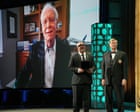
His acceptance speech, delivered via video link from Washington, D.C., captured that exact ethos. He expressed profound gratitude for the recognition, but he made certain to emphasize the totality of his journey. From a young boy building model airplanes in Texas to a military fighter pilot, a commercial captain, an international diplomat, and a fierce advocate for safety, his life was built on a foundation of lifelong learning and unwavering dedication.
The aviation industry faces new complexities today, from technological shifts to workforce shortages and evolving safety challenges. The lessons embedded in Sullenberger's career remain more relevant than ever. Experience matters. Preparation matters. Integrity matters.
When you look back at the trajectory of his life, the Hudson River landing is merely the most visible peak of a mountain range built over forty years. His induction into the Hall of Fame isn't just a nod to a single afternoon in New York. It is a permanent tribute to a life spent elevating the entire standard of human capability.